


microRNAs: critical regulators in Th17 cells and players in diseases
- PMID: 20364159
- PMCID: PMC4002913
- DOI: 10.1038/cmi.2010.19
microRNAs: critical regulators in Th17 cells and players in diseases
Abstract
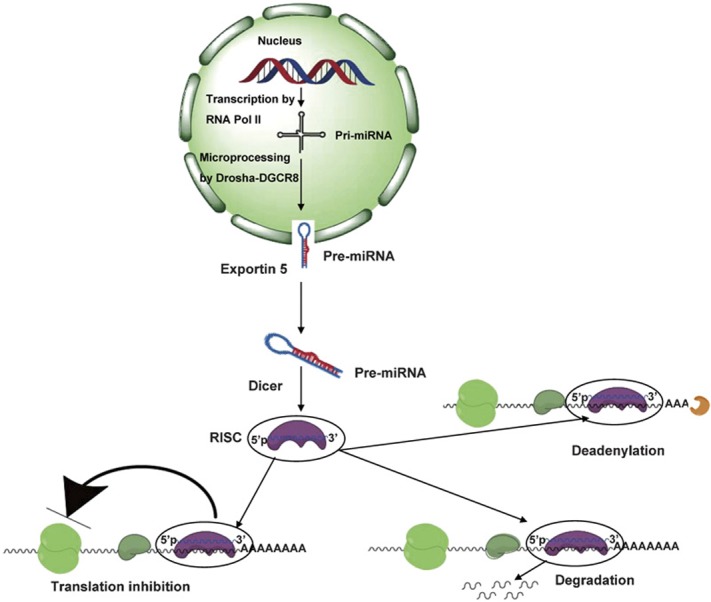
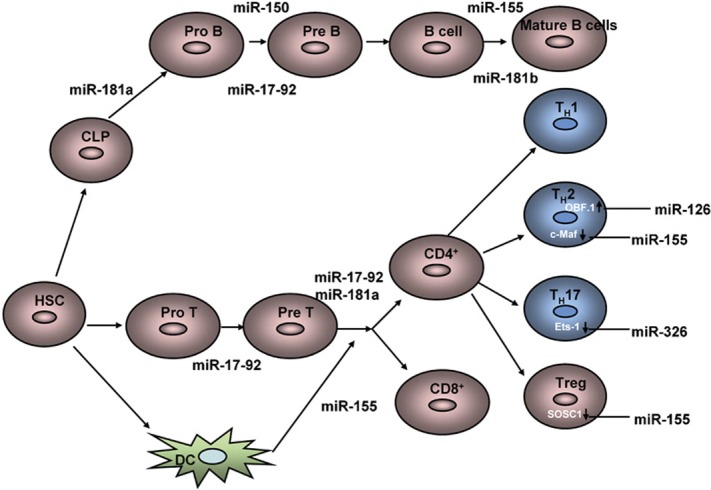
microRNAs are a novel group of small, conserved, non-coding RNA molecules that are present in all species. These molecules post-transcriptionally regulate gene expression by targeting mRNAs for degradation or by repressing the translation of the mRNAs. A good understanding of miRNA-mediated gene regulation is critical to gain a comprehensive view of many physiological processes and disease states. Emerging evidence demonstrates that miRNAs play an important role in the differentiation and function of the adaptive immune system. This review provides an overview of the diverse functions of miRNAs in modulating immune responses and in immune cell development, particularly the development of Th17 cells, and explores the involvement of miRNAs in several autoimmune diseases including multiple sclerosis (MS), rheumatoid arthritis (RA), inflammatory bowel disease (IBD) and diabetes.
Figures
References
-
- Miossec P, Korn T, Kuchroo VK. Interleukin-17 and type 17 helper T cells. N Engl J Med. 2009;361:888–898. - PubMed
-
- Ambros V. The functions of animal microRNAs. Nature. 2004;431:350–355. - PubMed
-
- Bartel DP, Chen CZ. Micromanagers of gene expression: the potentially widespread influence of metazoan microRNAs. Nat Rev Genet. 2004;5:396–400. - PubMed
-
- Bushati N, Cohen SM. microRNA functions. Annu Rev Cell Dev Biol. 2007;23:175–205. - PubMed
Publication types
MeSH terms
Substances
LinkOut - more resources
Full Text Sources
Other Literature Sources
Medical
