


Decreased expression of PinX1 protein is correlated with tumor development and is a new independent poor prognostic factor in ovarian carcinoma
- PMID: 20367640
- PMCID: PMC11159430
- DOI: 10.1111/j.1349-7006.2010.01560.x
Decreased expression of PinX1 protein is correlated with tumor development and is a new independent poor prognostic factor in ovarian carcinoma
Abstract
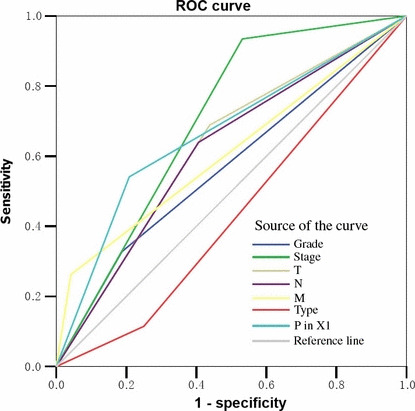
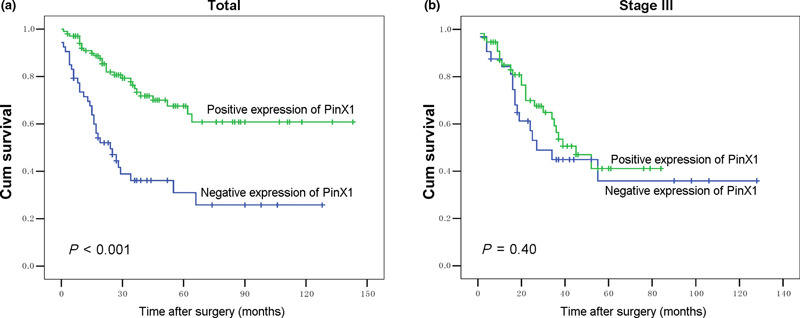
Human interacting protein X1 (PinX1) has been identified as a critical telomerase inhibitor and proposed to be a putative tumor suppressor gene. Loss of PinX1 has been found in a large variety of malignancies, but the expression status in epithelial ovarian tumors has not been investigated. In this study, immunohistochemistry for PinX1 protein was performed on a tissue microarray (TMA) of epithelial ovarian tumors (informatively containing 25 cystadenomas, 29 borderline tumors, and 157 invasive carcinomas) and 12 normal ovaries. Receiver-operator curve (ROC) analysis was used to determine cut-off scores for tumor positivity and to evaluate patients' survival status. The threshold for PinX1 positivity was determined to be above 60% (area under the curve = 0.856, P < 0.001) based on the area under the ROC. Positive expression of PinX1 was observed in 100% of normal ovarian tissues, in 84% of cystadenomas, in 75.9% borderline tumors, and 66.2% of ovarian carcinomas. Decreased expression of PinX1 was strongly related to patients with poor prognostic factors regarding presence of lymph node metastasis (P = 0.024), distant metastasis (P < 0.001), and late International Federation of Gynecology and Obstetrics (FIGO) stage (P < 0.001). In univariate survival analysis, a highly significant correlation between loss of PinX1 and shortened patient survival (mean, 48.2 months vs 99.2 months, P < 0.001) was displayed. Multivariate analysis demonstrated PinX1 expression (P = 0.027) was evaluated as an independent parameter. Our findings suggest that loss of PinX1 is an adverse independent molecular marker for epithelial ovarian carcinoma patients. PinX1 may be a novel target for telomerase-based anticancer therapy due to inhibiting telomerase activity.
Figures


References
-
- Lynch HT, Casey MJ, Lynch J, White TE, Godwin AK. Genetics and ovarian carcinoma. Semin Oncol 1998; 25: 265–80. - PubMed
-
- Kosary CL. FIGO stage, histology, histologic grade, age and race as prognostic factors in determining survival for cancers of the female gynecological system: an analysis of 1973–87 SEER cases of cancers of the endometrium, cervix, ovary, vulva, and vagina. Semin Surg Oncol 1994; 10: 31–46. - PubMed
-
- Engel J, Eckel R, Schubert‐Fritschle G et al. Moderate progress for ovarian cancer in the last 20 years: prolongation of survival, but no improvement in the cure rate. Eur J Cancer 2002; 38: 2435–45. - PubMed
-
- Baffa R, Santoro R, Bullrich F, Mandes B, Ishii H, Croce CM. Definition and refinement of chromosome 8p regions of loss of heterozygosity in gastric cancer. Clin Cancer Res 2000; 6: 1372–7. - PubMed
Publication types
MeSH terms
Substances
LinkOut - more resources
Full Text Sources
Medical
