Genomic, proteomic, and transcriptomic analysis of virulent and avirulent Rickettsia prowazekii reveals its adaptive mutation capabilities
- PMID: 20368341
- PMCID: PMC2860167
- DOI: 10.1101/gr.103564.109
Genomic, proteomic, and transcriptomic analysis of virulent and avirulent Rickettsia prowazekii reveals its adaptive mutation capabilities
Abstract
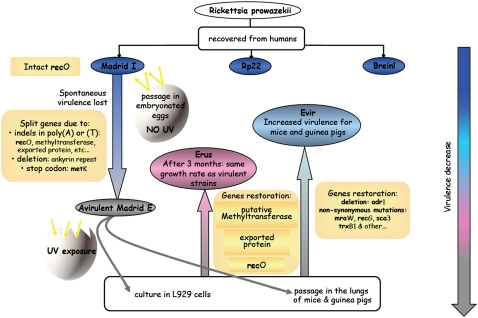
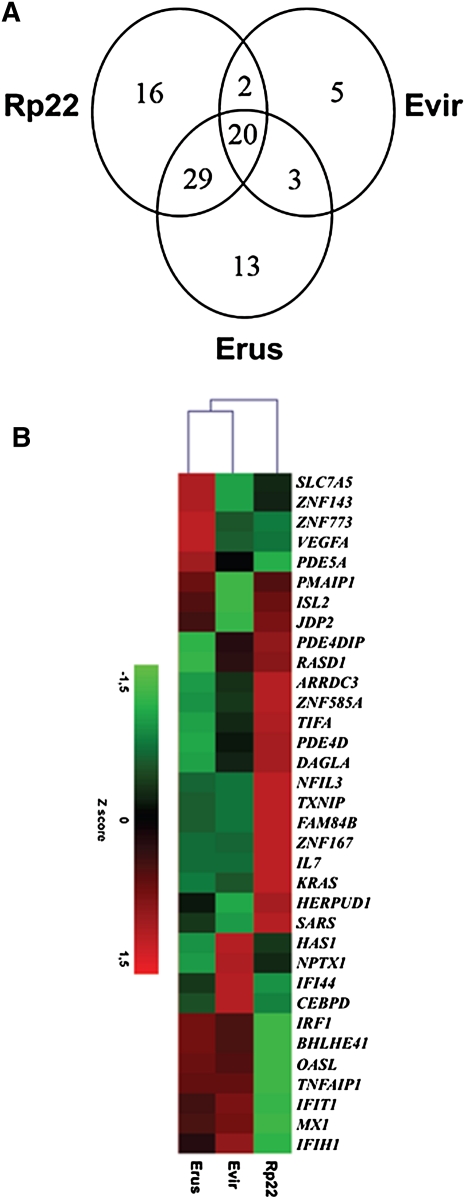
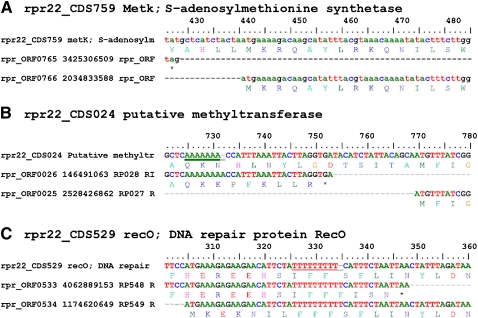
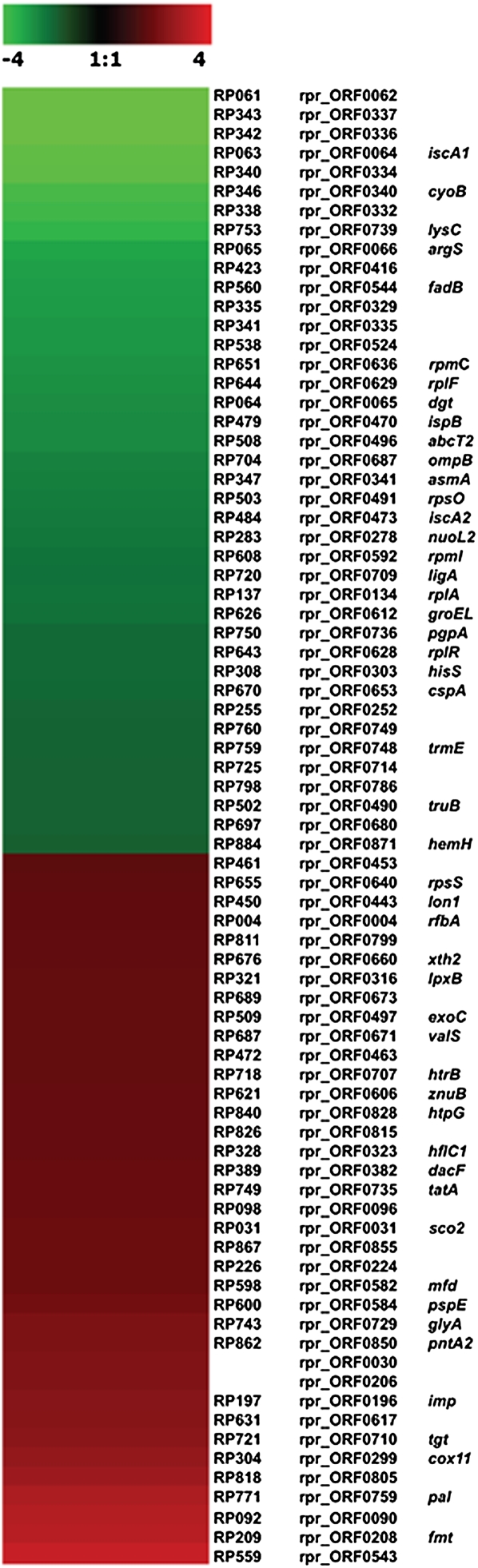
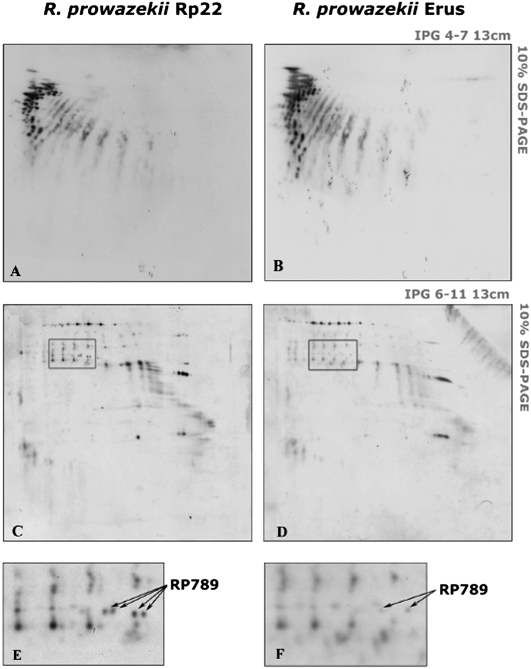
Rickettsia prowazekii, the agent of epidemic typhus, is an obligate intracellular bacterium that is transmitted to human beings by the body louse. Several strains that differ considerably in virulence are recognized, but the genetic basis for these variations has remained unknown since the initial description of the avirulent vaccine strain nearly 70 yr ago. We use a recently developed murine model of epidemic typhus and transcriptomic, proteomic, and genetic techniques to identify the factors associated with virulence. We identified four phenotypes of R. prowazekii that differed in virulence, associated with the up-regulation of antiapoptotic genes or the interferon I pathway in the host cells. Transcriptional and proteomic analyses of R. prowazekii surface protein expression and protein methylation varied with virulence. By sequencing a virulent strain and using comparative genomics, we found hotspots of mutations in homopolymeric tracts of poly(A) and poly(T) in eight genes in an avirulent strain that split and inactivated these genes. These included recO, putative methyltransferase, and exported protein. Passage of the avirulent Madrid E strain in cells or in experimental animals was associated with a cascade of gene reactivations, beginning with recO, that restored the virulent phenotype. An area of genomic plasticity appears to determine virulence in R. prowazekii and represents an example of adaptive mutation for this pathogen.
Figures
References
-
- Alban A, David SO, Bjorkesten L, Andersson C, Sloge E, Lewis S, Currie I 2003. A novel experimental design for comparative two-dimensional gel analysis: Two-dimensional difference gel electrophoresis incorporating a pooled internal standard. Proteomics 3: 36–44 - PubMed
-
- Andersson SGE, Zomorodipour A, Andersson JO, Sicheritz-Pontén T, Alsmark UCM, Podowski RM, Näslund AK, Eriksson AS, Winkler HH, Kurland CG 1998. The genome sequence of Rickettsia prowazekii and the origin of mitochondria. Nature 396: 133–140 - PubMed
-
- Balayeva NM, Nikolskaya VN 1970. Stability of increased virulence of vaccine strain E of Rickettsia prowazekii. J Hyg Epidemiol Microbiol Immunol 8: 36–38 - PubMed
-
- Balayeva NM, Nikolskaya VN 1972. Enhanced virulence of the vaccine strain E of Rickettsia prowazeki on passaging in white mice and guinea pigs. Acta Virol 16: 80–82 - PubMed
-
- Balayeva NM, Nikolskaya VN 1973. Analysis of lung culture of Rickettsia prowazedi E strain with regard to its capacity of increasing virulence in passages on the lungs of white mice. J Hyg Epidemiol Microbiol Immunol 17: 294–303 - PubMed
MeSH terms
Substances
Associated data
- Actions
- Actions
- Actions
LinkOut - more resources
Full Text Sources
Molecular Biology Databases