


Acetylcholine-dopamine interactions in the pathophysiology and treatment of CNS disorders
- PMID: 20370804
- PMCID: PMC6493877
- DOI: 10.1111/j.1755-5949.2010.00142.x
Acetylcholine-dopamine interactions in the pathophysiology and treatment of CNS disorders
Abstract
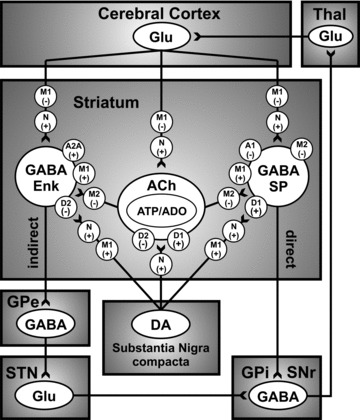
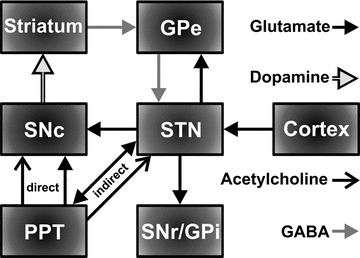
Dopaminergic neurons in the substantia nigra pars compacta and ventral tegmental area of the midbrain form the nigrostriatal and mesocorticolimbic dopaminergic pathways that, respectively, project to dorsal and ventral striatum (including prefrontal cortex). These midbrain dopaminergic nuclei and their respective forebrain and cortical target areas are well established as serving a critical role in mediating voluntary motor control, as evidenced in Parkinson's disease, and incentive-motivated behaviors and cognitive functions, as exhibited in drug addiction and schizophrenia, respectively. Although it cannot be disputed that excitatory and inhibitory amino acid-based neurotransmitters, such as glutamate and GABA, play a vital role in modulating activity of midbrain dopaminergic neurons, recent evidence suggests that acetylcholine may be as important in regulating dopaminergic transmission. Midbrain dopaminergic cell tonic and phasic activity is closely dependent upon projections from hindbrain pedunculopontine and the laterodorsal tegmental nuclei, which comprises the only known cholinergic inputs to these neurons. In close coordination with glutamatergic and GABAergic activity, these excitatory cholinergic projections activate nicotinic and muscarinic acetylcholine receptors within the substantia nigra and ventral tegmental area to modulate dopamine transmission in the dorsal/ventral striatum and prefrontal cortex. Additionally, acetylcholine-containing interneurons in the striatum also constitute an important neural substrate to provide further cholinergic modulation of forebrain striatal dopaminergic transmission. In this review, we examine neurological and psychopathological conditions associated with dysfunctions in the interaction of acetylcholine and dopamine and conventional and new pharmacological approaches to treat these disorders.
Conflict of interest statement
The authors have no conflict of interest.
Figures
References
-
- Albanese A, Minciacchi D. Organization of the ascending projections from the ventral tegmental area: A multiple fluorescent retrograde tracer study in the rat. J Comp Neurol 1983;216:406–420. - PubMed
-
- Bjorklund A, Lindvall O. Dopamine‐containing systems in the CNS. In: Bjorklund A, Hokfelt T, editors. Handbook of chemical neuroanatomy. Classical transmitters in the CNS (Volume 2). Amsterdam : Elsevier, 1984;55–122.
-
- Fallon GH, Moore RY. Catecholamine innervation of the basal forebrain. IV. Topography of the dopamine projection to the basal forebrain and neostriatum. J Comp Neurol 1978;180:545–580. - PubMed
-
- Le Moal M, Simon H. Mesocorticolimbic dopaminergic network: Functional and regulatory roles. Physiol Rev 1991;71:155–234. - PubMed
-
- Jellinger KA. Recent developments in the pathology of Parkinson's disease. J Neural Transm Suppl 2002;62:347–376. - PubMed
Publication types
MeSH terms
Substances
LinkOut - more resources
Full Text Sources
Other Literature Sources
Miscellaneous
