


Lead exposure during synaptogenesis alters vesicular proteins and impairs vesicular release: potential role of NMDA receptor-dependent BDNF signaling
- PMID: 20375082
- PMCID: PMC2886862
- DOI: 10.1093/toxsci/kfq111
Lead exposure during synaptogenesis alters vesicular proteins and impairs vesicular release: potential role of NMDA receptor-dependent BDNF signaling
Abstract
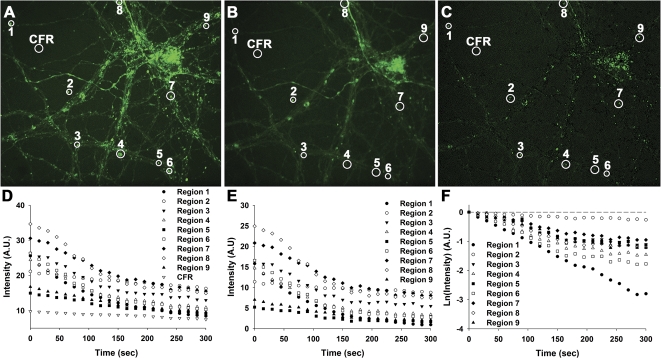
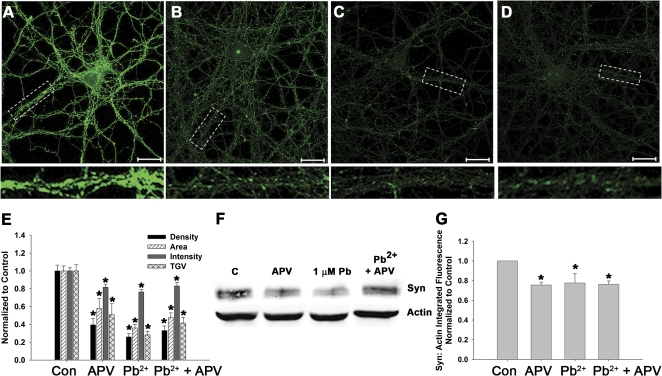
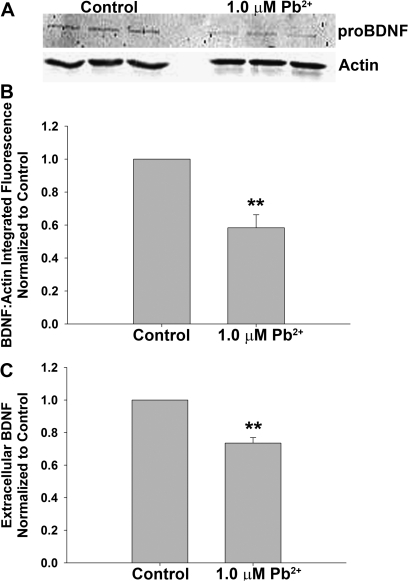
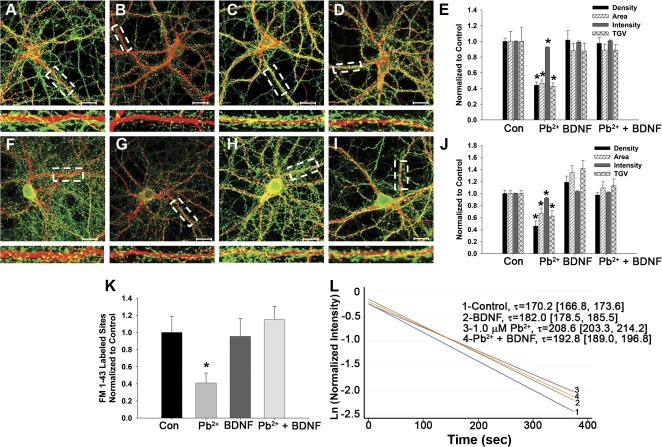
Lead (Pb(2+)) exposure is known to affect presynaptic neurotransmitter release in both in vivo and cell culture models. However, the precise mechanism by which Pb(2+) impairs neurotransmitter release remains unknown. In the current study, we show that Pb(2+) exposure during synaptogenesis in cultured hippocampal neurons produces the loss of synaptophysin (Syn) and synaptobrevin (Syb), two proteins involved in vesicular release. Pb(2+) exposure also increased the number of presynaptic contact sites. However, many of these putative presynaptic contact sites lack Soluble NSF attachment protein receptor complex proteins involved in vesicular exocytosis. Analysis of vesicular release using FM 1-43 dye confirmed that Pb(2+) exposure impaired vesicular release and reduced the number of fast-releasing sites. Because Pb(2+) is a potent N-methyl-D-aspartate receptor (NMDAR) antagonist, we tested the hypothesis that NMDAR inhibition may be producing the presynaptic effects. We show that NMDAR inhibition by aminophosphonovaleric acid mimics the presynaptic effects of Pb(2+) exposure. NMDAR activity has been linked to the signaling of the transsynaptic neurotrophin brain-derived neurotrophic factor (BDNF), and we observed that both the cellular expression of proBDNF and release of BDNF were decreased during the same period of Pb(2+) exposure. Furthermore, exogenous addition of BDNF rescued the presynaptic effects of Pb(2+). We suggest that the presynaptic deficits resulting from Pb(2+) exposure during synaptogenesis are mediated by disruption of NMDAR-dependent BDNF signaling.
Figures


References
-
- Alkondon M, Costa ACS, Radhakrishnan V, Aronstam RS, Albuquerque EX. Selective blockade of NMDA-activated channel currents may be implicated in learning deficits caused by lead. FEBS Lett. 1990;261:124–130. - PubMed
-
- Bouton CMLS, Frelin LP, Forde CE, Godwin HA, Pevsner J. Synaptotagmin I is a molecular target for lead. J. Neurochem. 2001;76:1724–1735. - PubMed
-
- Braga MFM, Pereira EFR, Albuquerque EX. Nanomolar concentrations of lead inhibit glutamatergic and GABAergic transmission in hippocampal neurons. Brain Res. 1999;826:22–34. - PubMed
-
- Bramham CR, Messaoudi E. BDNF function in adult synaptic plasticity: the synaptic consolidation hypothesis. Prog. Neurobiol. 2005;76:99–125. - PubMed
Publication types
MeSH terms
Substances
Grants and funding
LinkOut - more resources
Full Text Sources
Miscellaneous
