The RIM101 signal transduction pathway regulates Candida albicans virulence during experimental keratomycosis
- PMID: 20375342
- PMCID: PMC2941167
- DOI: 10.1167/iovs.09-4726
The RIM101 signal transduction pathway regulates Candida albicans virulence during experimental keratomycosis
Abstract
Purpose: To examine the role of the fungal RIM101 signal transduction pathway in the pathogenesis of Candida albicans keratitis.
Methods: C. albicans wild-type strain SC5314, prototrophic mutant control DAY185, and homozygous fungal mutants for the rim8, rim13, rim20, rim101, and phr1 genes were evaluated in vitro using proliferation and filamentation assays. Scarified corneas of BALB/c and C57BL/6J mice were topically inoculated and observed daily for keratitis severity. Corneal adaptation and pathogenicity were assessed ex vivo by maintaining infected porcine corneas for 3 days in an explantation culture system for histologic evaluation of hyphal penetration.
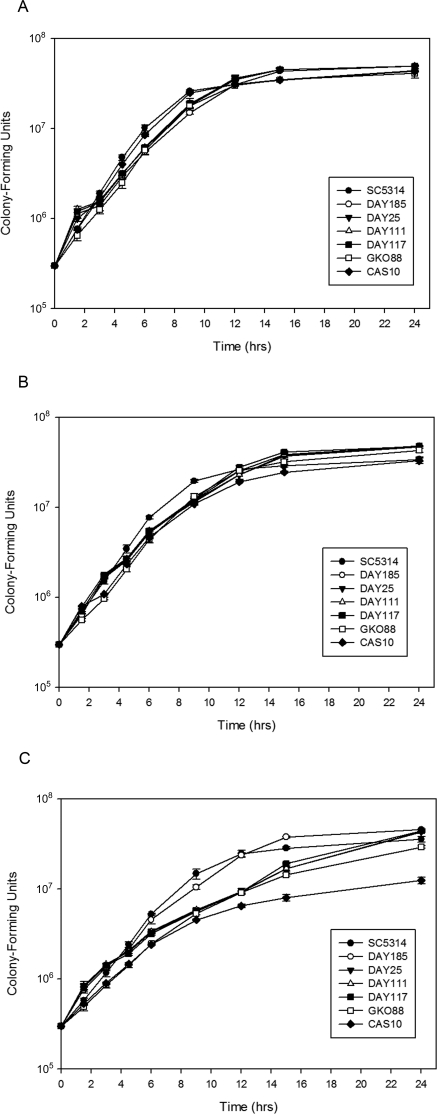
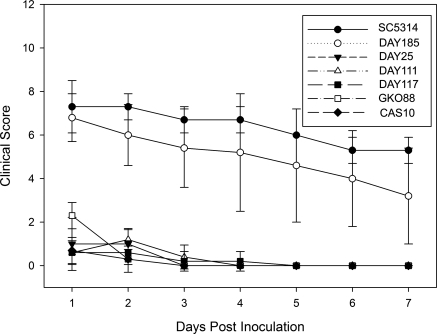
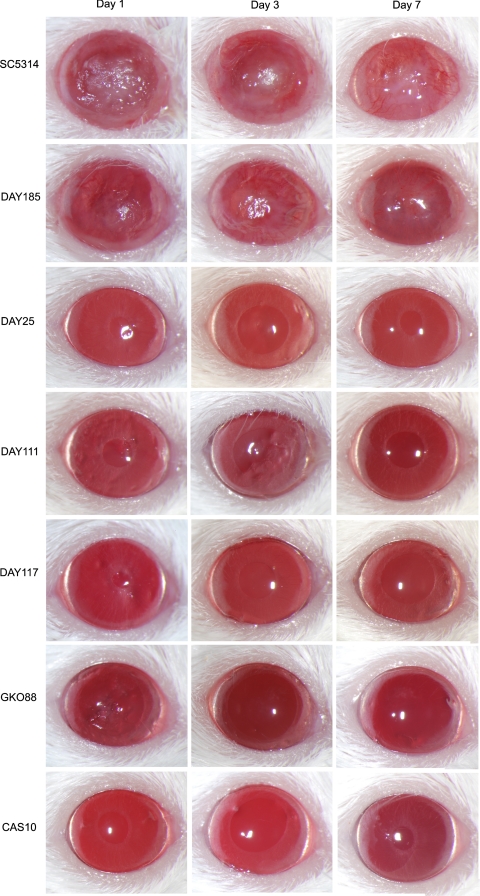
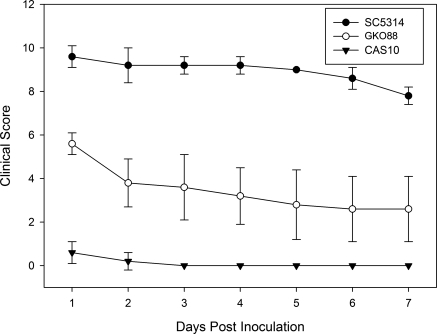
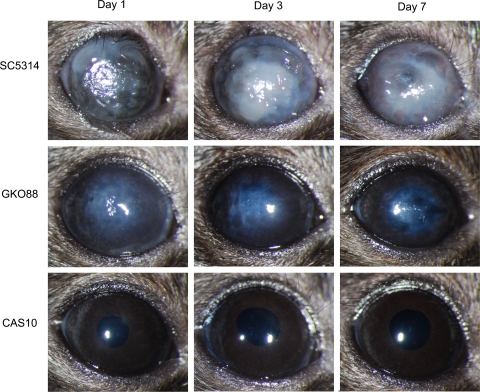
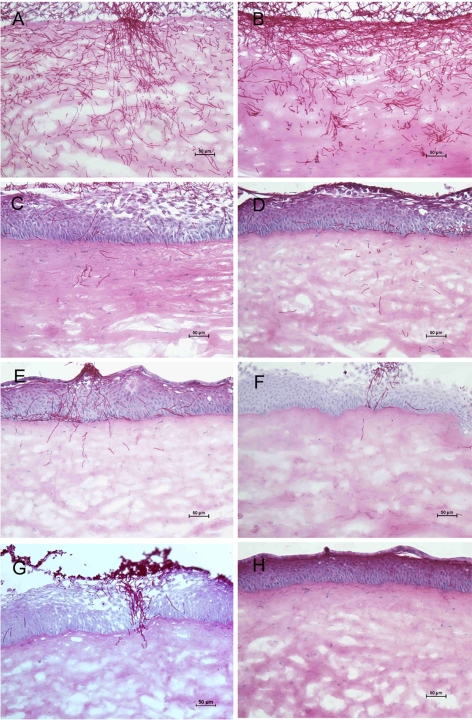
Results: All C. albicans strains had similar growth kinetics, and SC5314 and DAY185 demonstrated pH-induced filamentation. Fungal mutants had reduced hyphal formation at alkaline and neutral pH, but normal acidic assays ascertained that mutant strains did not have a generalized filamentation defect. SC5314 and DAY185 caused moderate to severe keratitis in mice, whereas fungal strains lacking constituents of the RIM101 pathway had significantly (P<0.05) attenuated severity in vivo. Three days after inoculation of porcine corneas, SC5314 and DAY185 produced hyphae that penetrated 28% and 25%, respectively, of the corneal thickness, and all five mutant strains showed significantly (P<0.05) less stromal penetration.
Conclusions: The RIM101 signal transduction pathway plays an important role in the development of C. albicans keratitis. The fungal pathway intermediates Rim8p, Rim13p, Rim20p, and Rim101p and the downstream cell-wall protein Phr1p are pivotal in the process of corneal invasion by C. albicans.
Figures
References
-
- Ruhnke M. Epidemiology of Candida albicans infections and role of non-Candida albicans yeasts. Curr Drug Targets. 2006;7:495–504 - PubMed
-
- Shah CP, McKey J, Spirn MJ, Maguire J. Ocular candidiasis: a review. Br J Ophthalmol. 2008;92:466–468 - PubMed
-
- Mitchell AP. Dimorphism and virulence in Candida albicans. Curr Opin Microbiol. 1998;1:687–692 - PubMed
Publication types
MeSH terms
Substances
Grants and funding
LinkOut - more resources
Full Text Sources
Medical
Molecular Biology Databases