


One Health approach to identify research needs in bovine and human babesioses: workshop report
- PMID: 20377902
- PMCID: PMC2859369
- DOI: 10.1186/1756-3305-3-36
One Health approach to identify research needs in bovine and human babesioses: workshop report
Abstract
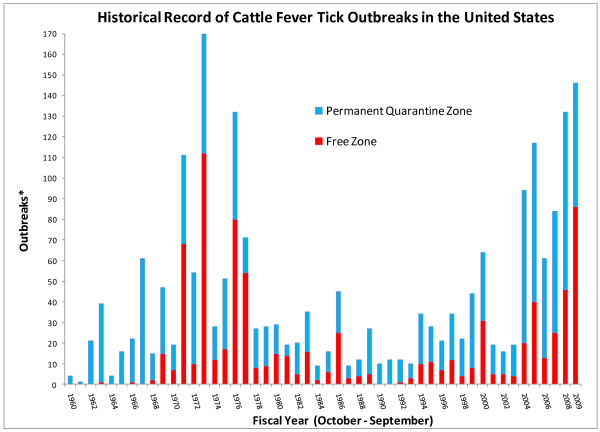
Background: Babesia are emerging health threats to humans and animals in the United States. A collaborative effort of multiple disciplines to attain optimal health for people, animals and our environment, otherwise known as the One Health concept, was taken during a research workshop held in April 2009 to identify gaps in scientific knowledge regarding babesioses. The impetus for this analysis was the increased risk for outbreaks of bovine babesiosis, also known as Texas cattle fever, associated with the re-infestation of the U.S. by cattle fever ticks.
Results: The involvement of wildlife in the ecology of cattle fever ticks jeopardizes the ability of state and federal agencies to keep the national herd free of Texas cattle fever. Similarly, there has been a progressive increase in the number of cases of human babesiosis over the past 25 years due to an increase in the white-tailed deer population. Human babesiosis due to cattle-associated Babesia divergens and Babesia divergens-like organisms have begun to appear in residents of the United States. Research needs for human and bovine babesioses were identified and are presented herein.
Conclusions: The translation of this research is expected to provide veterinary and public health systems with the tools to mitigate the impact of bovine and human babesioses. However, economic, political, and social commitments are urgently required, including increased national funding for animal and human Babesia research, to prevent the re-establishment of cattle fever ticks and the increasing problem of human babesiosis in the United States.
Figures
References
LinkOut - more resources
Full Text Sources
Miscellaneous
