


Seven direct methods for measuring HDL and LDL cholesterol compared with ultracentrifugation reference measurement procedures
- PMID: 20378768
- PMCID: PMC4687457
- DOI: 10.1373/clinchem.2009.142810
Seven direct methods for measuring HDL and LDL cholesterol compared with ultracentrifugation reference measurement procedures
Abstract
Background: Methods from 7 manufacturers and 1 distributor for directly measuring HDL cholesterol (C) and LDL-C were evaluated for imprecision, trueness, total error, and specificity in nonfrozen serum samples.
Methods: We performed each direct method according to the manufacturer's instructions, using a Roche/Hitachi 917 analyzer, and compared the results with those obtained with reference measurement procedures for HDL-C and LDL-C. Imprecision was estimated for 35 runs performed with frozen pooled serum specimens and triplicate measurements on each individual sample. Sera from 37 individuals without disease and 138 with disease (primarily dyslipidemic and cardiovascular) were measured by each method. Trueness and total error were evaluated from the difference between the direct methods and reference measurement procedures. Specificity was evaluated from the dispersion in differences observed.
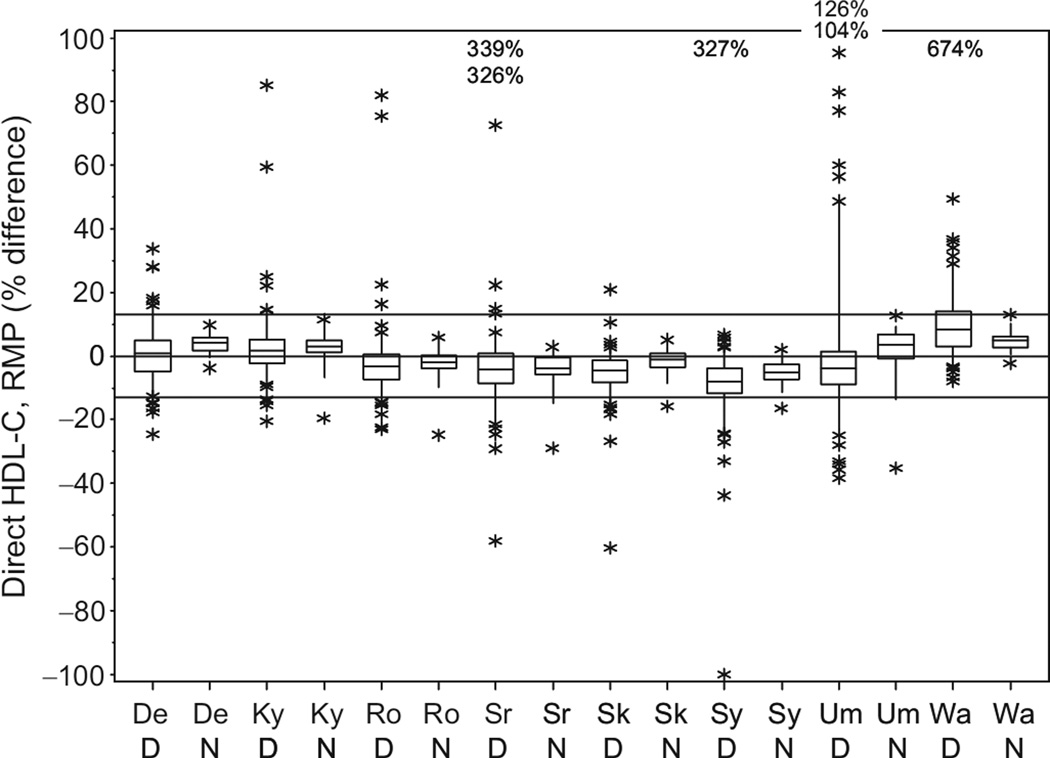
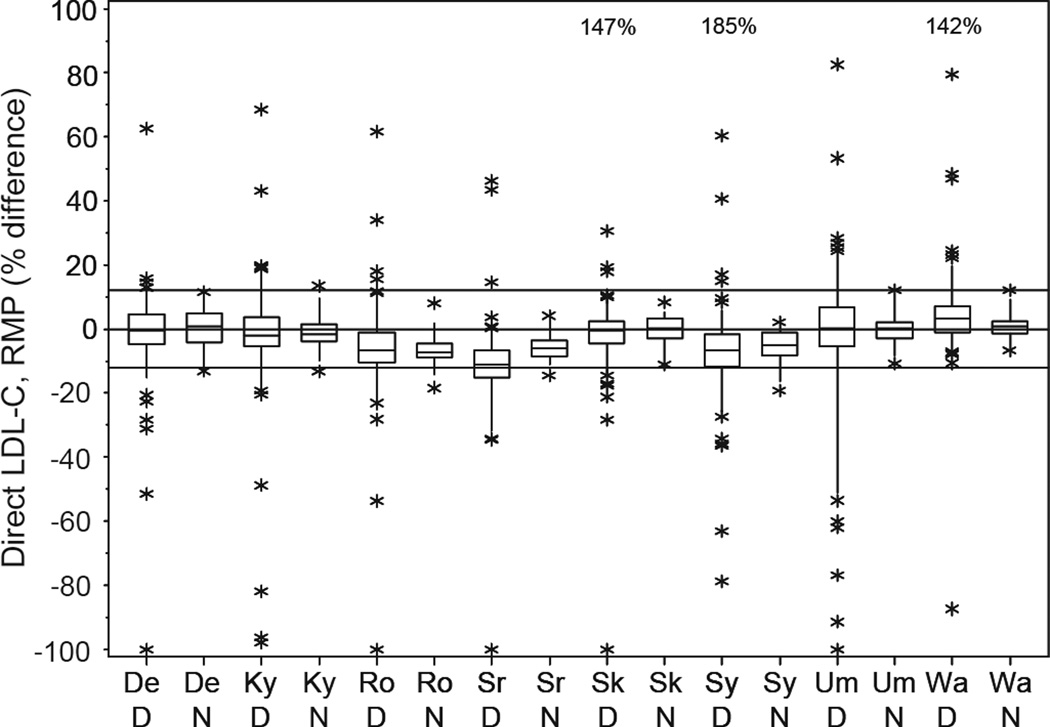
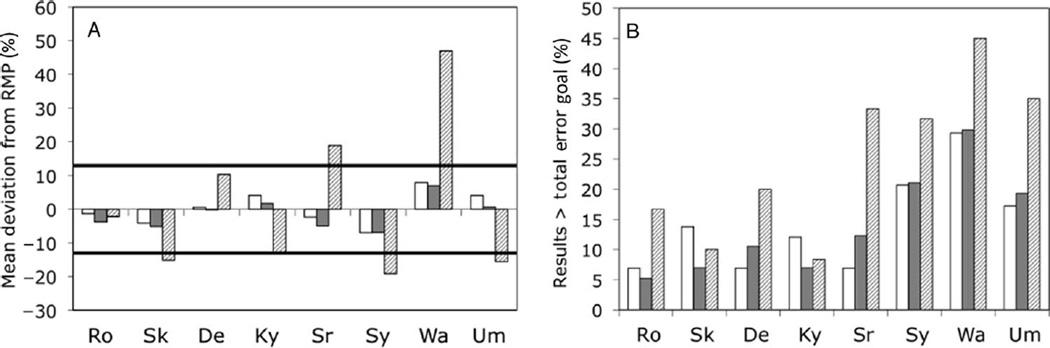
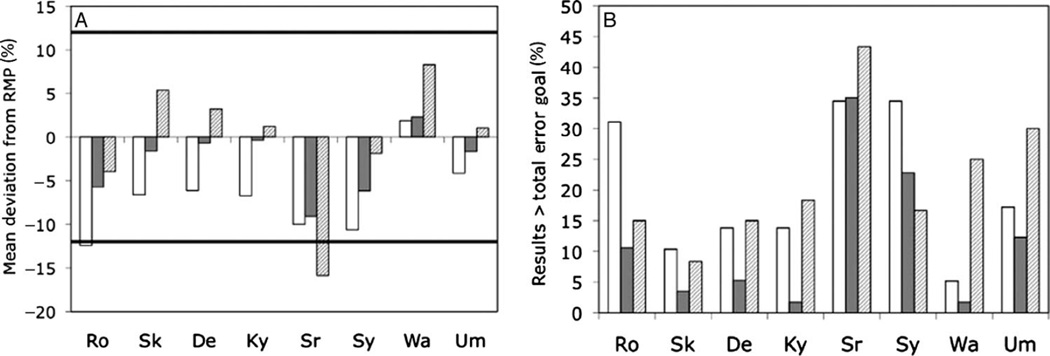
Results: Imprecision data based on 4 frozen serum pools showed total CVs <3.7% for HDL-C and <4.4% for LDL-C. Bias for the nondiseased group ranged from -5.4% to 4.8% for HDL-C and from -6.8% to 1.1% for LDL-C, and for the diseased group from -8.6% to 8.8% for HDL-C and from -11.8% to 4.1% for LDL-C. Total error for the nondiseased group ranged from -13.4% to 13.6% for HDL-C and from -13.3% to 13.5% for LDL-C, and for the diseased group from -19.8% to 36.3% for HDL-C and from -26.6% to 31.9% for LDL-C.
Conclusions: Six of 8 HDL-C and 5 of 8 LDL-C direct methods met the National Cholesterol Education Program total error goals for nondiseased individuals. All the methods failed to meet these goals for diseased individuals, however, because of lack of specificity toward abnormal lipoproteins.
Conflict of interest statement
Figures
Comment in
-
Limitations of direct methods and the reference method for measuring HDL and LDL cholesterol.Clin Chem. 2011 Jul;57(7):1081-3; author reply 1083. doi: 10.1373/clinchem.2010.159483. Epub 2011 Mar 28. Clin Chem. 2011. PMID: 21444737 No abstract available.
References
-
- Executive summary of the third report of the National Cholesterol Education Program (NCEP) expert panel on detection, evaluation, and treatment of high blood cholesterol in adults (Adult Treatment Panel III) JAMA. 2001;285:2486–2497. - PubMed
-
- Daniels SR, Greer FR Committee on Nutrition. Lipid screening and cardiovascular health in childhood. Pediatrics. 2008;122:198–208. - PubMed
-
- National Cholesterol Education Program. Recommendations on lipoprotein measurement: from the Working Group on Lipoprotein Measurement. Bethesda (MD): NIH, National Heart, Lung, and Blood Institute; 1995. [Accessed April 2010]. p. 186. Available at: www.lassa.org.za/guidelines/lipoprot.pdf. NIH publication no. 95-3044.
-
- Nauck M, Warnick GR, Rifai N. Methods for measurement of LDL-cholesterol: a critical assessment of direct measurement by homogeneous assays versus calculation. Clin Chem. 2002;48:236–254. - PubMed
-
- Warnick GR, Nauck M, Rifai N. Evolution of methods for measurement of HDL-cholesterol: from ultracentrifugation to homogeneous assays. Clin Chem. 2001;47:1579–1596. - PubMed
Publication types
MeSH terms
Substances
Grants and funding
LinkOut - more resources
Full Text Sources
Other Literature Sources
Medical
Miscellaneous
