


Risky car following in abstinent users of MDMA
- PMID: 20380914
- PMCID: PMC3108507
- DOI: 10.1016/j.aap.2009.04.015
Risky car following in abstinent users of MDMA
Abstract
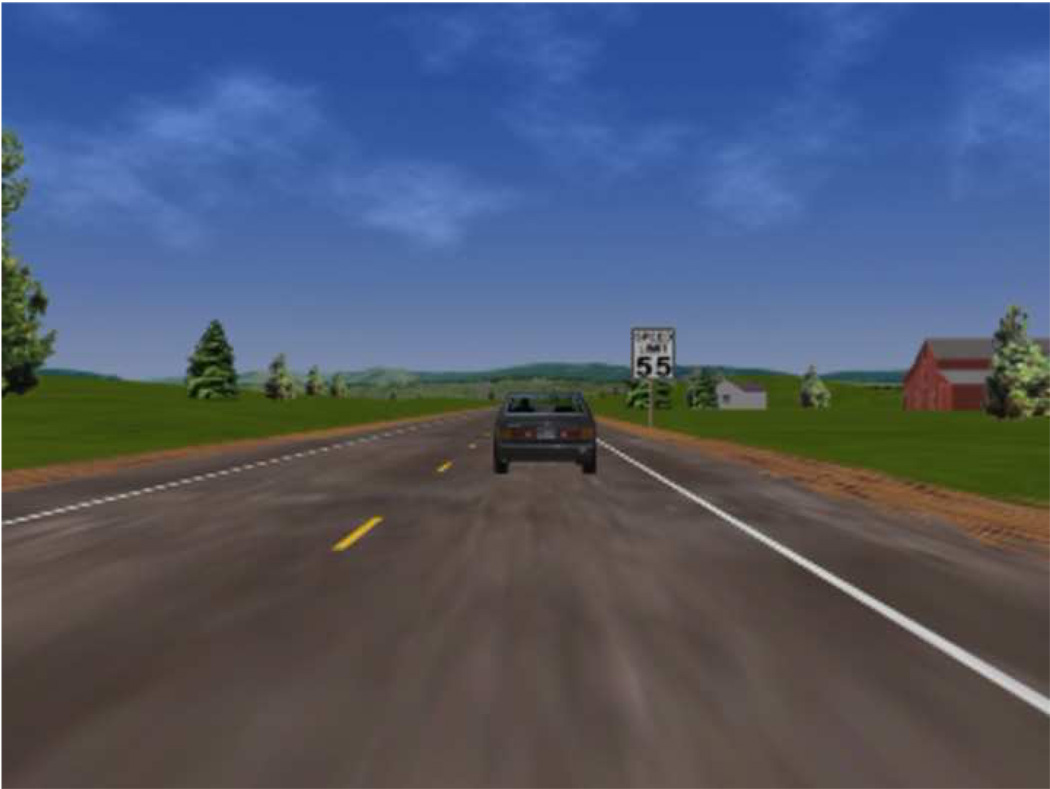
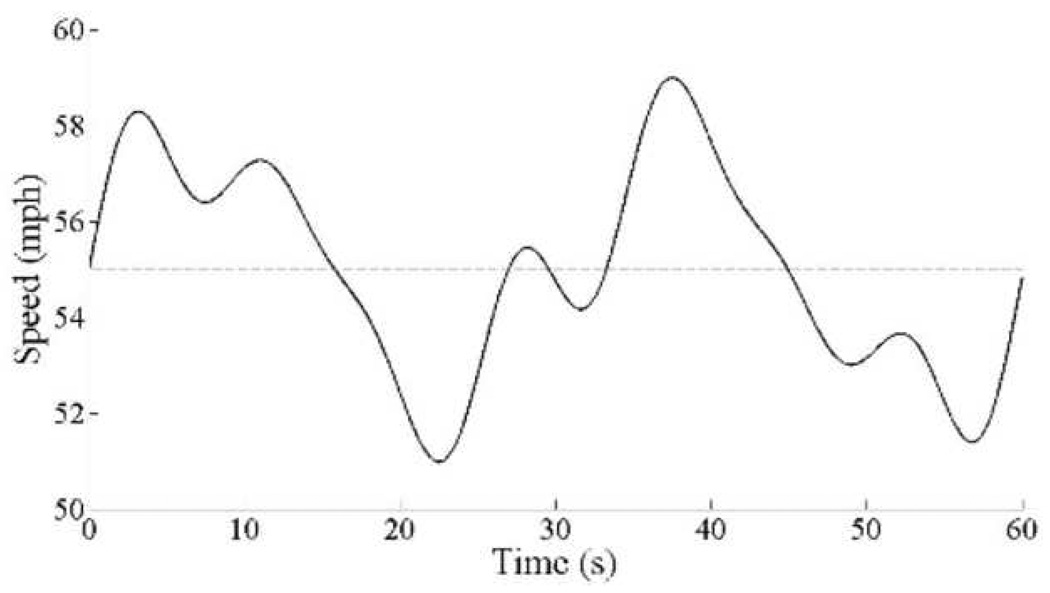
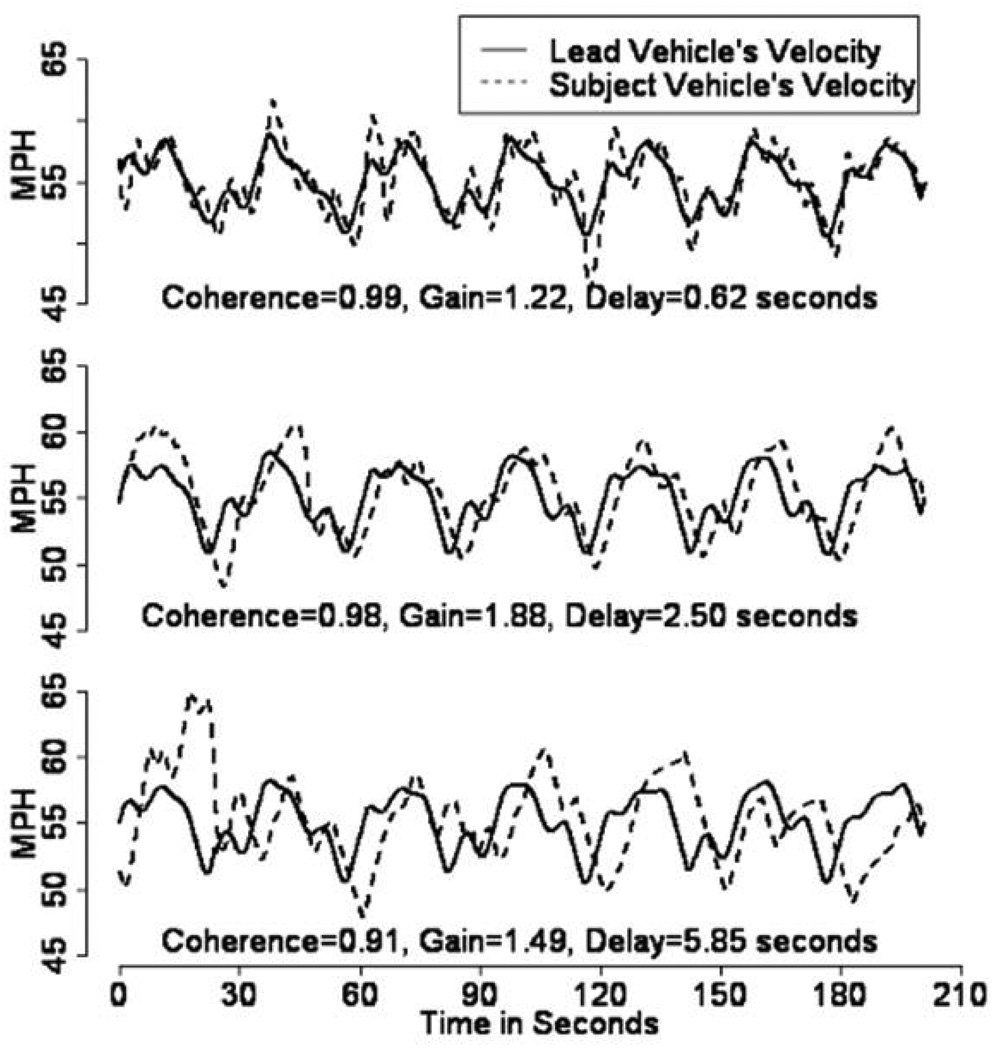
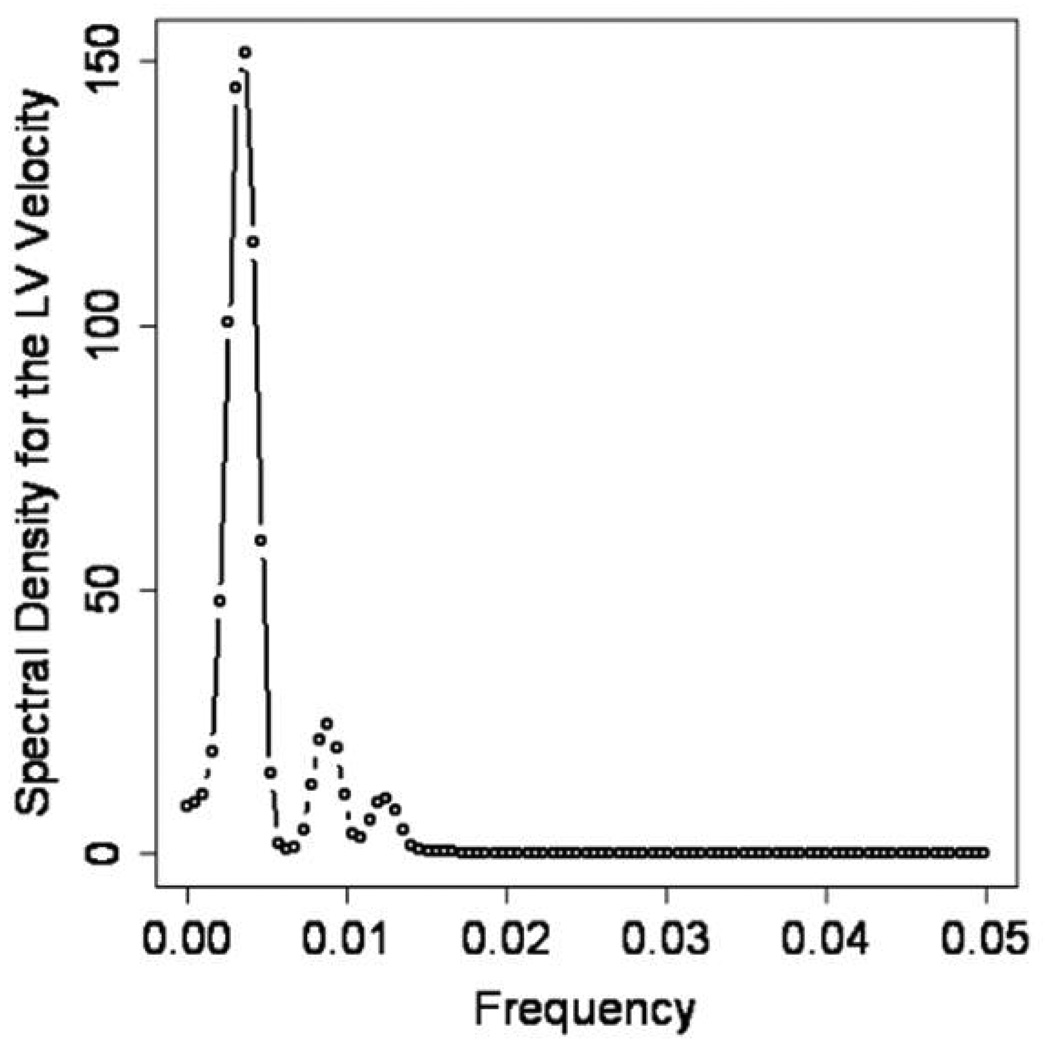
Ecstasy (MDMA) use raises concerns because of its association with risky driving. We evaluated driving performance and risk taking in abstinent recreational MDMA users in a simulated car following task that required continuous attention and vigilance. Drivers were asked to follow two car lengths behind a lead vehicle (LV). Three sinusoids generated unpredictable LV velocity changes. Drivers could mitigate risk by following further behind the erratic LV. From vehicle trajectory data we performed a Fourier analysis to derive measures of coherence, gain, and delay. These measures and headway distance were compared between the different groups. All MDMA drivers met coherence criteria indicating cooperation in the car following task. They matched periodic changes in LV velocity similar to controls (abstinent THC users, abstinent alcohol users, and non-drug users), militating against worse vigilance. While all participants traveled approximately 55 mph (89 kph), the MDMA drivers followed 64 m closer to the LV and demonstrated 1.04 s shorter delays to LV velocity changes than other driver groups. The simulated car following task safely discriminated between driving behavior in abstinent MDMA users and controls. Abstinent MDMA users do not perform worse than controls, but may assume extra risk. The control theory framework used in this study revealed behaviors that might not otherwise be evident.
Copyright (c) 2009 Elsevier Ltd. All rights reserved.
Figures
References
-
- Andersen GJ, Ni R. The spatial extent of attention during driving. 3rd International Driving Symposium on Human Factors in Driver Assessment, Training and Vehicle Design; 2005.
-
- Bechara A. Risky business: emotion, decision-making and addiction. Journal of Gambling Studies. 2003;19:23–51. - PubMed
-
- Bechara A. Decision-making, impulse control, and loss of willpower to resist drugs: A neurocognitive perspective. Nature Neuroscience. 2005;8(11):1458–1463. - PubMed
-
- Bolla K, et al. Memory impairment in abstinent MDMA ("ecstasy") users [see comments] Neurology. 1998;51:1532–1537. - PubMed
-
- Brookhuis K, et al. Measuring driving performance by car-following in traffic. Ergonomics. 1994;37(3):427–434.
Publication types
MeSH terms
Substances
Grants and funding
LinkOut - more resources
Full Text Sources
Medical
Miscellaneous
