


Dissecting grain yield pathways and their interactions with grain dry matter content by a two-step correlation approach with maize seedling transcriptome
- PMID: 20385002
- PMCID: PMC2923537
- DOI: 10.1186/1471-2229-10-63
Dissecting grain yield pathways and their interactions with grain dry matter content by a two-step correlation approach with maize seedling transcriptome
Abstract
Background: The importance of maize for human and animal nutrition, but also as a source for bio-energy is rapidly increasing. Maize yield is a quantitative trait controlled by many genes with small effects, spread throughout the genome. The precise location of the genes and the identity of the gene networks underlying maize grain yield is unknown. The objective of our study was to contribute to the knowledge of these genes and gene networks by transcription profiling with microarrays.
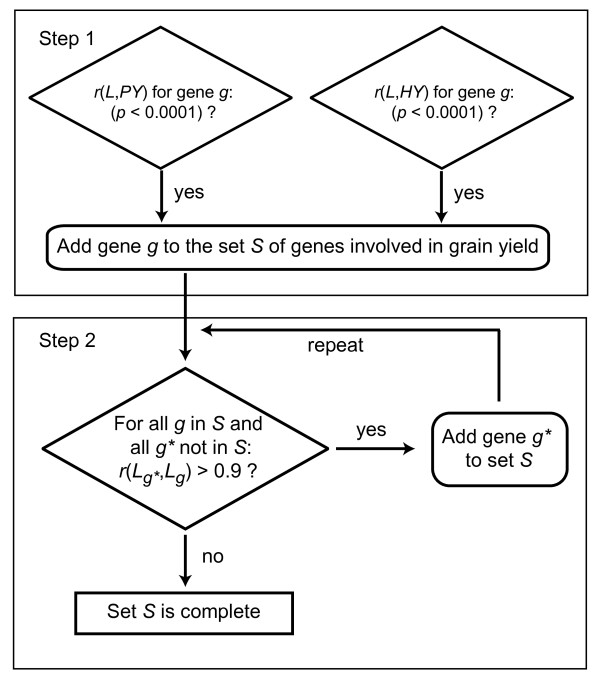
Results: We assessed the grain yield and grain dry matter content (an indicator for early maturity) of 98 maize hybrids in multi-environment field trials. The gene expression in seedlings of the parental inbred lines, which have four different genetic backgrounds, was assessed with genome-scale oligonucleotide arrays. We identified genes associated with grain yield and grain dry matter content using a newly developed two-step correlation approach and found overlapping gene networks for both traits. The underlying metabolic pathways and biological processes were elucidated. Genes involved in sucrose degradation and glycolysis, as well as genes involved in cell expansion and endocycle were found to be associated with grain yield.
Conclusions: Our results indicate that the capability of providing energy and substrates, as well as expanding the cell at the seedling stage, highly influences the grain yield of hybrids. Knowledge of these genes underlying grain yield in maize can contribute to the development of new high yielding varieties.
Figures


References
-
- Rosegrant MW, Paisner MS, Meijer S, Witcover J. Global food projections to 2020: Emerging trends and alternative futures. Washington, D. C: International Food Policy Research Institute; 2001.
-
- Duvick DN. In: Advances in Agronomy. Sparks DL, editor. Vol. 86. New York: Elsevier Inc; 2005. The contribution of breeding to yield advances in maize (Zea mays L.) pp. 83–145. full_text.
-
- Tuberosa R, Salvi S. In: Handbook of Maize: Its Biology. Bennetzen JL, Hake SC, editor. New York: Springer; 2009. QTL for Agronomic Traits in Maize Production; pp. 501–541. full_text.
Publication types
MeSH terms
Substances
LinkOut - more resources
Full Text Sources
Molecular Biology Databases
