


Tumor infiltrating lymphocytes: an intriguing player in the survival of colorectal cancer patients
- PMID: 20385003
- PMCID: PMC2864219
- DOI: 10.1186/1471-2172-11-19
Tumor infiltrating lymphocytes: an intriguing player in the survival of colorectal cancer patients
Abstract
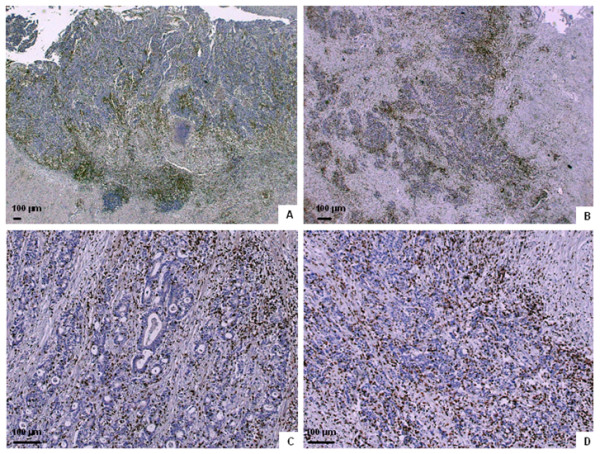
Background: There is growing evidence that both local and systemic inflammatory responses play an important role in the progression of a variety of solid tumors. Colorectal cancer results from the cumulative effect of sequential genetic alterations, leading to the expression of tumor associated antigens possibly inducing a cellular anti-tumor immune response. It is well recognized that cytotoxic lymphocytes constitute one of the most important effector mechanisms of anti-tumor-immunity. However, their potential prognostic influence in colorectal cancer remains controversial. Aim of the study was to examine infiltration of CD3+ and CD8+ lymphocytes in colorectal cancer and their prognostic potential.Two-hundred-fifteen colorectal cancer cases, previously analyzed for microsatellite instability (MSI), were selected for immunohistochemical detection of CD3+, CD8+ infiltration and the expression of granzyme B. Prognostic relevance was assessed by survival analysis.
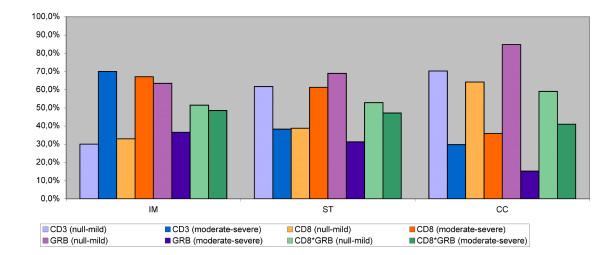
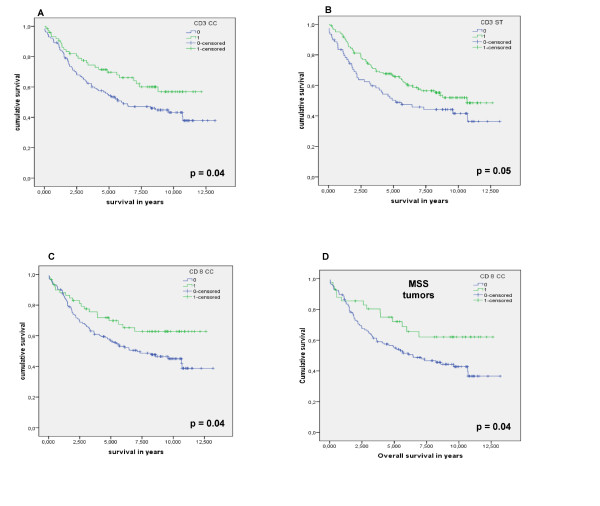
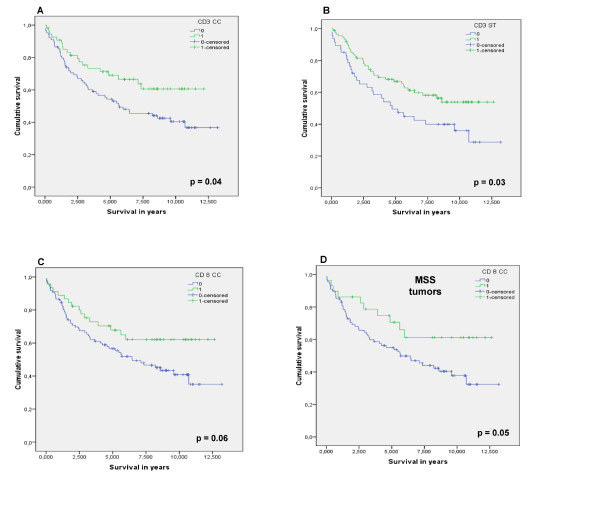
Results: Strong correlations were found between the infiltration of lymphocytes and several clinicopathological variables. Survival analysis revealed that intra-epithelial infiltration of CD3+ and CD8+ T lymphocytes and stromal infiltration of CD3+ lymphocytes had a major impact on the patients' overall survival in the univariate analysis, however independent of their association with MSI-status. In addition, it was also demonstrated that there was an important disease specific survival advantage for patients with microsatellite stable (MSS) tumors containing intraepithelial CD8+ tumor infiltrating lymphocytes. When samples were analyzed for colon cancer and rectal cancer separately, the results of the overall population were confirmed in colon cancer only. When entered into a multiple Cox regression analysis adjusting for other possible important confounding factors, the strong impact of lymphocyte infiltration on overall survival was not maintained. Only early stage and young age (borderline significant for overall population only) were associated with a better overall survival (early disease with disease-free survival also).
Conclusions: In conclusion our results suggest a role for infiltrating CD3+ and CD8+ T lymphocytes in colorectal cancer whereby tumor infiltration could reflect a general principle of antitumor immunity, irrespective of the MSI-status.
Figures
References
Publication types
MeSH terms
Substances
LinkOut - more resources
Full Text Sources
Other Literature Sources
Medical
Research Materials
