


Variants of contextual fear conditioning are differentially impaired in the juvenile rat by binge ethanol exposure on postnatal days 4-9
- PMID: 20385174
- PMCID: PMC3918449
- DOI: 10.1016/j.bbr.2010.04.003
Variants of contextual fear conditioning are differentially impaired in the juvenile rat by binge ethanol exposure on postnatal days 4-9
Abstract
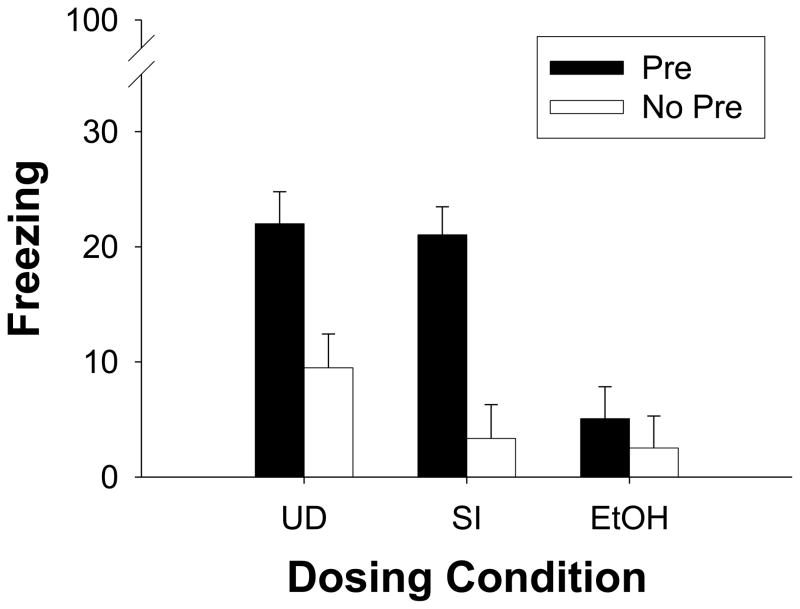
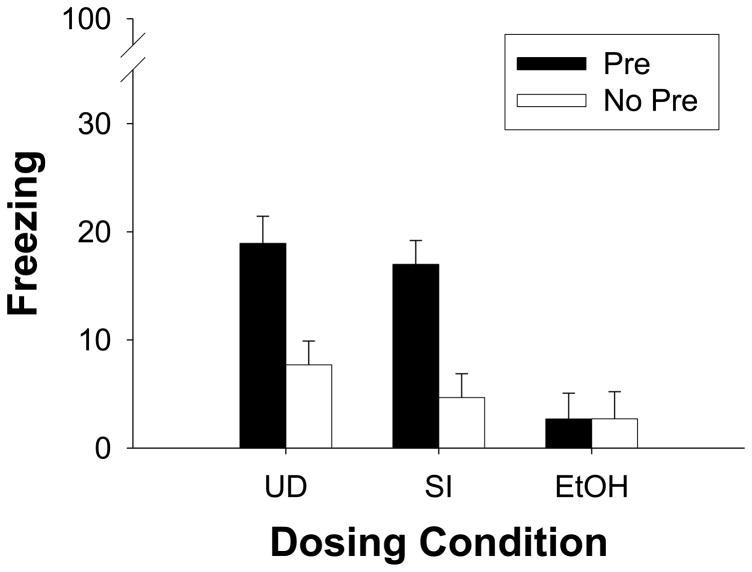
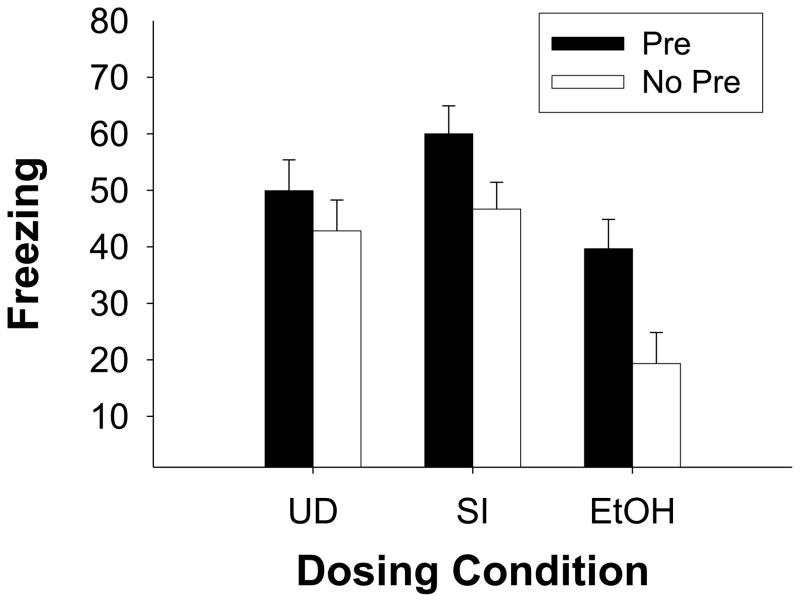
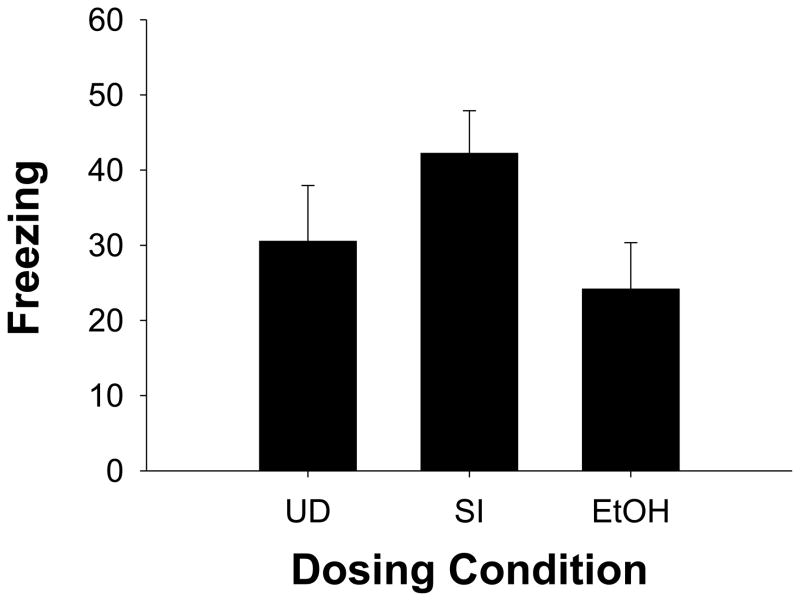
Neonatal ethanol exposure in the rat is known to partially damage the hippocampus, but such exposure causes only modest or inconsistent deficits on hippocampus-dependent behavioral tasks. This may reflect variable sensitivity of these tasks or residual function following partial hippocampal injury. The context preexposure facilitation effect (CPFE) is a variant of context conditioning in which context exposure and immediate shock occur on successive occasions. During testing, preexposed rats freeze more than non-preexposed controls. The CPFE is more sensitive to anterograde hippocampal injury than standard contextual fear conditioning (e.g., Rudy JW, O'Reilly RC. Conjunctive representations, the hippocampus, and contextual fear conditioning. Cogn Affect Behav Neurosci 2001;1:66-82). We report that rats exposed to a high binge dose of ethanol (5.25g/kg/day) over postnatal days [PD] 4-9 failed to demonstrate the CPFE when preexposed to the conditioning context on PD31, relative to sham-intubated and undisturbed controls (Experiment 1). Neonatal alcohol disrupted conditioned freezing to a much lesser extent relative to controls when context preexposure was followed by a standard context conditioning trial rather than immediate shock (Experiment 2). Fear conditioning to a discrete auditory cue (tone) was unaffected by neonatal alcohol exposure ruling out possible performance effects (Experiment 3). These findings suggest that the CPFE is an especially sensitive task for detecting hippocampal injury produced by neonatal alcohol. Mixed results with other tasks may reflect residual hippocampal function and/or the use of alternate neurobehavioral systems or "strategies" following alcohol-induced brain damage.
Copyright 2010 Elsevier B.V. All rights reserved.
Figures
References
-
- Abel EL, Sokol RJ. Fetal alcohol syndrome is now leading cause of mental retardation. Lancet. 1986;2:1222. - PubMed
-
- Allan AM, Chynoweth J, Tyler LA, Caldwell KK. A mouse model of prenatal ethanol exposure using a voluntary drinking paradigm. Alcoholism-Clinical and Experimental Research. 2003;27:2009–2016. - PubMed
-
- Anagnostaras SG, Gale GD, Fanselow MS. Hippocampus and contextual fear conditioning: recent controversies and advances. Hippocampus. 2001;11:8–17. - PubMed
-
- Barrientos RM, O’Reilly RC, Rudy JW. Memory for context is impaired by injecting anisomycin into dorsal hippocampus following context exploration. Behav Brain Res. 2002;134:299–306. - PubMed
Publication types
MeSH terms
Substances
Grants and funding
LinkOut - more resources
Full Text Sources
