Food combination and Alzheimer disease risk: a protective diet
- PMID: 20385883
- PMCID: PMC3029147
- DOI: 10.1001/archneurol.2010.84
Food combination and Alzheimer disease risk: a protective diet
Abstract
Objective: To assess the association between food combination and Alzheimer disease (AD) risk. Because foods are not consumed in isolation, dietary pattern (DP) analysis of food combination, taking into account the interactions among food components, may offer methodological advantages.
Design: Prospective cohort study.
Setting: Northern Manhattan, New York, New York.
Patients or other participants: Two thousand one hundred forty-eight community-based elderly subjects (aged > or = 65 years) without dementia in New York provided dietary information and were prospectively evaluated with the same standardized neurological and neuropsychological measures approximately every 1.5 years. Using reduced rank regression, we calculated DPs based on their ability to explain variation in 7 potentially AD-related nutrients: saturated fatty acids, monounsaturated fatty acids, omega-3 polyunsaturated fatty acids, omega-6 polyunsaturated fatty acids, vitamin E, vitamin B(12), and folate. The associations of reduced rank regression-derived DPs with AD risk were then examined using a Cox proportional hazards model. Main Outcome Measure Incident AD risk.
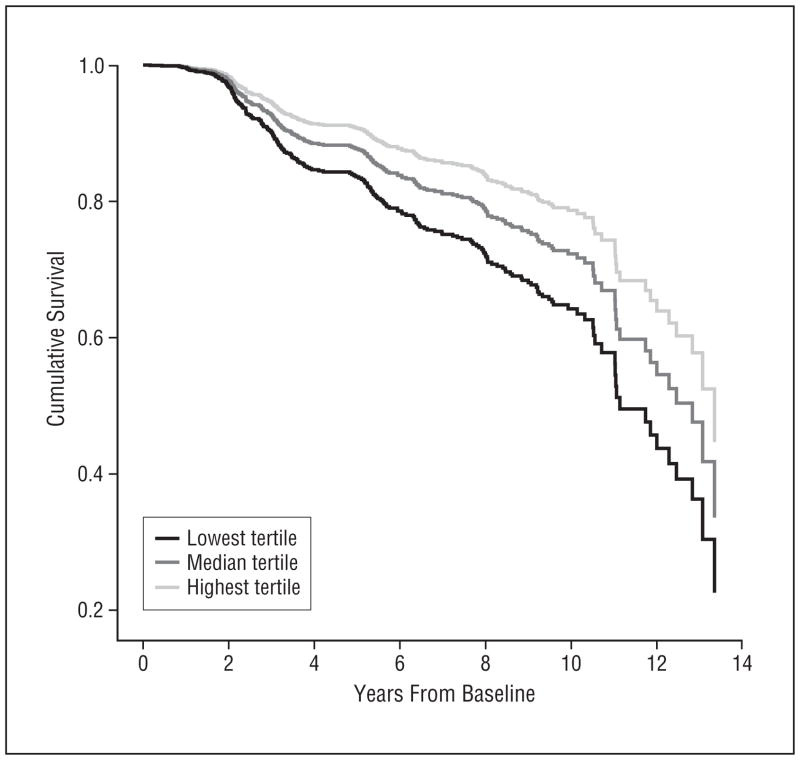
Results: Two hundred fifty-three subjects developed AD during a follow-up of 3.9 years. We identified a DP strongly associated with lower AD risk: compared with subjects in the lowest tertile of adherence to this pattern, the AD hazard ratio (95% confidence interval) for subjects in the highest DP tertile was 0.62 (0.43-0.89) after multivariable adjustment (P for trend = .01). This DP was characterized by higher intakes of salad dressing, nuts, fish, tomatoes, poultry, cruciferous vegetables, fruits, and dark and green leafy vegetables and a lower intake of high-fat dairy products, red meat, organ meat, and butter.
Conclusion: Simultaneous consideration of previous knowledge regarding potentially AD-related nutrients and multiple food groups can aid in identifying food combinations that are associated with AD risk.
Figures
Comment in
-
Diet and prevention of Alzheimer disease.JAMA. 2010 Jun 23;303(24):2519-20. doi: 10.1001/jama.2010.844. JAMA. 2010. PMID: 20578272 No abstract available.
-
Dietary patterns and protection against Alzheimer disease and cognitive decline.Arch Neurol. 2010 Oct;67(10):1285-6; author reply 1287-8. doi: 10.1001/archneurol.2010.244. Arch Neurol. 2010. PMID: 20937964 No abstract available.
-
Potential role of iron in a Mediterranean-style diet.Arch Neurol. 2010 Oct;67(10):1286-7; author reply 1287-8. doi: 10.1001/archneurol.2010.245. Arch Neurol. 2010. PMID: 20937965 No abstract available.
References
-
- Hu FB. Dietary pattern analysis: a new direction in nutritional epidemiology. Curr Opin Lipidol. 2002;13(1):3–9. - PubMed
-
- Huijbregts PP, Feskens EJ, Rasanen L, et al. Dietary patterns and cognitive function in elderly men in Finland, Italy and The Netherlands. Eur J Clin Nutr. 1998;52(11):826–831. - PubMed
-
- Corrêa Leite ML, Nicolosi A, Cristina S, Hauser WA, Nappi G. Nutrition and cognitive deficit in the elderly: a population study. Eur J Clin Nutr. 2001;55(12):1053–1058. - PubMed
Publication types
MeSH terms
Substances
Grants and funding
LinkOut - more resources
Full Text Sources
Other Literature Sources
Medical