


Identification of candidate growth promoting genes in ovarian cancer through integrated copy number and expression analysis
- PMID: 20386695
- PMCID: PMC2851616
- DOI: 10.1371/journal.pone.0009983
Identification of candidate growth promoting genes in ovarian cancer through integrated copy number and expression analysis
Erratum in
- PLoS One. 2011;6(7). doi:10.1371/annotation/4056b510-e92d-4472-871f-2cf1f6834689
Abstract
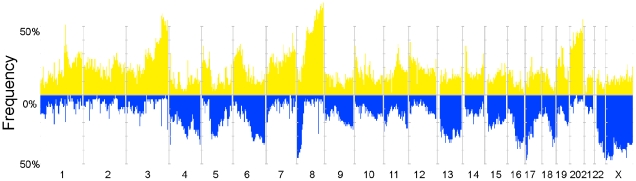
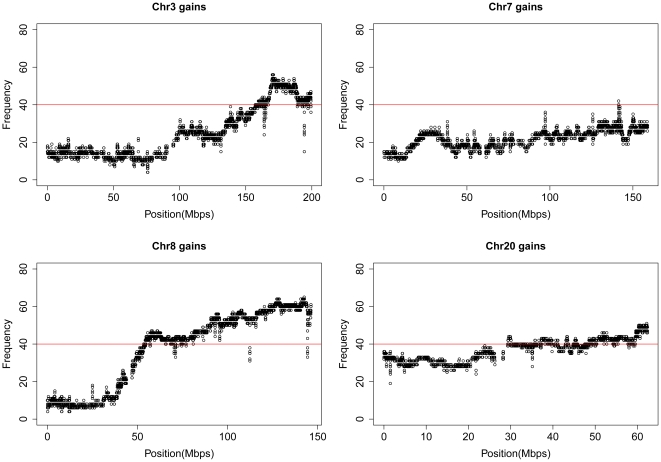
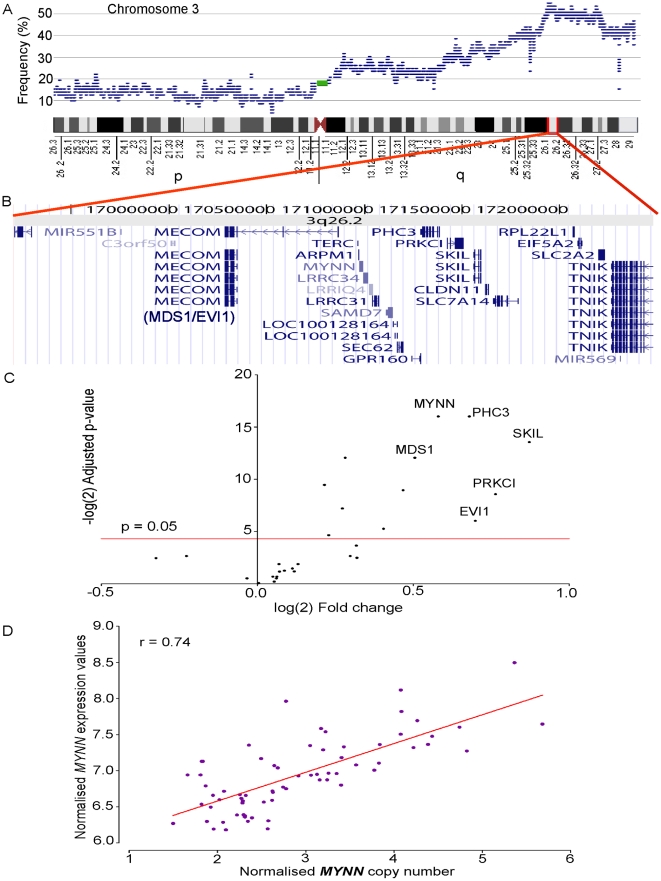
Ovarian cancer is a disease characterised by complex genomic rearrangements but the majority of the genes that are the target of these alterations remain unidentified. Cataloguing these target genes will provide useful insights into the disease etiology and may provide an opportunity to develop novel diagnostic and therapeutic interventions. High resolution genome wide copy number and matching expression data from 68 primary epithelial ovarian carcinomas of various histotypes was integrated to identify genes in regions of most frequent amplification with the strongest correlation with expression and copy number. Regions on chromosomes 3, 7, 8, and 20 were most frequently increased in copy number (> 40% of samples). Within these regions, 703/1370 (51%) unique gene expression probesets were differentially expressed when samples with gain were compared to samples without gain. 30% of these differentially expressed probesets also showed a strong positive correlation (r > or =0.6) between expression and copy number. We also identified 21 regions of high amplitude copy number gain, in which 32 known protein coding genes showed a strong positive correlation between expression and copy number. Overall, our data validates previously known ovarian cancer genes, such as ERBB2, and also identified novel potential drivers such as MYNN, PUF60 and TPX2.
Conflict of interest statement
Figures
References
-
- Gyorffy B, Dietel M, Fekete T, Lage H. A snapshot of microarray-generated gene expression signatures associated with ovarian carcinoma. Int J Gynecol Cancer. 2008;18:1215–1233. - PubMed
-
- Tothill RW, Tinker AV, George J, Brown R, Fox SB, et al. Novel molecular subtypes of serous and endometrioid ovarian cancer linked to clinical outcome. Clin Cancer Res. 2008;14:5198–5208. - PubMed
-
- Gorringe KL, Jacobs S, Thompson ER, Sridhar A, Qiu W, et al. High-resolution single nucleotide polymorphism array analysis of epithelial ovarian cancer reveals numerous microdeletions and amplifications. Clin Cancer Res. 2007;13:4731–4739. - PubMed
-
- Pollack JR, Perou CM, Alizadeh AA, Eisen MB, Pergamenschikov A, et al. Genome-wide analysis of DNA copy-number changes using cDNA microarrays. 1999;23:41–46. - PubMed
Publication types
MeSH terms
Substances
LinkOut - more resources
Full Text Sources
Other Literature Sources
Medical
Molecular Biology Databases
Research Materials
Miscellaneous
