


Expression of basigin in reproductive tissues of estrogen receptor-{alpha} or -{beta} null mice
- PMID: 20388736
- PMCID: PMC4778977
- DOI: 10.1530/REP-10-0069
Expression of basigin in reproductive tissues of estrogen receptor-{alpha} or -{beta} null mice
Abstract
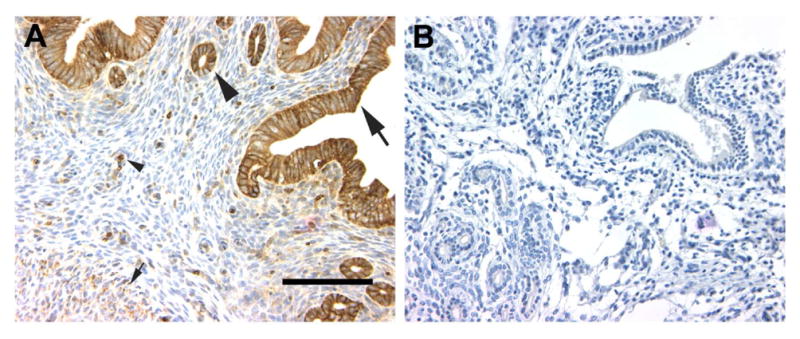
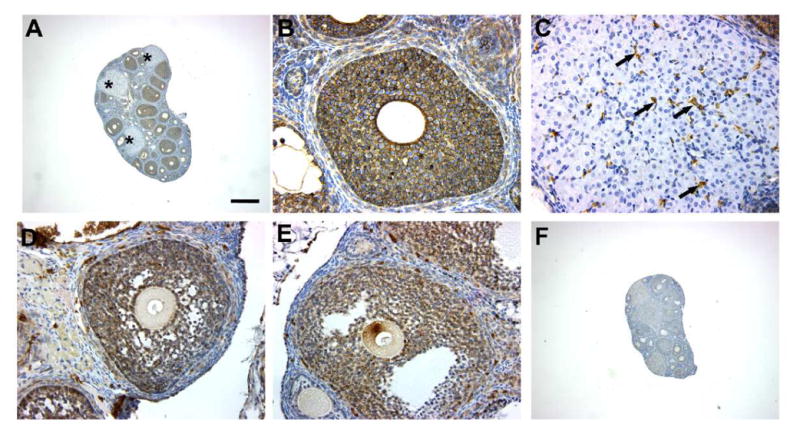
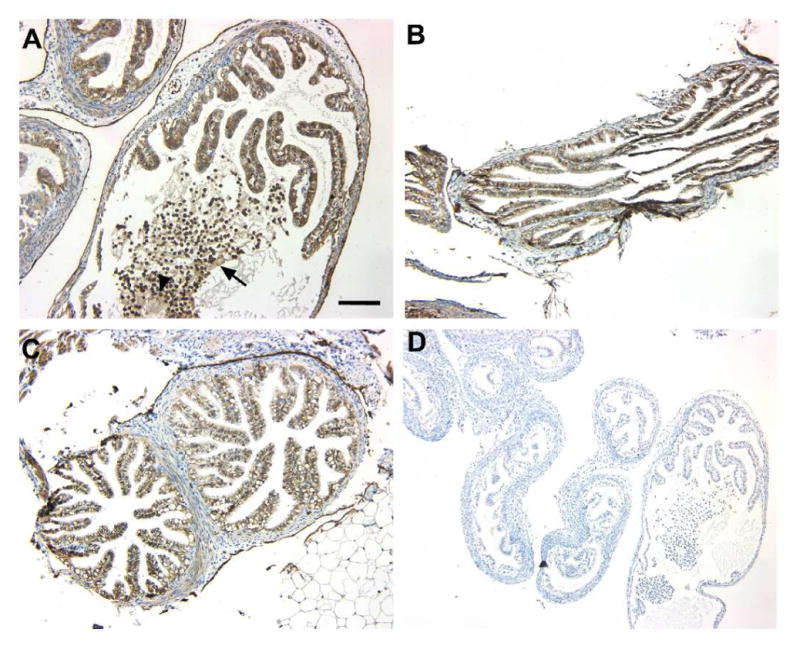
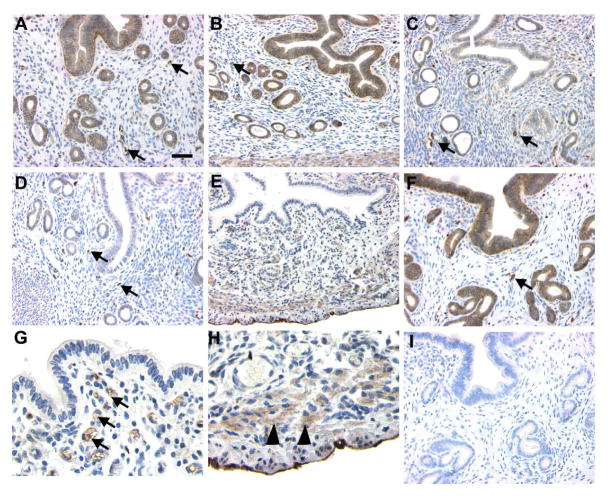
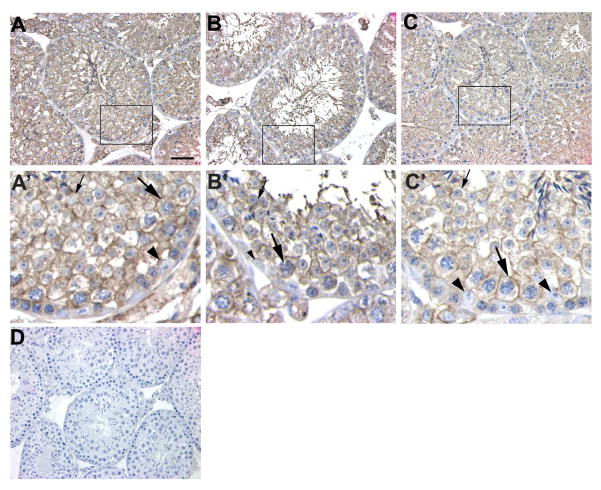
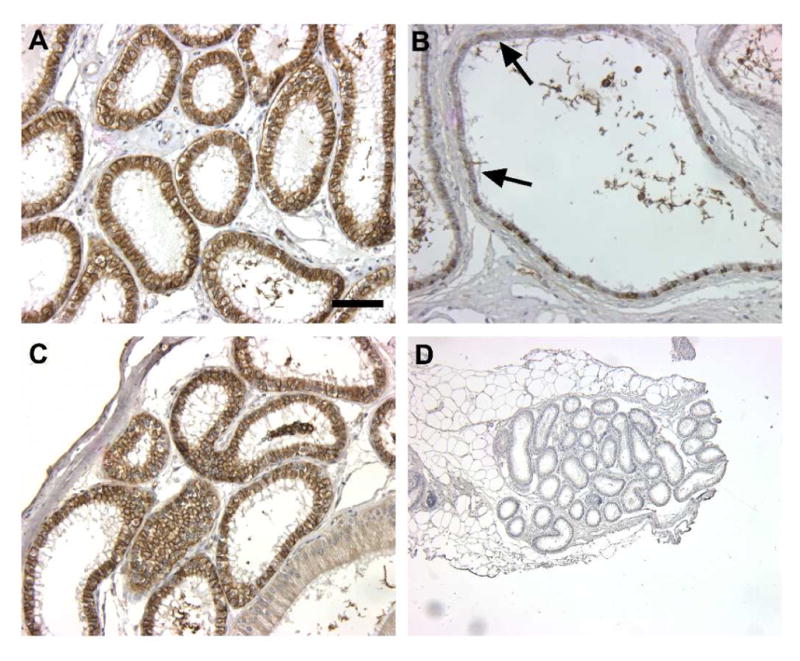
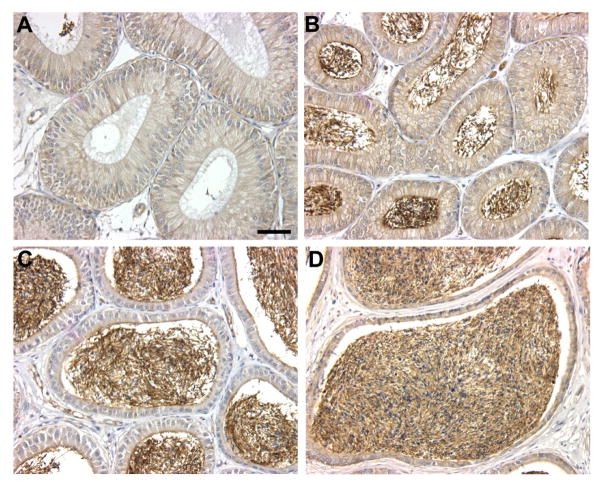
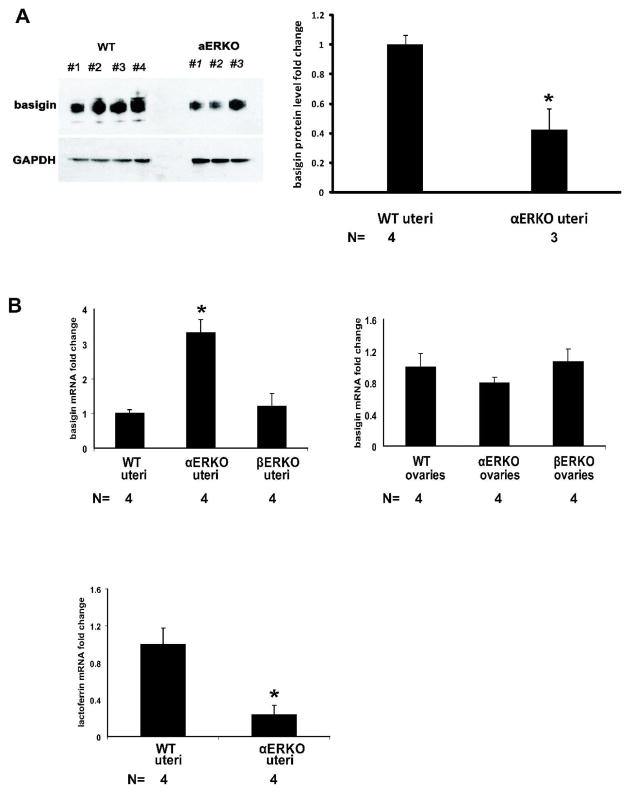
Basigin plays important roles in both male and female reproduction because basigin (Bsg) null male and female mice are infertile. The aim of the present study was to determine whether basigin expression in reproductive organs requires estrogen receptor-alpha (ESR1, ERalpha) or -beta (ESR2, ERbeta). Expression of basigin protein in the testis, ovary, and male and female reproductive tracts was studied in adult wild-type (WT), Esr1-null (alphaERKO), and Esr2-null (betaERKO) mice by immunohistochemistry and immunoblotting. Basigin mRNA levels in ovary and uterus were examined by quantitative RT-PCR. In females, basigin protein expression was observed mainly in granulosa and interstitial cells of the ovary and epithelial cells of the proximal oviduct in all genotypes. Basigin protein was also expressed in the uterine epithelium at proestrus and estrus in WT and betaERKO mice but not in alphaERKO mice. However, a higher level of basigin mRNA was observed in uteri of alphaERKO mice compared with WT and betaERKO mice. In males, basigin was expressed in Leydig cells and all germ cells except spermatogonia in all genotypes. Basigin was present in epithelial cells lining the efferent ductules in WT and betaERKO mice, but expression was greatly reduced in alphaERKO mice. In epididymal ducts, basigin expression was observed in epithelial cells in the caput and cauda in all genotypes. These data suggest that expression of basigin protein requires ESR1, but not ESR2, in the uterus and efferent ductules, but is independent of estrogen receptor in the ovary, oviduct, testis, and epididymis.
Figures
References
-
- Ambros V. The functions of animal microRNAs. Nature. 2004;431:350–355. - PubMed
-
- Biswas C. Collagenase stimulation in cocultures of human fibroblasts and human tumor cells. Cancer Lett. 1984;24:201–207. - PubMed
-
- Biswas C, Zhang Y, DeCastro R, Guo H, Nakamura T, Kataoka H, Nabeshima K. The human tumor cell-derived collagenase stimulatory factor (renamed EMMPRIN) is a member of the immunoglobulin superfamily. Cancer Res. 1995;55:434–439. - PubMed
-
- Chang H, Ni H, Ma XH, Xu LB, Kadomatsu K, Muramatsu T, Yang ZM. Basigin expression and regulation in mouse ovary during the sexual maturation and development of corpus luteum. Mol Reprod Dev. 2004;68:135–141. - PubMed
Publication types
MeSH terms
Substances
Grants and funding
LinkOut - more resources
Full Text Sources
Molecular Biology Databases
Miscellaneous
