Gemcitabine sensitivity can be induced in pancreatic cancer cells through modulation of miR-200 and miR-21 expression by curcumin or its analogue CDF
- PMID: 20388782
- PMCID: PMC2978024
- DOI: 10.1158/0008-5472.CAN-09-4598
Gemcitabine sensitivity can be induced in pancreatic cancer cells through modulation of miR-200 and miR-21 expression by curcumin or its analogue CDF
Retraction in
-
Retraction: Gemcitabine Sensitivity Can Be Induced in Pancreatic Cancer Cells through Modulation of miR-200 and miR-21 Expression by Curcumin or Its Analogue CDF.Cancer Res. 2018 Sep 15;78(18):5466. doi: 10.1158/0008-5472.CAN-18-1178. Cancer Res. 2018. PMID: 30217876 Free PMC article. No abstract available.
Abstract
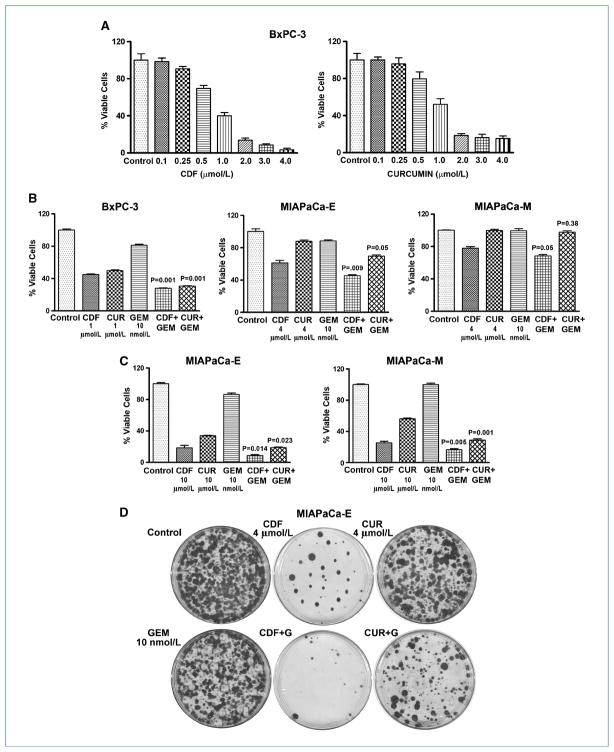
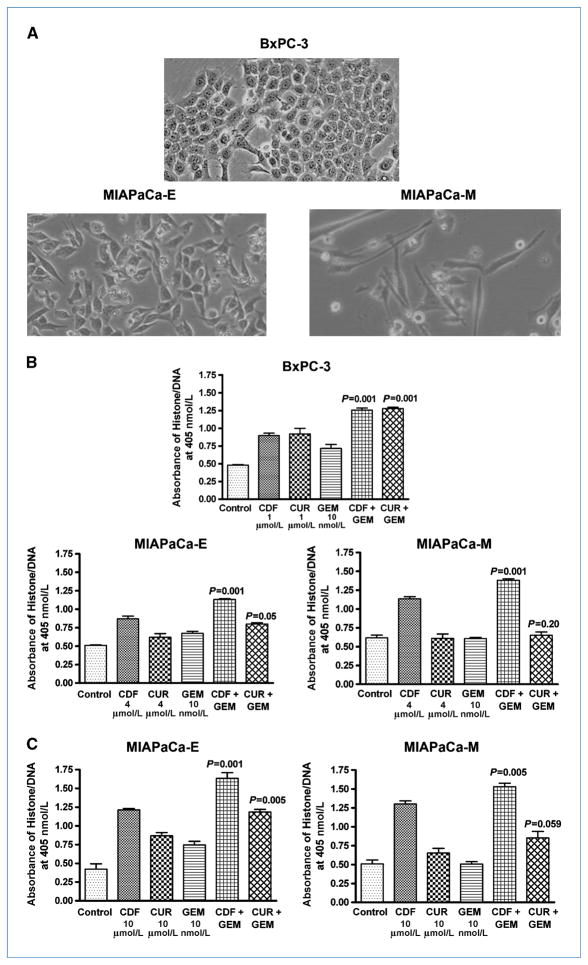
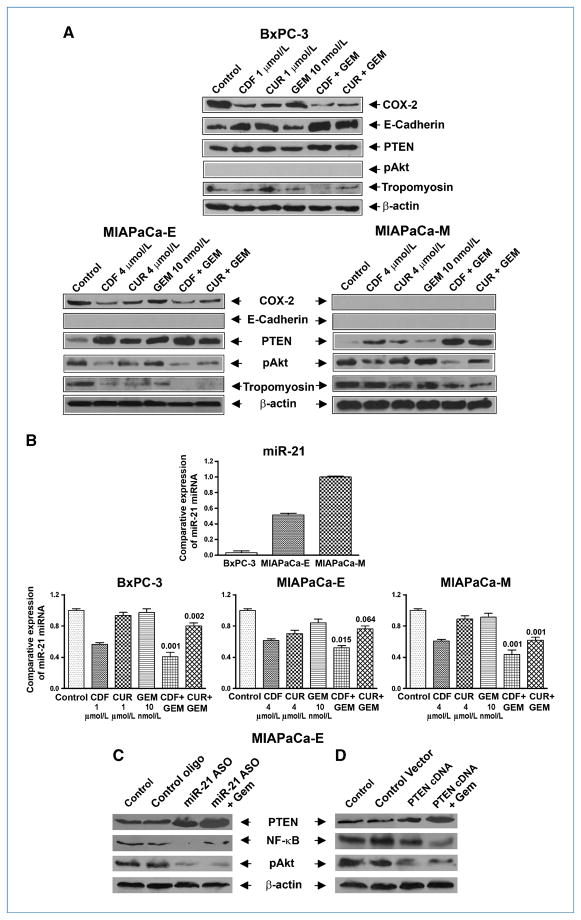
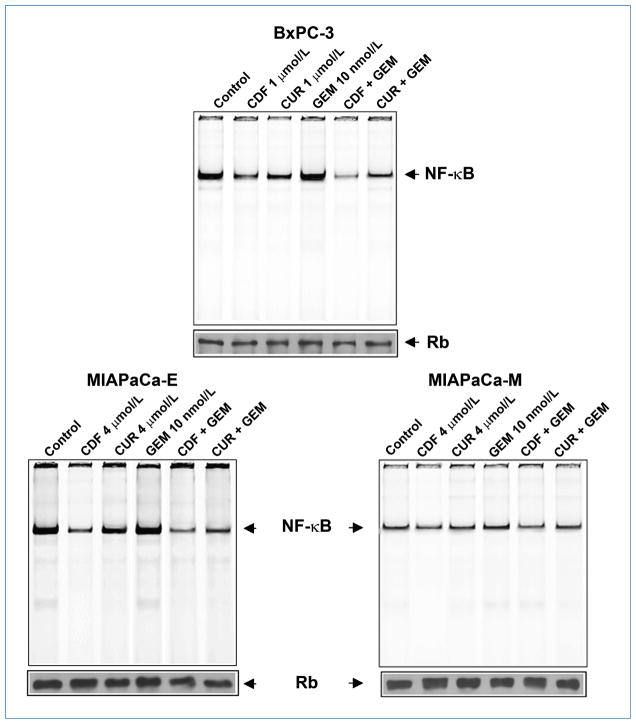
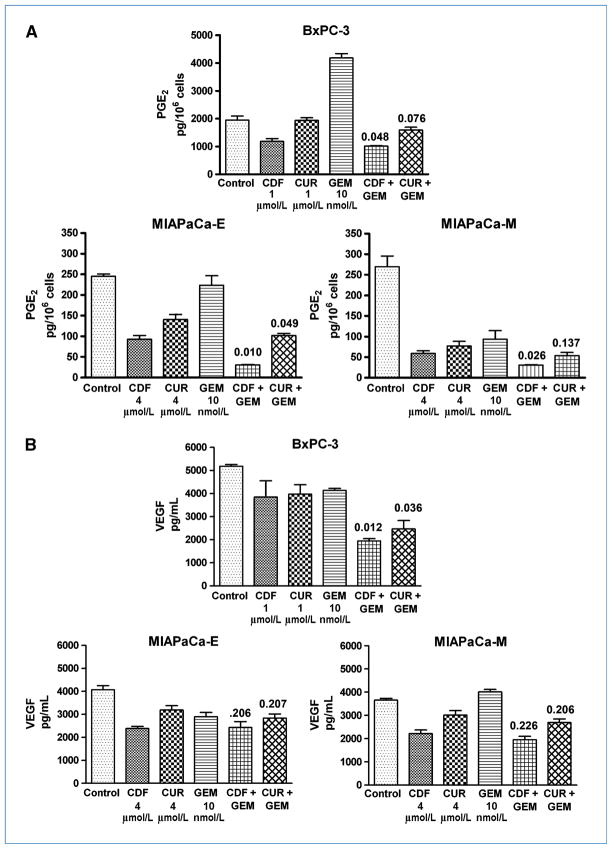
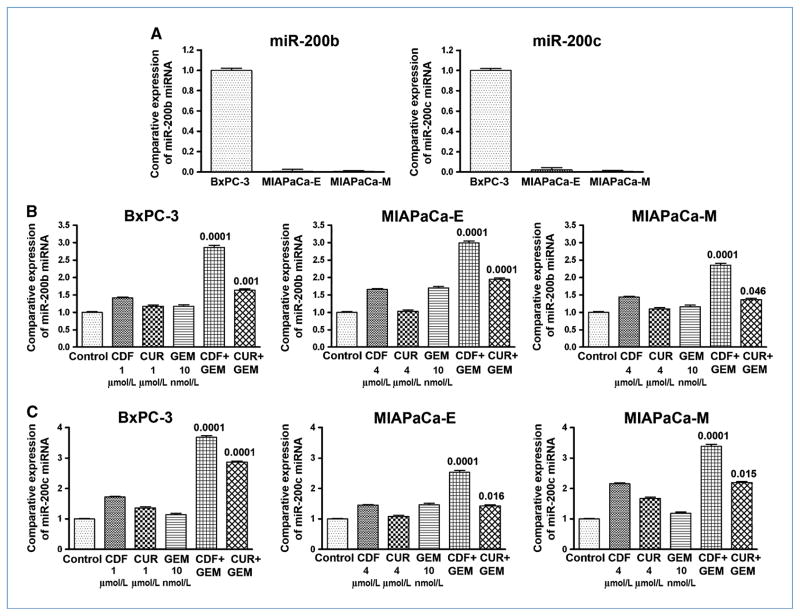
Curcumin induces cancer cell growth arrest and apoptosis in vitro, but its poor bioavailability in vivo limits its antitumor efficacy. We have previously evaluated the bioavailability of novel analogues of curcumin compared with curcumin, and we found that the analogue CDF exhibited greater systemic and pancreatic tissue bioavailability. In this study, we evaluated the effects of CDF or curcumin alone or in combination with gemcitabine on cell viability and apoptosis in gemcitabine-sensitive and gemcitabine-resistant pancreatic cancer (PC) cell lines. Mechanistic investigations revealed a significant reduction in cell viability in CDF-treated cells compared with curcumin-treated cells, which were also associated with the induction of apoptosis, and these results were consistent with the downregulation of Akt, cyclooxygenase-2, prostaglandin E(2), vascular endothelial growth factor, and NF-kappaB DNA binding activity. We have also documented attenuated expression of miR-200 and increased expression of miR-21 (a signature of tumor aggressiveness) in gemcitabine-resistant cells relative to gemcitabine-sensitive cells. Interestingly, CDF treatment upregulated miR-200 expression and downregulated the expression of miR-21, and the downregulation of miR-21 resulted in the induction of PTEN. These results prompt further interest in CDF as a drug modality to improve treatment outcome of patients diagnosed with PC as a result of its greater bioavailability in pancreatic tissue.
(c)2010 AACR.
Conflict of interest statement
No potential conflicts of interest were disclosed.
Figures
References
-
- Jemal A, Siegel R, Ward E, Hao Y, Xu J, Thun MJ. Cancer statistics, 2009. CA Cancer J Clin. 2009;59:225–49. - PubMed
-
- Holcomb B, Yip-Schneider MT, Matos JM, et al. Pancreatic cancer cell genetics and signaling response to treatment correlate with efficacy of gemcitabine-based molecular targeting strategies. J Gastro-intest Surg. 2008;12:288–96. - PubMed
-
- Kunnumakkara AB, Guha S, Krishnan S, Diagaradjane P, Gelovani J, Aggarwal BB. Curcumin potentiates antitumor activity of gemcitabine in an orthotopic model of pancreatic cancer through suppression of proliferation, angiogenesis, and inhibition of nuclear factor-κB-regulated gene products. Cancer Res. 2007;67:3853–61. - PubMed
-
- Lev-Ari S, Vexler A, Starr A, et al. Curcumin augments gemcitabine cytotoxic effect on pancreatic adenocarcinoma cell lines. Cancer Invest. 2007;25:411–8. - PubMed
-
- Lev-Ari S, Zinger H, Kazanov D, et al. Curcumin synergistically potentiates the growth inhibitory and pro-apoptotic effects of celecoxib in pancreatic adenocarcinoma cells. Biomed Pharmacother. 2005;59 (Suppl 2):S276–80. - PubMed
Publication types
MeSH terms
Substances
Grants and funding
LinkOut - more resources
Full Text Sources
Other Literature Sources
Medical
Research Materials