


The biological activity of structurally defined inositol glycans
- PMID: 20390053
- PMCID: PMC2853056
- DOI: 10.4155/fmc.09.6
The biological activity of structurally defined inositol glycans
Abstract
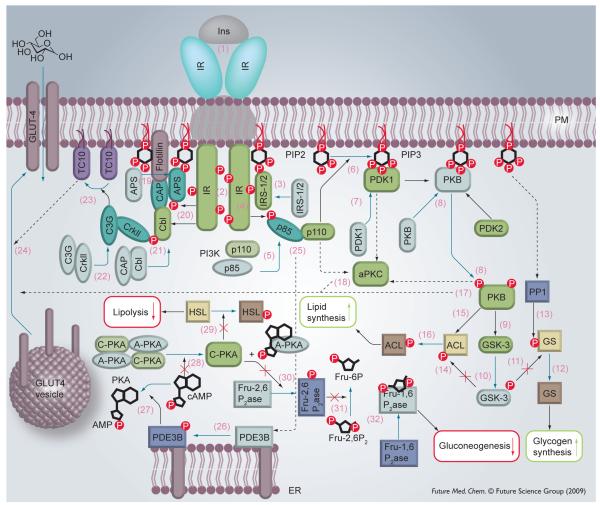
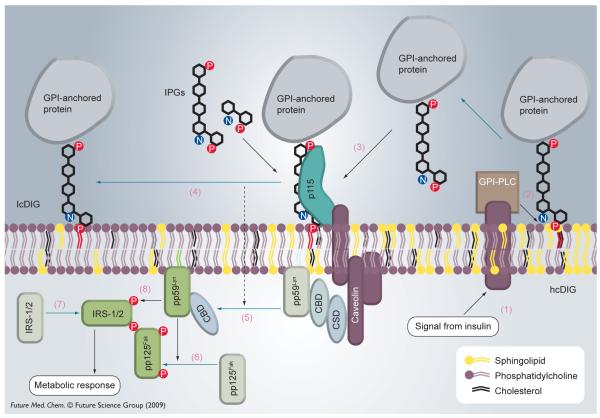
BACKGROUND: The inositol glycans (IGs) are glycolipid-derived carbohydrates produced by insulin-sensitive cells in response to insulin treatment. IGs exhibit an array of insulin-like activities including stimulation of lipogenesis, glucose transport and glycogen synthesis, suggesting that they may be involved in insulin signal transduction. However, because the natural IGs are structurally heterogeneous and difficult to purify to homogeneity, an understanding of the relationship between structure and biological activity has relied principally on synthetic IGs of defined structure. DISCUSSION: This article briefly describes what is known about the role of IGs in signal transduction and reviews the specific biological activities of the structurally defined IGs synthesized and tested to date. CONCLUSION: A pharmacophore for IG activity begins to emerge from the reviewed data and the structural elements necessary for activity are summarized.
Figures
References
-
- Larner J. Insulin mediator – fact or fancy. J. Cyclic Nucleotide Res. 1982;8(5):289–296. - PubMed
-
- Larner J, Huang LC, Schwartz CF, et al. Rat liver insulin mediator which stimulates pyruvate dehydrogenase phosphate contains galactosamine and D-chiroinositol. Biochem. Biophys. Res. Commun. 1988;151(3):1416–1426. - PubMed
-
- Misek DE, Saltiel AR. An inositol phosphate glycan derived from a Trypanosoma brucei glycosylphosphatidylinositol mimics some of the metabolic actions of insulin. J. Biol. Chem. 1992;267(23):16266–16273. - PubMed
-
- Misek DE, Saltiel AR. An inositol phosphate glycan derived from a Trypanosoma brucei glycosyl phosphatidylinositol promotes protein dephosphorylation in rat epididymal adipocytes. Endocrinology. 1994;135(5):1869–1876. - PubMed
Grants and funding
LinkOut - more resources
Full Text Sources
