


Action knowledge, visuomotor activation, and embodiment in the two action systems
- PMID: 20392282
- PMCID: PMC4311774
- DOI: 10.1111/j.1749-6632.2010.05447.x
Action knowledge, visuomotor activation, and embodiment in the two action systems
Abstract
Scientific interest in the relationship between cognition and action has increased markedly in the past several years, fueled by the discovery of mirror neurons in monkey prefrontal and parietal cortex and by the emergence of a movement in cognitive psychology, termed the embodied cognition framework, which emphasizes the role of simulation in cognitive representations. Guided by a functional neuroanatomic model called the Two Action Systems account, which posits numerous points of differentiation between structure- and function-based actions, we focus on two of the major issues under recent scrutiny: the relationship between representations for action production and recognition, and the role of action in object representations. We suggest that mirror neurons in humans are not critical for full action understanding, and that only function-based (and not structure-based) action is a component of embodied object concepts.
Conflict of interest statement
The authors declare no conflicts of interest.
Figures
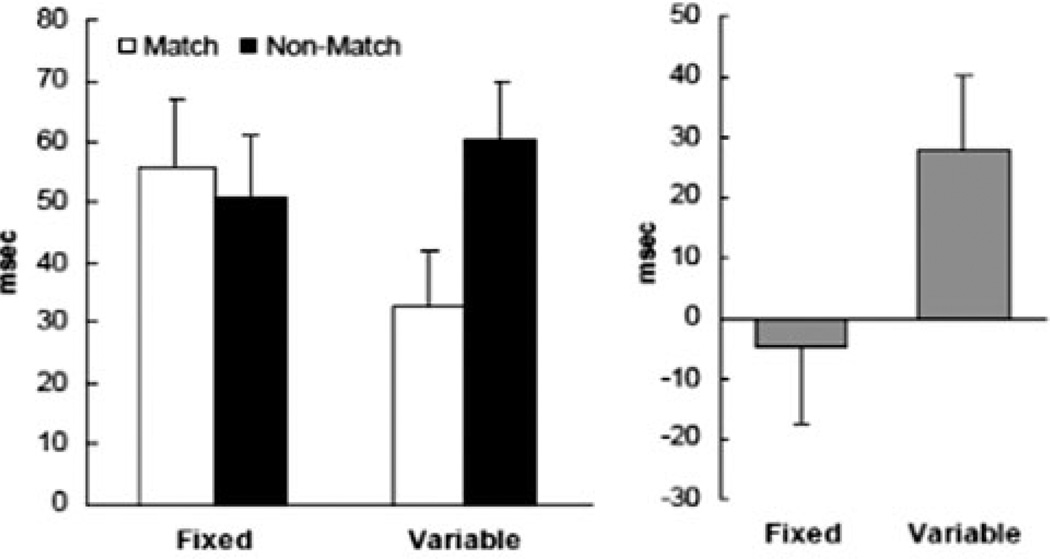
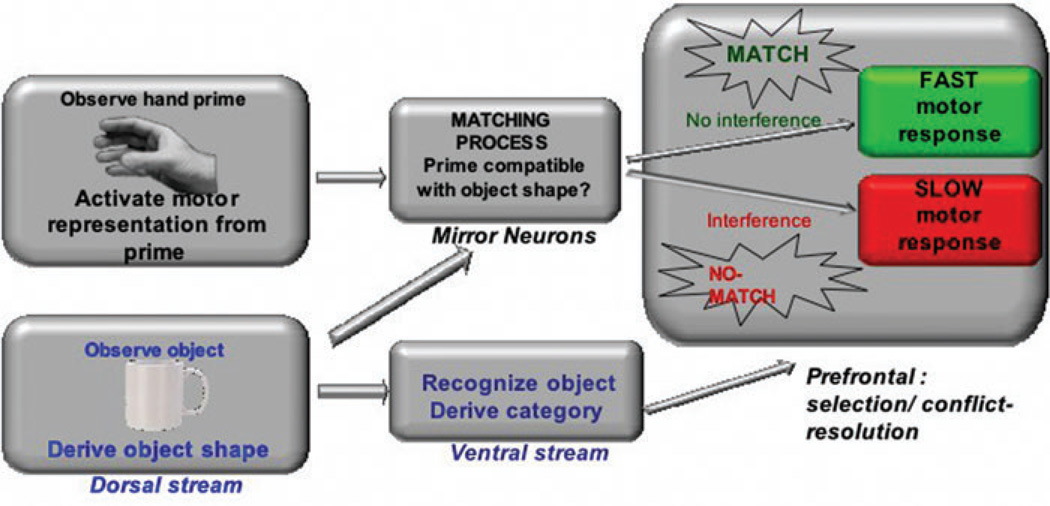
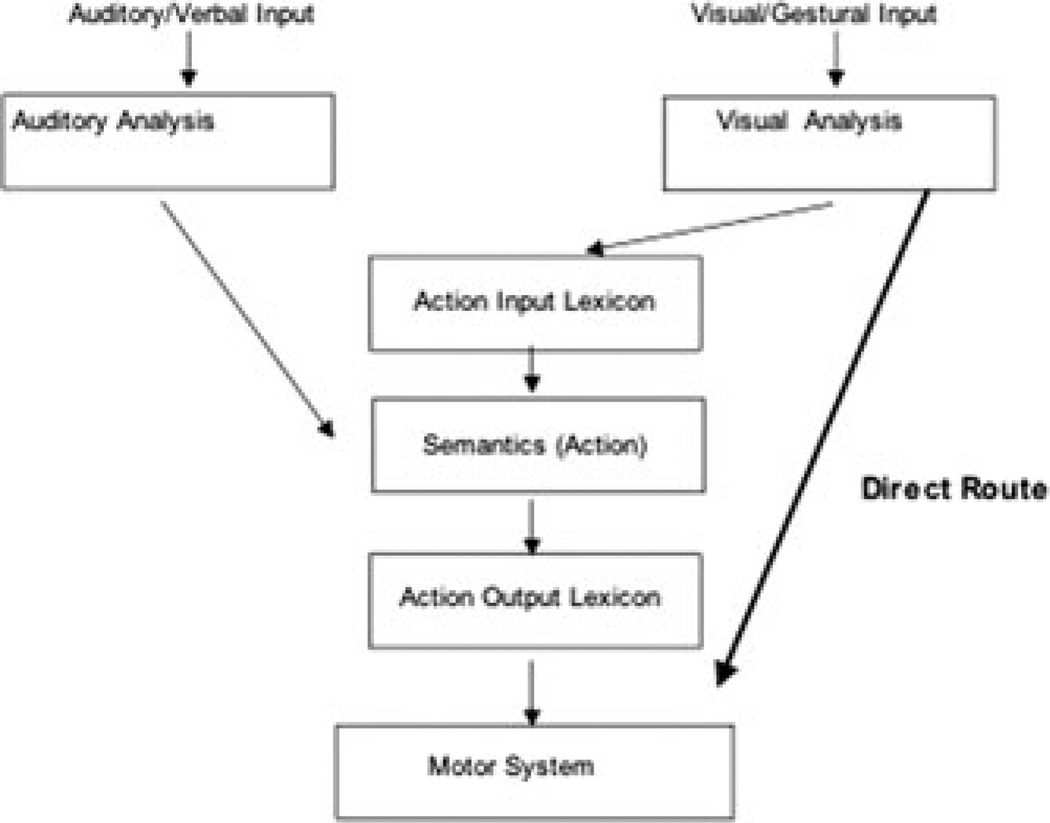
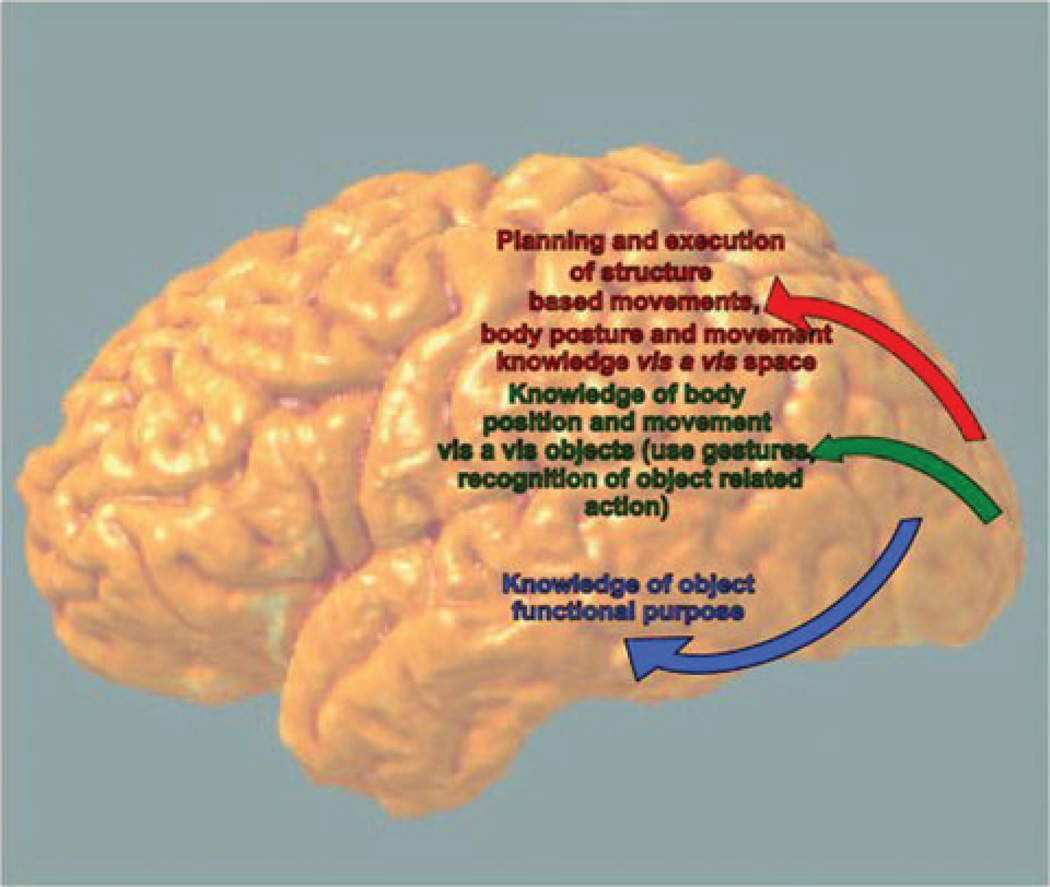
References
-
- Wilson M. Six views of embodied cognition. Psychon. Bull. Rev. 2002;9:625–636. - PubMed
-
- Grafton ST. Embodied cognition and the simulation of action to understand others. Ann. NY Acad. Sci. 2009;1156:97–117. - PubMed
-
- Leslie KR, Johnson-Frey SH, Grafton ST. Functional imaging of face and hand imitation:towards a motor theory of empathy. Neuroimage. 2004;21:601–607. - PubMed
-
- Ungerleider LG, Mishkin M. Two cortical visual systems. In: Ingle DJ, Goodale MA, Manfield RJW, editors. Analysis of Visual behavior. Cambridge, MA: MIT Press; 1982.
-
- Milner AD, Goodale MA. The Visual Brain in Action. Oxford University Press; Oxford; 1995.
Publication types
MeSH terms
Grants and funding
LinkOut - more resources
Full Text Sources
Miscellaneous
