


Comment
doi: 10.1126/scitranslmed.3001083.
Optimal control of blood glucose: the diabetic patient or the machine?
Affiliations
- PMID: 20393187
- PMCID: PMC4620569
- DOI: 10.1126/scitranslmed.3001083
Item in Clipboard
Comment
Optimal control of blood glucose: the diabetic patient or the machine?
Sci Transl Med.
.
Abstract
In this issue of Science Translational Medicine, El-Khatib et al. describe a "closed-loop" bihormonal artificial pancreas, designed to avert episodes of low blood sugar in patients with insulin-dependent diabetes. We discuss the benefits and challenges of therapy directed at tight control of blood glucose and ask whether this and similar technological breakthroughs can address as yet unanswered questions in the biology of diabetes.
Figures
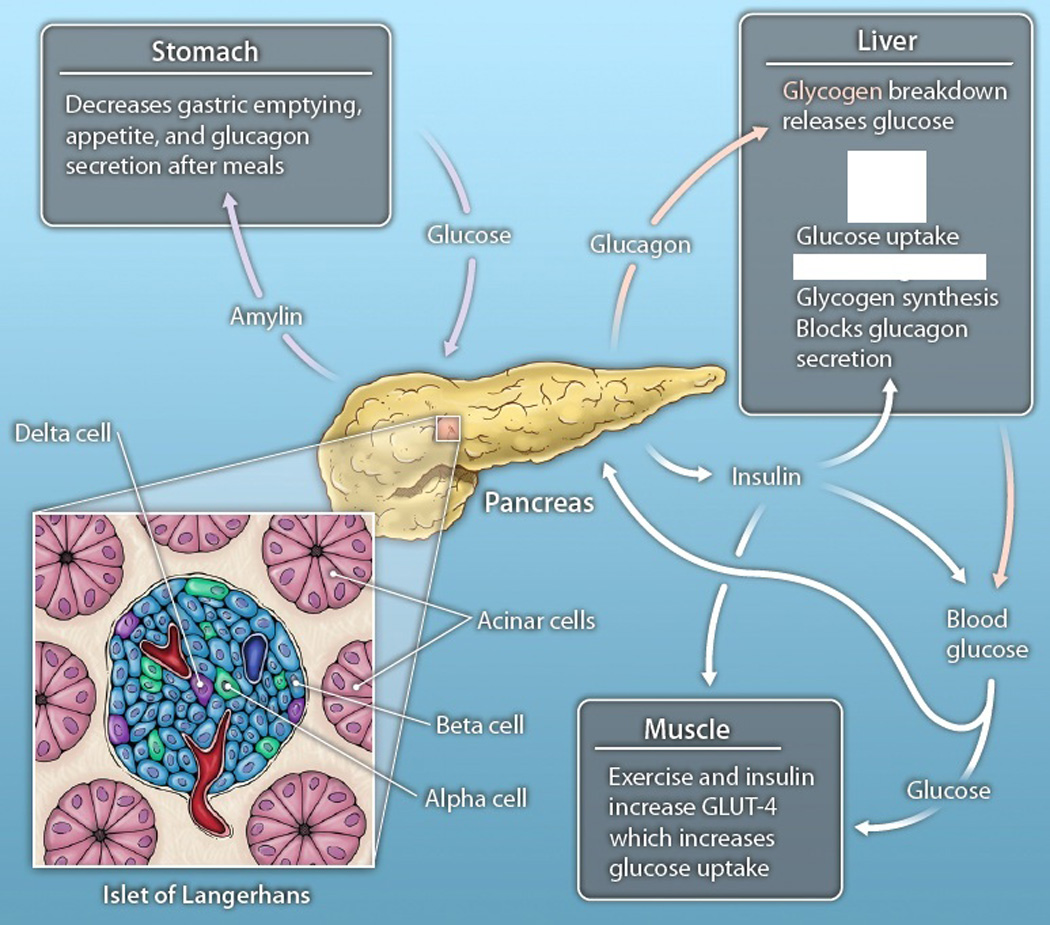
Insulin secretion from the beta cells of the pancreas results in glucose uptake and gluconeogenesis by the liver, upregulation of the GLUT-4 glucose transporter in muscle, and attenuation of glucagon secretion from the islets. Glucagon secreted by the alpha cells stimulates glycogen breakdown by the liver, thereby releasing glucose in times of need. Somatostatin secreted from the delta cells attenuates both insulin and glucagon secretion. Amylin secreted by beta cells delays gastric emptying, decreases appetite, and suppresses glucagon secretion after a meal. Cells within the islets are in close proximity with one another. CREDIT: CHRIS BICKEL/SCIENCE TRANSLATIONAL MEDICINE.
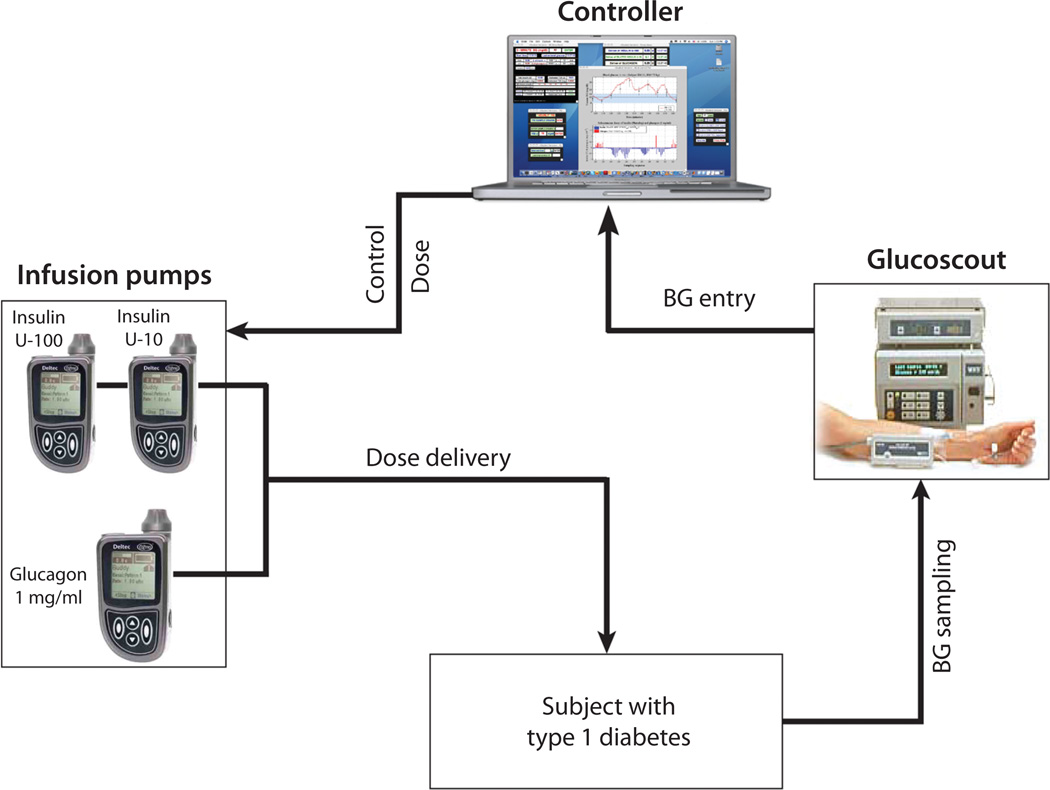
Bi-hormonal closed-loop insulin and glucagon delivery system. Developed by El-Khatib et al. (8). Closed-loop insulin delivery is designed to maintain near normal glycemia. Intravenous glucose is measured every five minutes using the GlucoScout device, and these data are used to guide a computer-controlled algorithm that titrates the delivery of two hormones. An increase in blood glucose is countered by insulin administration. Glucagon is administered to increase blood glucose by stimulating liver breakdown of glycogen. From (8) (Supplemental Fig. 1), used by permission.
Comment on
-
A bihormonal closed-loop artificial pancreas for type 1 diabetes.Sci Transl Med. 2010 Apr 14;2(27):27ra27. doi: 10.1126/scitranslmed.3000619. Sci Transl Med. 2010. PMID: 20393188 Free PMC article. Clinical Trial.
References
-
- Joslin EP. Diabetic Manual for the Mutual Use of Doctor and Patient. ed. 5th. Philadelphia, PA: Lea & Febiger; 1933. The treatment of diabetes with diet and exercise; pp. 100–120.
-
- Joslin EP. A Diabetic Manual for the Mutual Use of Doctor and Patient. ed. 1st. Philadelphia, PA: Lea & Febinger; 1918.
-
- Cryer PE, Gerich JE. Glucose counterregulation, hypoglycemia, and intensive insulin therapy in diabetes mellitus. N Engl. J. Med. 1985;313:232–241. - PubMed
-
- The Diabetes Control and Complications Trial Research Group. The effect of intensive treatment of diabetes on the development and progression of long-term complications in insulin-dependent diabetes mellitus. N/ Engl. J. Med. 1993;329:977–986. - PubMed
-
- Palmer AJ, Roze S, Valentine WJ, Minshall ME, Lammert M, Nicklasson L, Spinas GA. Deleterious effects of increased body weight associated with intensive insulin therapy for type 1 diabetes: increased blood pressure and worsened lipid profile partially negate improvements in life expectancy. Curr. Med. Res. Opin. 2004;20(Suppl 1):S67–S73. - PubMed
Publication types
MeSH terms
Substances
Grants and funding
LinkOut - more resources
Full Text Sources
Other Literature Sources
Medical
