


Patterns of drug use and abuse among aging adults with and without HIV: a latent class analysis of a US Veteran cohort
- PMID: 20395074
- PMCID: PMC3087206
- DOI: 10.1016/j.drugalcdep.2010.02.020
Patterns of drug use and abuse among aging adults with and without HIV: a latent class analysis of a US Veteran cohort
Abstract
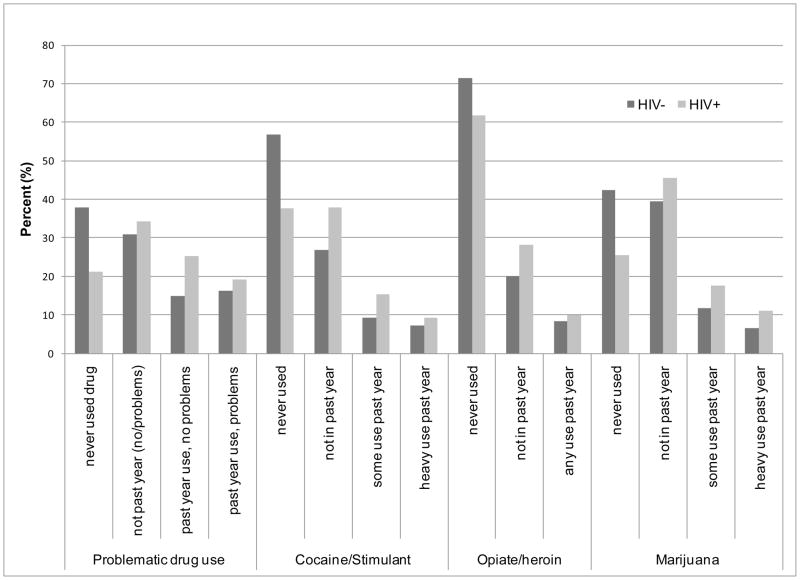
This study characterized the extent and patterns of self-reported drug use among aging adults with and without HIV, assessed differences in patterns by HIV status, and examined pattern correlates. Data derived from 6351 HIV-infected and uninfected adults enrolled in an eight-site matched cohort, the Veterans Aging Cohort Study (VACS). Using clinical variables from electronic medical records and socio-demographics, drug use consequences, and frequency of drug use from baseline surveys, we performed latent class analyses (LCA) stratified by HIV status and adjusted for clinical and socio-demographic covariates. Participants were, on average, age 50 (range 22-86), primarily male (95%) and African-American (64%). Five distinct patterns emerged: non-users, past primarily marijuana users, past multidrug users, current high consequence multidrug users, and current low consequence primarily marijuana users. HIV status strongly influenced class membership. Non-users were most prevalent among HIV uninfected (36.4%) and current high consequence multidrug users (25.5%) were most prevalent among HIV-infected. While problems of obesity marked those not currently using drugs, current users experienced higher prevalences of medical or mental health disorders. Multimorbidity was highest among past and current multidrug users. HIV-infected participants were more likely than HIV-uninfected participants to be current low consequence primarily marijuana users. In this sample, active drug use and abuse were common. HIV-infected and uninfected Veterans differed on extent and patterns of drug use and on important characteristics within identified classes. Findings have the potential to inform screening and intervention efforts in aging drug users with and without HIV.
Copyright (c) 2010 Elsevier Ireland Ltd. All rights reserved.
Figures
References
-
- AETC. Clinical manual for management of the HIV-infected adult. AIDS Education and Training Center; Newark, NJ: 2006. Recreational drugs and antiretroviral therapy.
-
- Agrawal A, Lynskey MT, Madden PA, Bucholz KK, Heath AC. A latent class analysis of illicit drug abuse/dependence: results from the National Epidemiological Survey on Alcohol and Related Conditions. Addiction (Abingdon, England) 2007;102:94–104. - PubMed
-
- Altice FL, Mezger JA, Hodges J, Bruce RD, Marinovich A, Walton M, Springer SA, Friedland GH. Developing a directly administered antiretroviral therapy intervention for HIV-infected drug users: implications for program replication. Clin Infect Dis. 2004;38(Suppl 5):S376–387. - PubMed
-
- Armstrong GL. Injection Drug Users in the United States, 1979–2002: An Aging Population. 2007. pp. 166–173. - PubMed
MeSH terms
Grants and funding
LinkOut - more resources
Full Text Sources
Other Literature Sources
Medical
Research Materials
Miscellaneous
