


Tracing cardiac metabolism in vivo: one substrate at a time
- PMID: 20395343
- PMCID: PMC3611329
- DOI: 10.2967/jnumed.109.068205
Tracing cardiac metabolism in vivo: one substrate at a time
Abstract
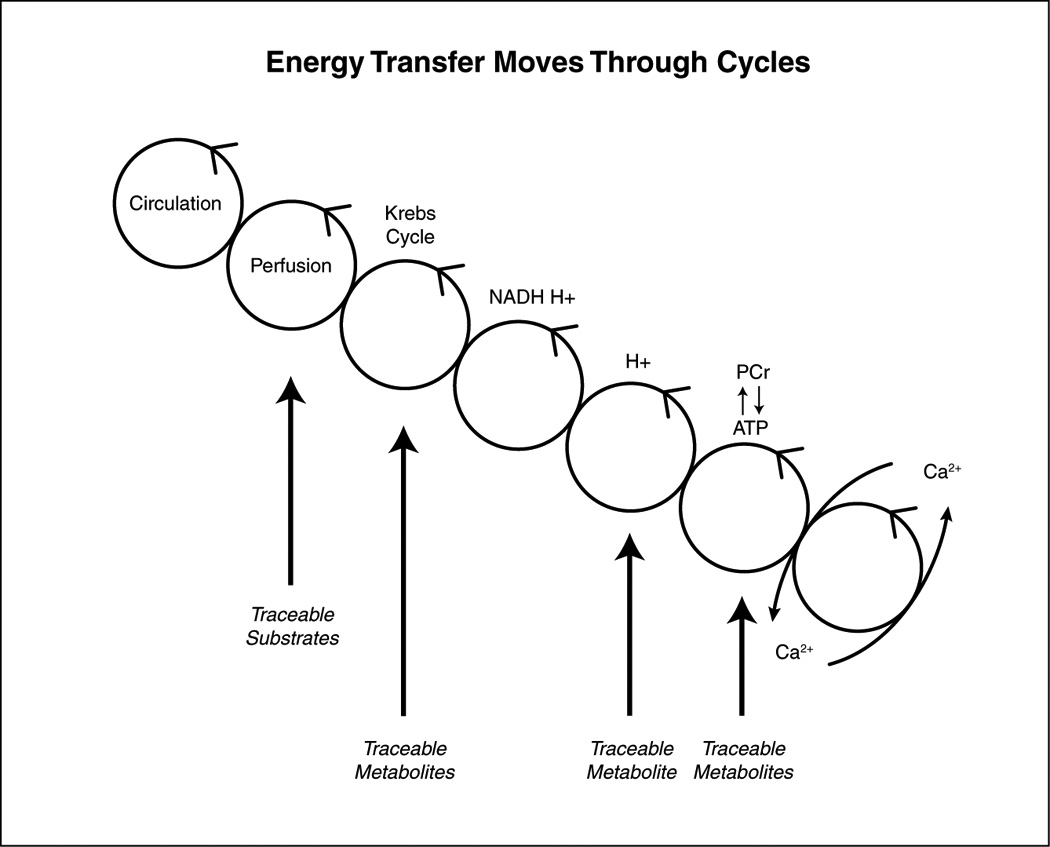
In the myocardial cell, a series of enzyme-catalyzed reactions results in the efficient transfer of chemical energy into mechanical energy. The goals of this article are to emphasize the ability of noninvasive imaging techniques using isotopic tracers to detect the metabolic footprints of heart disease and to propose that cardiac metabolic imaging is more than a useful adjunct to current myocardial perfusion imaging studies. A strength of metabolic imaging is in the assessment of regional myocardial differences in metabolic activity, probing for 1 substrate at a time. We hope that new and developing methods of cardiac imaging will lead to the earlier detection of heart disease and improve the management and quality of life for patients afflicted with ischemic and nonischemic heart muscle disorders.
Figures
References
-
- Winterstein H. Ueber die Sauerstoffatmung des isolierten Saeugetierherzens. Z Allg Physiol. 1904;4:339–359.
-
- Taegtmeyer H. Myocardial energetics: Still only the tip of an iceberg. Heart Lung Circ. 2003;12:3–6. - PubMed
-
- Taegtmeyer H, Golfman L, Sharma S, Razeghi P, van Arsdall M. Linking gene expression to function: metabolic flexibility in the normal and diseased heart. Ann N Y Acad Sci. 2004;1015:202–213. - PubMed
-
- Taegtmeyer H. Energy metabolism of the heart: from basic concepts to clinical applications. Curr Prob Cardiol. 1994;19:57–116. - PubMed
-
- Holmes FL. Between Biology and Medicine: The Formation of Intermediary Metabolism. Berkeley, CA: University of California at Berkeley; 1992. p. 114.
Publication types
MeSH terms
Substances
Grants and funding
LinkOut - more resources
Full Text Sources
Medical
