


Rapid upregulation of sodium-glucose transporter SGLT1 in response to intestinal sweet taste stimulation
- PMID: 20395849
- PMCID: PMC4123655
- DOI: 10.1097/SLA.0b013e3181d96e1f
Rapid upregulation of sodium-glucose transporter SGLT1 in response to intestinal sweet taste stimulation
Abstract
Objective: We set out to examine the short-term regulation of the intestinal sodium/glucose cotransporter SGLT1 by its substrate glucose and sweet taste analogs.
Summary background data: Intestinal SGLT1 is a putative target for antidiabetic therapy; however, its physiological regulation is incompletely understood, limiting its application as a pharmacological target. While it is clearly regulated by dietary composition over a period of days, its short-term regulation by nutrients is unknown.
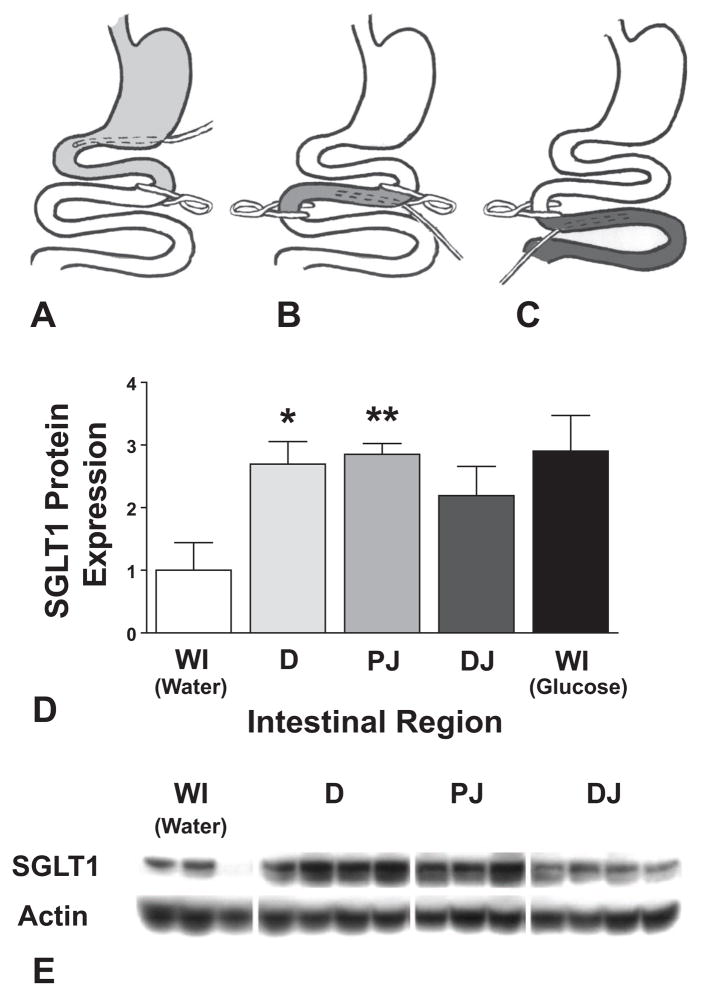
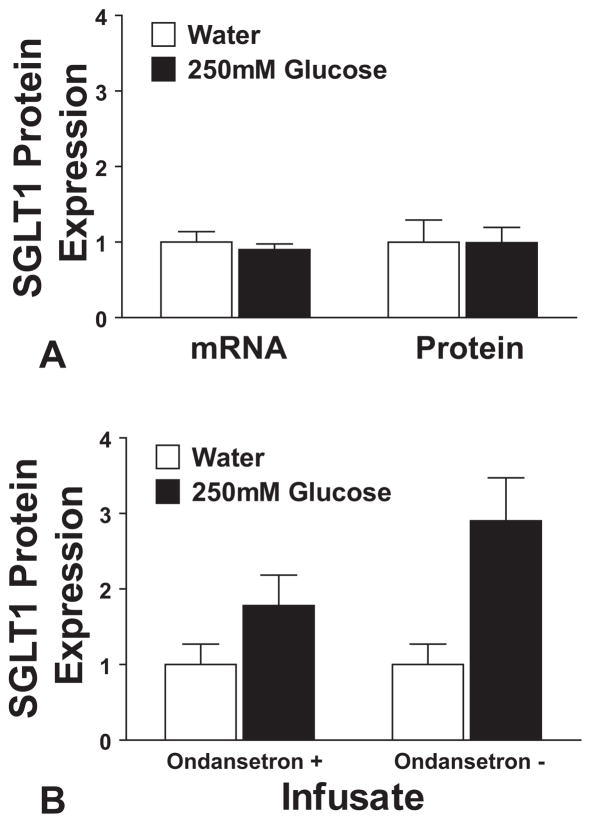
Methods: Sprague-Dawley rats were anesthetized, and the duodenum cannulated. D-glucose, D-fructose, saccharin, D-mannitol, and water were infused for 3 hours, before harvest of proximal jejunum for SGLT1 analysis with Western blotting and quantitative polymerase chain reaction. In further experiments, the receptor region was identified by D-glucose infusion of isolated regions. Lastly, the vagus was de-afferented with capsaicin, and 5HT3-receptor activation of vagal afferents inhibited using ondansetron, before repeating experiments using water or D-glucose infusion.
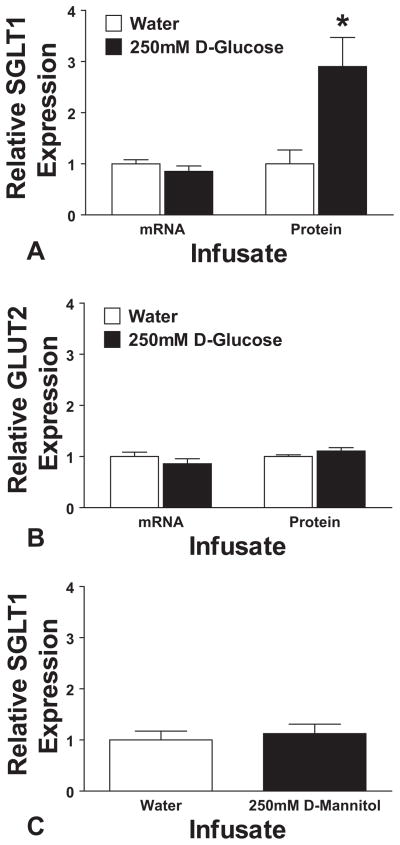
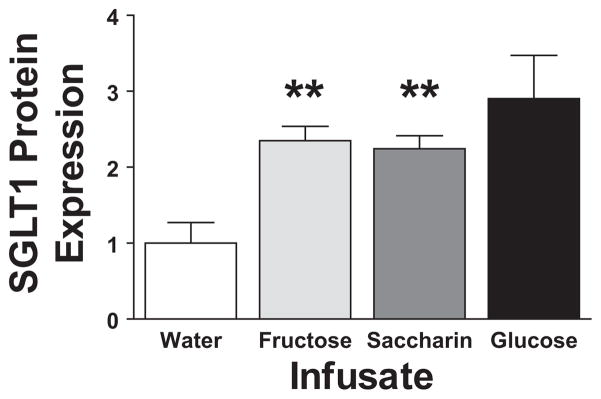
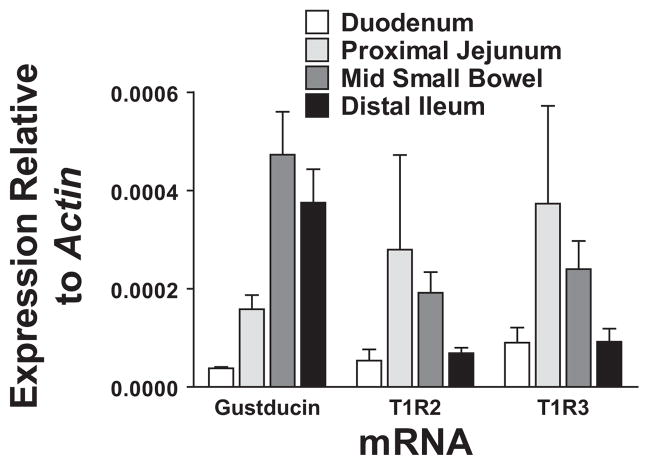
Results: Infusion of D-glucose led to 2.9-fold up-regulation in SGLT1 compared with water or iso-osmotic D-mannitol; this effect was replicated by D-fructose or saccharin. This response was strongest following isolated infusions of duodenum and proximal jejunum, with a blunted effect distally; topography matched the expression profile of sweet taste receptor T1R2/T1R3. The reflex was abolished by capsaicin pretreatment, and blunted by ondansetron.
Conclusions: The agonist response implicates the luminal-based sweet-taste receptor T1R2/T1R3, with the reflex apparently involving vagal afferents. The proximal nature of the sensor coincides with the excluded biliopancreatic limb in Roux-en-Y gastric bypass, and this may provide a novel explanation for the antidiabetic effect of this procedure.
Figures
References
-
- American Diabetes Association. Economic costs of diabetes in the U.S. in 2007. Diabetes Care. 2008;31:596– 615. - PubMed
-
- Runge CF. Economic consequences of the obese. Diabetes. 2007;56:2668–2672. - PubMed
-
- Buchwald H, Avidor Y, Braunwald E, et al. Bariatric surgery: a systematic review and meta-analysis. JAMA. 2004;292:1724–1737. - PubMed
-
- Morton AP, Hanson PJ. Monosaccharide transport by the small intestine of lean and genetically obese (ob/ob) mice. Q J Exp Physiol. 1984;69:117–126. - PubMed
-
- Bihler I, Freund N. Sugar transport in the small intestine of obese hyperglycemic, fed and fasted mice. Diabetologia. 1975;11:387–393. - PubMed
Publication types
MeSH terms
Substances
Grants and funding
LinkOut - more resources
Full Text Sources
Other Literature Sources
Research Materials
