Long-term results of proximal and total gastrectomy for adenocarcinoma of the upper third of the stomach
- PMID: 20396565
- PMCID: PMC2855111
- DOI: 10.4143/crt.2004.36.1.50
Long-term results of proximal and total gastrectomy for adenocarcinoma of the upper third of the stomach
Abstract
Purpose: The choice of surgical strategy for patients with adenocarcinoma of the upper one third of the stomach is controversial. This study was performed to analyze the surgical results of a 11-year experience with these lesions.
Materials and methods: From January 1990 to December 2000, 259 patients with upper third gastric cancer underwent proximal gastrectomy (n=74) or total gastrectomy (n=185) through an abdominal approach. Morbidity, mortality, recurrence patterns, and survival were compared between these two groups retrospectively.
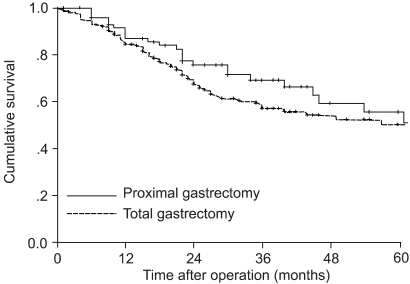
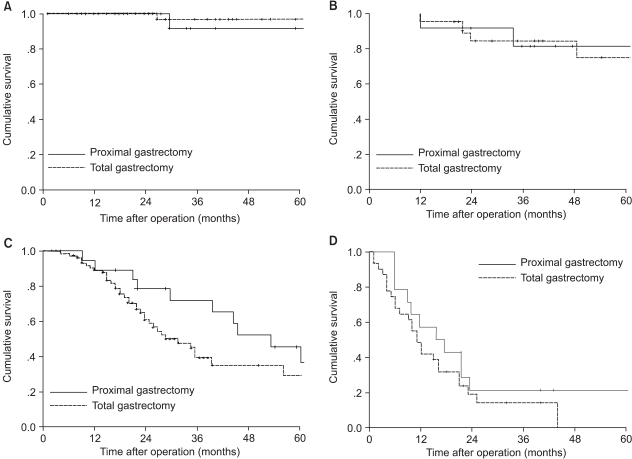
Results: There were no significant differences in general complication and mortality rates between the two groups. However, the incidences of reflux esophagitis (16.2%) and anastomotic stricture (35.1%) were more common in the proximal gastrectomy group compared with the total gastrectomy group (0.5 and 8.1%). Regarding the main patterns of recurrence, local recurrence was dominant in the proximal gastrectomy group, whereas distant recurrence was dominant in the total gastrectomy group. Five-year overall survival (54.8 versus 47.8%) and survival according to tumor stage were no different between the groups. Multivariate analysis showed that the extent of resection was not an independent prognostic factor.
Conclusion: The extent of resection for upper third gastric cancer did not appear to affect long-term outcome. However, proximal gastrectomy is associated with an increased risk of reflux esophagitis, anastomotic stricture, and local recurrence.
Keywords: Prognosis; Recurrence; Stomach neoplasm; Surgical treatment.
Figures
References
-
- Borch K, Jnsson B, Tarpila E, Franzen T, Berglund J, Kullman E, Franzen L. Changing pattern of histological type, location, stage and outcome of surgical treatment of gastric carcinoma. Br J Surg. 2000;87:618–626. - PubMed
-
- de Calan L, Portier G, Ozoux JP, Rivallain B, Perrier M, Brizon J. Carinoma of the cardia and proximal third of the stomach. Am J Surg. 1988;155:481–485. - PubMed
-
- Kaibara N, Nishimura O, Nishidoi H. Proximal gastrectomy as the surgical procedure of choice for upper gastric carcinoma. J Surg Oncol. 1987;36:110–112. - PubMed
-
- Kitamura K, Yamaguchi T, Okamoto K, Taniguchi H, Hagiwara A, Sawai K, Takahashi T. Total gastrectomy for early gastric cancer. J Surg Oncol. 1995;60:83–88. - PubMed
-
- Japanese Gastric Cancer Association. The new Japanese Classification of Gastric Carcinoma, 2nd English ed. Gastric Cancer. 1998;1:1–15.
LinkOut - more resources
Full Text Sources