


Why is it getting more difficult to successfully artificially inseminate dairy cows?
- PMID: 20396609
- PMCID: PMC2854809
- DOI: 10.1017/S175173110800236X
Why is it getting more difficult to successfully artificially inseminate dairy cows?
Abstract
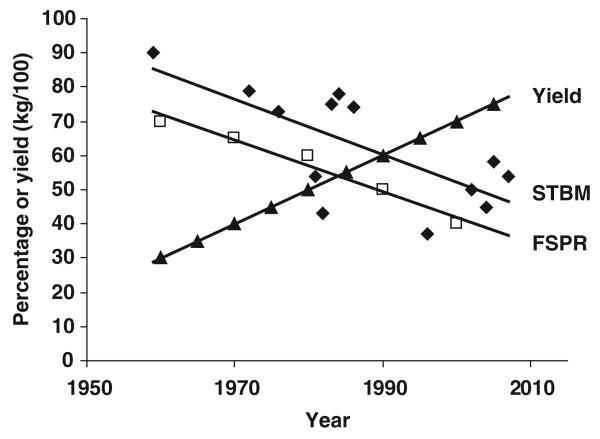
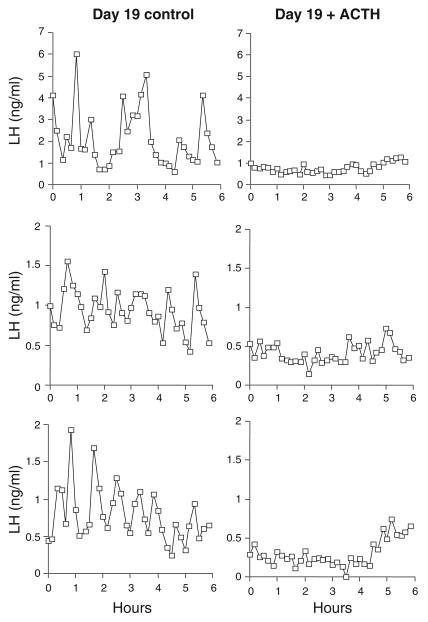
Successfully using artificial insemination (AI) is defined as getting cows pregnant when the farmer wants them in-calf and making the best use of appropriate genetic potential. Over the past 30 to 50 years, the percentage of animals in oestrus that stand-to-be-mounted (STBM) has declined from 80% to 50%, and the duration of STBM from 15 h to 5 h; both in parallel with a reduction in first-service-pregnancy-rate from 70% to 40%. Meanwhile, the incidence of lameness and mastitis has not decreased; and it takes more than an extra 40 and 18 days, respectively, to get a lame or mastitic cow in-calf compared to healthy herd-mates. The intensity of oestrus is 50% lower in severely lame cows, and fewer lame cows ovulate. Luteal phase milk progesterone concentrations are also 50% lower in lame cows, and follicular phase oestradiol is also lower in non-ovulating lame cows compared to ovulating animals. Furthermore, lame cows that do not ovulate do not have an LH surge, and the LH pulse frequency in their late follicular phase is lower (0.53 v. 0.76 pulses/h). Thus, we suggest that the stress of lameness reduces LH pulsatility required to drive oestradiol production by the dominant follicle. The consequent low oestradiol results in less-intense oestrus behaviour and failure to initiate an LH surge; hence there is no ovulation. A series of experimental studies substantiate our hypothesis that events activating the hypothalamus-pituitary-adrenal axis interfere at both the hypothalamus and the pituitary level to disrupt LH and oestradiol secretion, and thus the expression of oestrus behaviour. Our inability to keep stress at a minimum by appropriately feeding and housing high-production cows is leading to a failure to meet genetic potential for yield and fertility. We must provide realistic solutions soon, if we want to successfully use AI to maintain a sustainable dairy industry for the future.
Figures



References
-
- At-Taras EE, Spahr SL. Detection and characterization of estrus in dairy cattle with an electronic heatmount detector and an electronic activity tag. Journal of Dairy Science. 2001;84:792–798. - PubMed
-
- Bartlett PC, Miller GY, Lance SE, Heider LE. Clinical mastitis and intramammary infections on Ohio dairy farms. Preventive Veterinary Medicine. 1992;12:59–71.
-
- Beckett S, Lean I, Dyson R, Tranter W, Wade L. Effects of monensin on the reproduction, health, and milk production of dairy cows. Journal of Dairy Science. 1998;81:1563–1573. - PubMed
-
- Bigras-Poulin M, Meek AH, Martin SW, McMillan I. Health-problems in selected Ontario Holstein cows – frequency of occurrences, time to first diagnosis and associations. Preventive Veterinary Medicine. 1990;10:79–89.
-
- Borsberry S, Dobson H. Periparturient diseases and their effect on reproductive performance in five dairy herds. Veterinary Record. 1989;124:217–219. - PubMed
Grants and funding
LinkOut - more resources
Full Text Sources
Other Literature Sources
Miscellaneous