


The glucocorticoid receptor: pivot of depression and of antidepressant treatment?
- PMID: 20399565
- PMCID: PMC3513407
- DOI: 10.1016/j.psyneuen.2010.03.007
The glucocorticoid receptor: pivot of depression and of antidepressant treatment?
Abstract
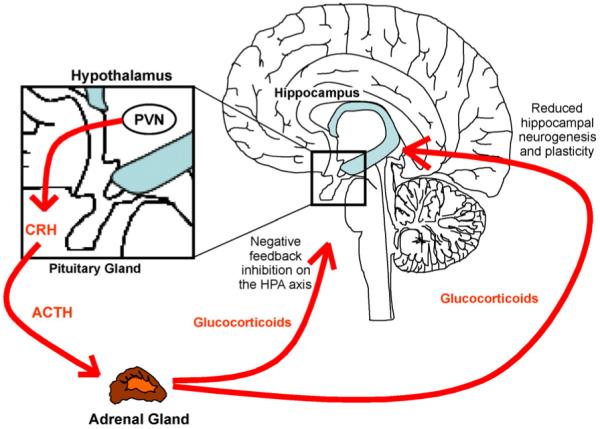
Hyperactivity of the hypothalamus-pituitary-adrenal (HPA) axis and increased levels of glucocorticoid hormones in patients with depression have mostly been ascribed to impaired feedback regulation of the HPA axis, possibly caused by altered function of the receptor for glucocorticoid hormones, the glucocorticoid receptor (GR). Antidepressants, in turn, ameliorate many of the neurobiological disturbances in depression, including HPA axis hyperactivity, and thereby alleviate depressive symptoms. There is strong evidence for the notion that antidepressants exert these effects by modulating the GR. Such modulations, however, can be manifold and range from regulation of receptor expression to post-translational modifications, which may result in differences in GR nuclear translocation and GR-dependent gene transcription. The idea that the therapeutic action of antidepressants is mediated, at least in part, by restoring GR function, is consistent with studies showing that decreased GR function contributes to HPA axis hyperactivity and to the development of depressive symptoms. Conversely, excessive glucocorticoid signalling, which requires an active GR, is associated with functional impairments in the depressed brain, especially in the hippocampus, where it results in reduced neurogenesis and impaired neuroplasticity. In this review, we will focus on the GR as a key player in the precipitation, development and resolution of depression. We will discuss potential explanations for the apparent controversy between glucocorticoid resistance and the detrimental effects of excessive glucocorticoid signalling. We will review some of the evidence for modulation of the GR by antidepressants and we will provide further insight into how antidepressants may regulate the GR to overcome depressive symptoms.
Copyright © 2010 Elsevier Ltd. All rights reserved.
References
-
- Alt SR, et al. Differential expression of glucocorticoid receptor transcripts in major depressive disorder is not epigenetically programmed. Psychoneuroendocrinology. 2009 - PubMed
-
- Antoni FA. Vasopressinergic control of pituitary adrenocorticotropin secretion comes of age. Front. Neuroendocrinol. 1993;14:6–122. - PubMed
-
- Ardayfio P, Kim KS. Anxiogenic-like effect of chronic corticosterone in the light-dark emergence task in mice. Behav. Neurosci. 2006;120:249–256. - PubMed
-
- Augustyn M, et al. Effects of some new antidepressant drugs on the glucocorticoid receptor-mediated gene transcription in fibroblast cells. Pharmacol. Rep. 2005;57:766–773. - PubMed
Publication types
MeSH terms
Substances
Grants and funding
LinkOut - more resources
Full Text Sources
Other Literature Sources
Medical
