


Preclinical Alzheimer disease: brain oxidative stress, Abeta peptide and proteomics
- PMID: 20399861
- PMCID: PMC2885559
- DOI: 10.1016/j.nbd.2010.04.011
Preclinical Alzheimer disease: brain oxidative stress, Abeta peptide and proteomics
Abstract
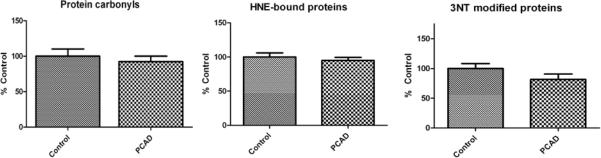
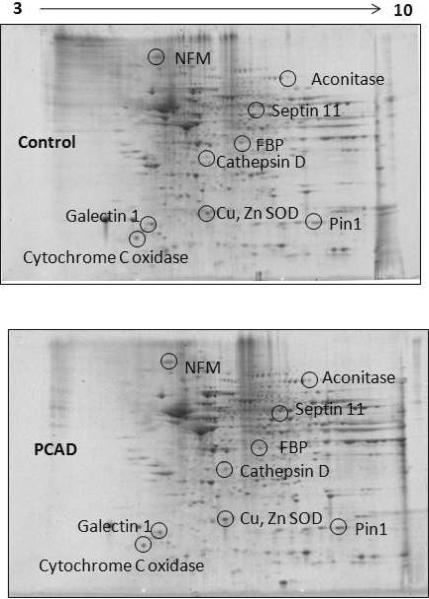
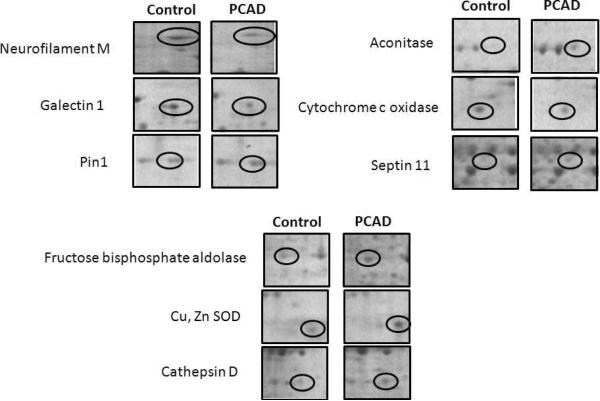
Alzheimer disease (AD) is a neurodegenerative disorder characterized clinically by progressive memory loss and subsequent dementia and neuropathologically by senile plaques, neurofibrillary tangles, and synapse loss. Interestingly, a small percentage of individuals with normal antemortem psychometric scores meet the neuropathological criteria for AD (termed 'preclinical' AD (PCAD)). In this study, inferior parietal lobule (IPL) from PCAD and control subjects was compared for oxidative stress markers by immunochemistry, amyloid beta peptide by ELISA, and identification of protein expression differences by proteomics. We observed a significant increase in highly insoluble monomeric Abeta42, but no significant differences in oligomeric Abeta nor in oxidative stress measurements between controls and PCAD subjects. Expression proteomics identified proteins whose trends in PCAD are indicative of cellular protection, possibly correlating with previous studies showing no cell loss in PCAD. Our analyses may reveal processes involved in a period of protection from neurodegeneration that mimic the clinical phenotype of PCAD.
Figures
References
-
- Aksenov MY, Tucker HM, Nair P, Aksenova MV, Butterfield DA, Estus S, Markesbery WR. The expression of key oxidative stress-handling genes in different brain regions in Alzheimer's disease. J Mol Neurosci. 1998;11:151–164. - PubMed
-
- Butterfield DA, Drake J, Pocernich C, Castegna A. Evidence of oxidative damage in Alzheimer's disease brain: central role for amyloid beta-peptide. Trends Mol Med. 2001;7:548–554. - PubMed
Publication types
MeSH terms
Substances
Grants and funding
LinkOut - more resources
Full Text Sources
Medical
