


Influence of metoprolol dosage release formulation on the pharmacokinetic drug interaction with paroxetine
- PMID: 20400652
- PMCID: PMC3006004
- DOI: 10.1177/0091270010365559
Influence of metoprolol dosage release formulation on the pharmacokinetic drug interaction with paroxetine
Abstract
Studies have demonstrated an influence of dosage release formulations on drug interactions and enantiomeric plasma concentrations. Metoprolol is a commonly used beta-adrenergic antagonist metabolized by CYP2D6. The CYP2D6 inhibitor paroxetine has previously been shown to interact with metoprolol tartrate. This open-label, randomized, 4-phase crossover study assessed the potential differential effects of paroxetine on stereoselective pharmacokinetics of immediate-release (IR) tartrate and extended-release (ER) succinate metoprolol formulations. Ten healthy participants received metoprolol IR (50 mg) and ER (100 mg) with and without paroxetine coadministration. Blood samples were collected over 24 hours for determination of metoprolol plasma enantiomer concentrations. Paroxetine coadministration significantly increased S and R metoprolol area under the plasma concentration-time curve from time 0 to the 24-hour blood draw (AUC(0-24h)) by 4- and 5-fold, respectively for IR, and 3- and 4-fold, respectively, for ER. S/R AUC ratios significantly decreased. These results demonstrate a pharmacokinetic interaction between paroxetine and both formulations of metoprolol. The interaction is greater with R metoprolol, and stereoselective metabolism is lost. This could theoretically result in greater beta-blockade and lost cardioselectivity. The magnitude of the interaction was similar between metoprolol formulations, which may be attributable to low doses/drug input rates employed.
Figures
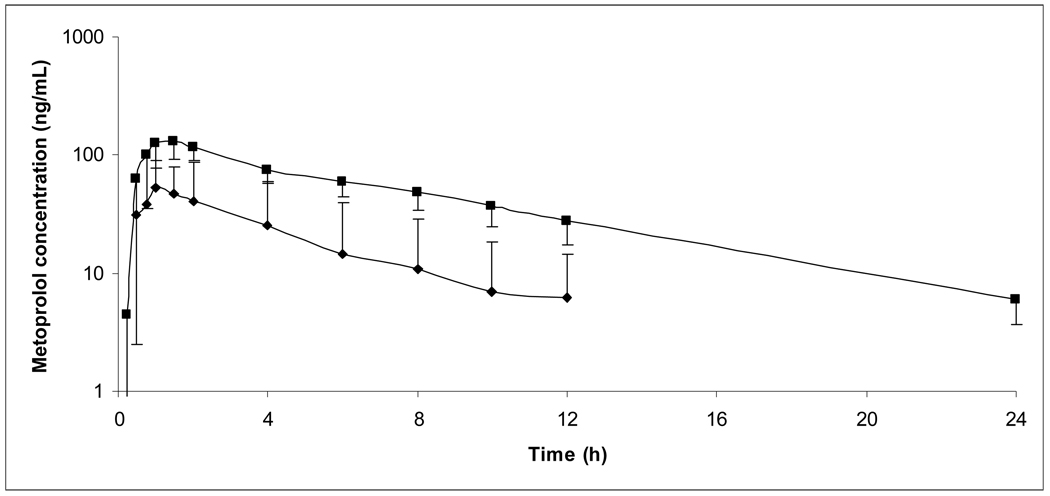
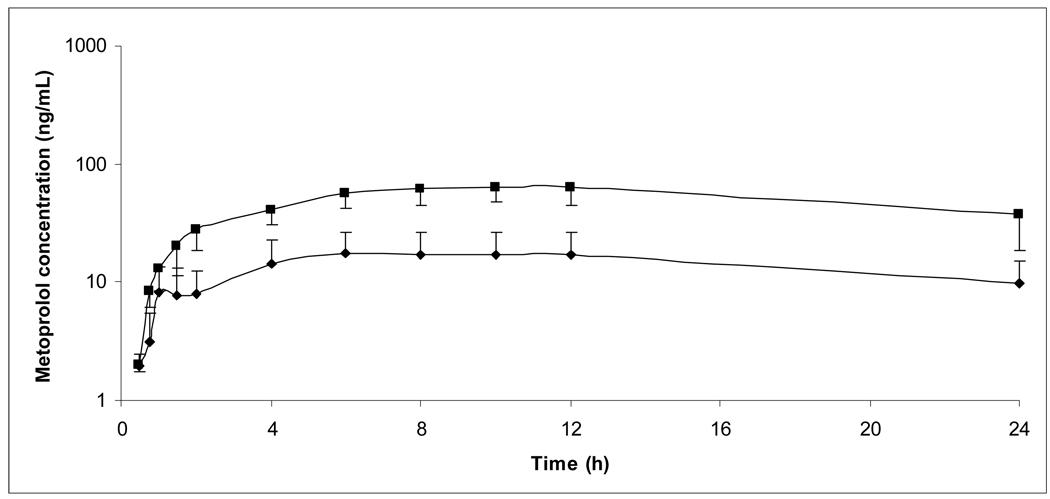
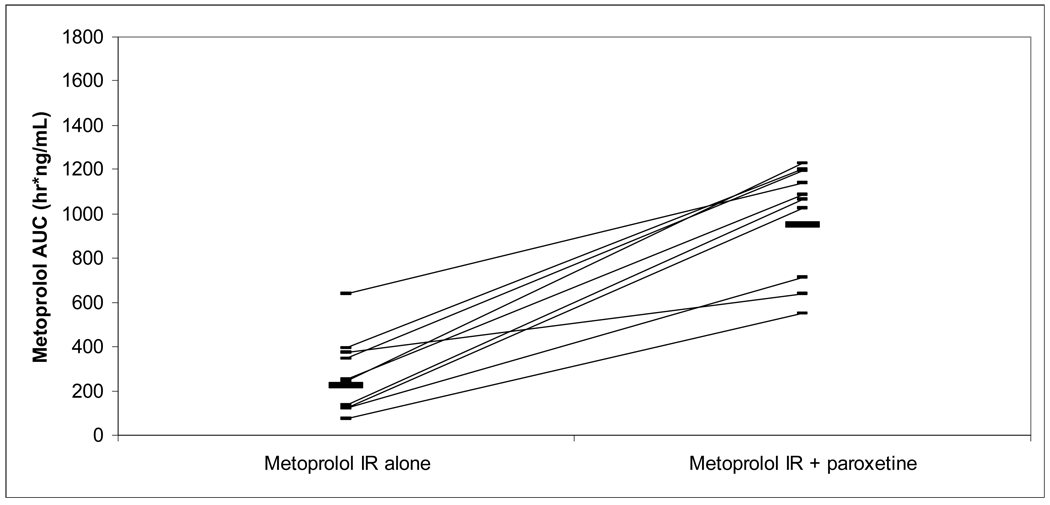
 mean metoprolol AUC 223 ng*h/mL without paroxetine, 949 ng*h/mL with paroxetine.
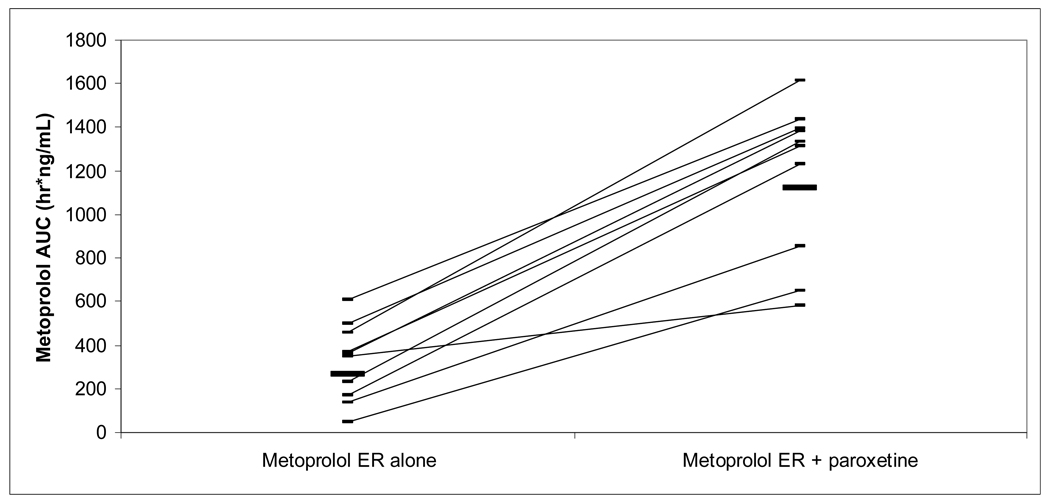 mean metoprolol AUC 265 ng*h/mL without paroxetine, 1121 ng*h/mL with paroxetine.
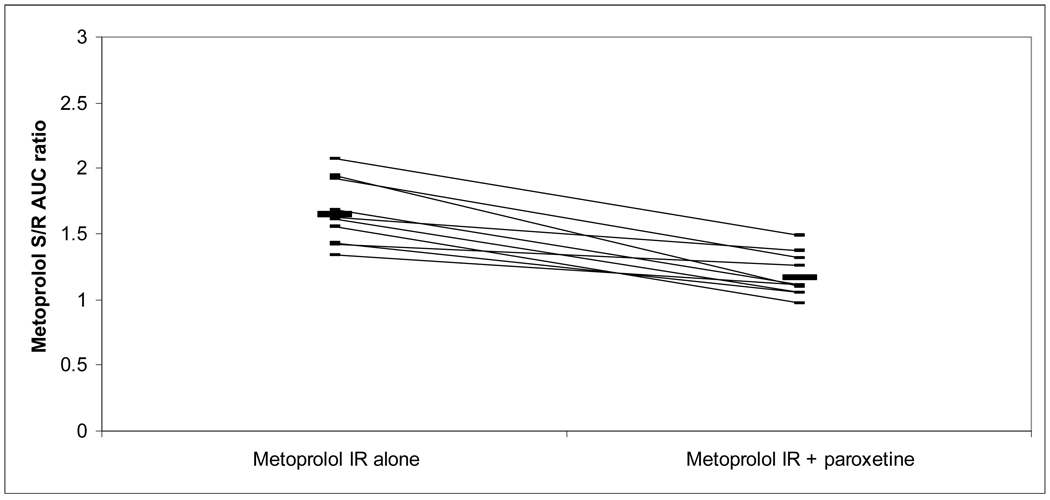 mean S/R ratio 1.6 without paroxetine, 1.2 with paroxetine.
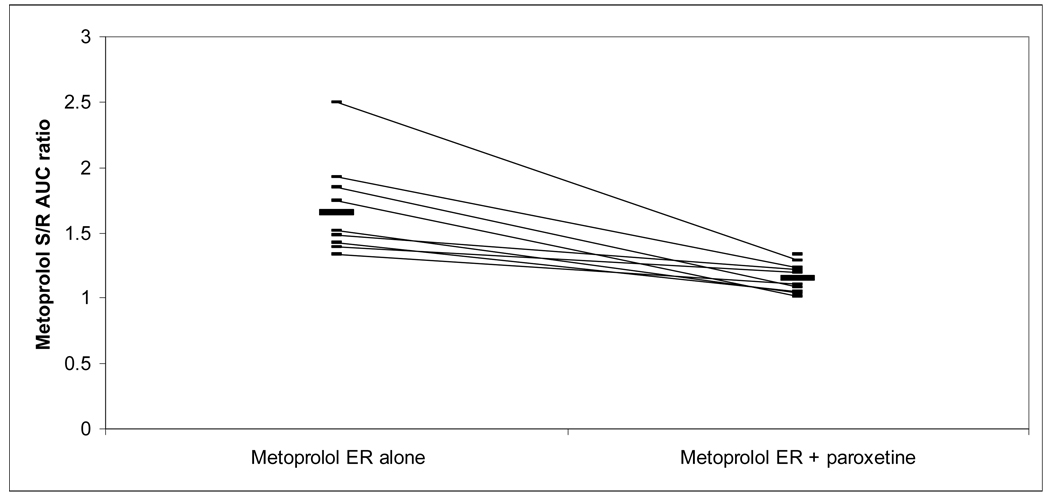 mean S/R ratio 1.7 without paroxetine, 1.2 with paroxetine.
References
-
- Borg KO, Carlsson E, Hoffmann KJ, Jönsson TE, Thorin H, Wallin B. Metabolism of metoprolol-(3-h) in man, the dog, and the rat. Acta Pharmacol Toxicol (Copenh) 1975;35 Suppl 5:125–135. - PubMed
-
- Otton SV, Crewe HK, Lennard MS, Tucker GT, Woods HF. Use of quinidine inhibition to define the role of the sparteine/debrisoquine cytochrome P450 in metoprolol oxidation by human liver microsomes. J Pharmacol Exp Ther. 1988;247(1):242–247. - PubMed
-
- Dayer P, Leemann T, Marmy A, Rosenthaler J. Interindividual variation of beta-adrenoceptor blocking drugs, plasma concentration and effect: influence of genetic status on behaviour of atenolol, bopindolol and metoprolol. Eur J Clin Pharmacol. 1985;28(2):149–153. - PubMed
Publication types
MeSH terms
Substances
Grants and funding
LinkOut - more resources
Full Text Sources
Research Materials
