


Mild therapeutic hypothermia alters neuron specific enolase as an outcome predictor after resuscitation: 97 prospective hypothermia patients compared to 133 historical non-hypothermia patients
- PMID: 20403168
- PMCID: PMC2887191
- DOI: 10.1186/cc8975
Mild therapeutic hypothermia alters neuron specific enolase as an outcome predictor after resuscitation: 97 prospective hypothermia patients compared to 133 historical non-hypothermia patients
Abstract
Introduction: Neuron specific enolase (NSE) has been proven effective in predicting neurological outcome after cardiac arrest with a current cut off recommendation of 33 microg/l. However, most of the corresponding studies were conducted before the introduction of mild therapeutic hypothermia (MTH). Therefore we conducted a study investigating the association between NSE and neurological outcome in patients treated with MTH.
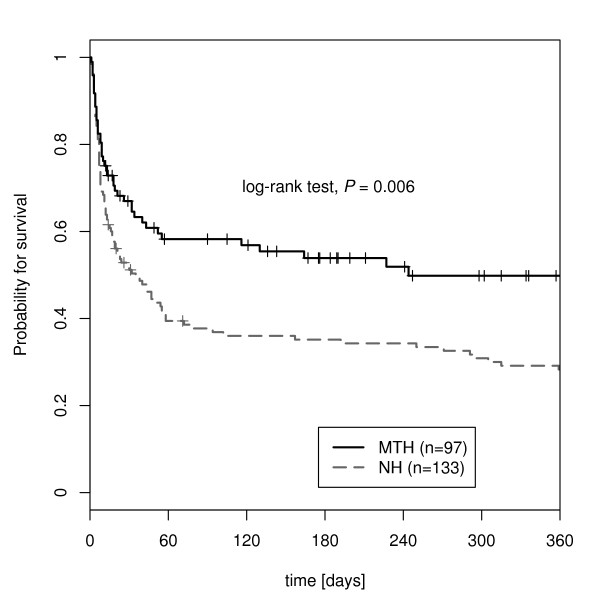
Methods: In this prospective observational cohort study the data of patients after cardiac arrest receiving MTH (n = 97) were consecutively collected and compared with a retrospective non-hypothermia (NH) group (n = 133). Serum NSE was measured 72 hours after admission to ICU. Neurological outcome was classified according to the Pittsburgh cerebral performance category (CPC 1 to 5) at ICU discharge.
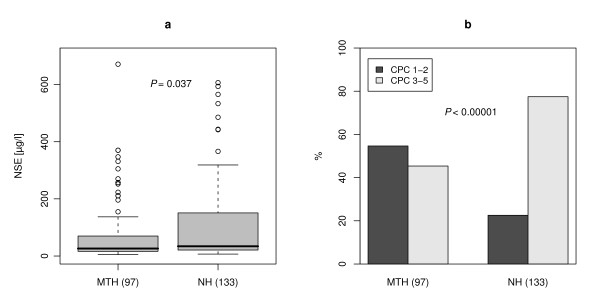
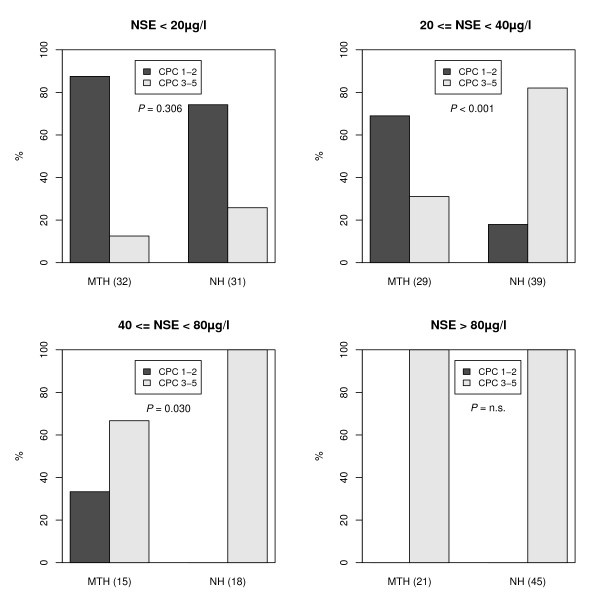
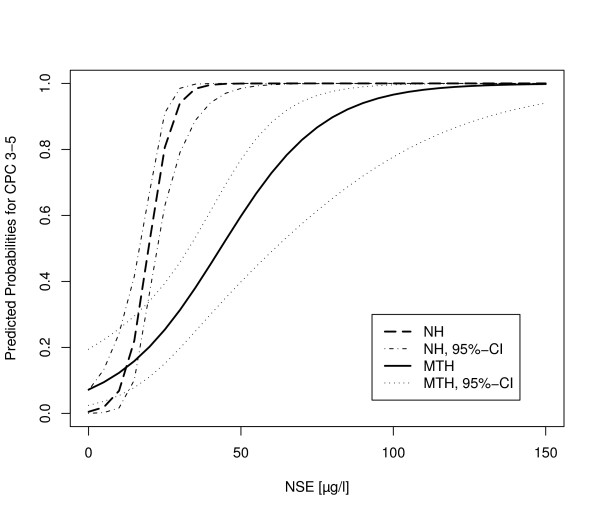
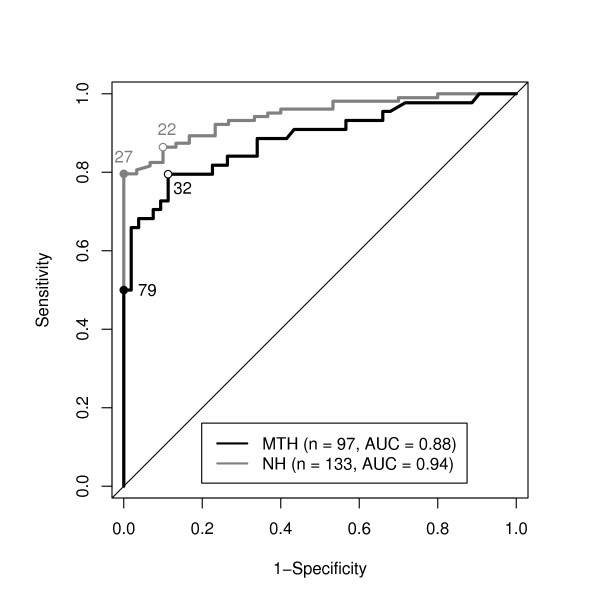
Results: NSE serum levels were significantly lower under MTH compared to NH in univariate analysis. However, in a linear regression model NSE was affected significantly by time to return of spontaneous circulation (ROSC) and ventricular fibrillation rhythm but not by MTH. The model for neurological outcome identified NSE, NSE*MTH (interaction) as well as time to ROSC as significant predictors. Receiver Operating Characteristic (ROC) analysis revealed a higher cutoff value for unfavourable outcome (CPC 3 to 5) with a specificity of 100% in the hypothermia group (78.9 microg/l) compared to the NH group (26.9 microg/l).
Conclusions: Recommended cutoff levels for NSE 72 hours after ROSC do not reliably predict poor neurological outcome in cardiac arrest patients treated with MTH. Prospective multicentre trials are required to re-evaluate NSE cutoff values for the prediction of neurological outcome in patients treated with MTH.
Figures
References
-
- Pfeifer R, Borner A, Krack A, Sigusch HH, Surber R, Figulla HR. Outcome after cardiac arrest: predictive values and limitations of the neuroproteins neuron-specific enolase and protein S-100 and the Glasgow Coma Scale. Resuscitation. 2005;65:49–55. doi: 10.1016/j.resuscitation.2004.10.011. - DOI - PubMed
-
- Meynaar IA, Oudemans-van Straaten HM, Wetering J van der, Verlooy P, Slaats EH, Bosman RJ, Spoel JI van der, Zandstra DF. Serum neuron-specific enolase predicts outcome in post-anoxic coma: a prospective cohort study. Intensive Care Med. 2003;29:189–195. - PubMed
-
- Schoerkhuber W, Kittler H, Sterz F, Behringer W, Holzer M, Frossard M, Spitzauer S, Laggner AN. Time course of serum neuron-specific enolase. A predictor of neurological outcome in patients resuscitated from cardiac arrest. Stroke. 1999;30:1598–1603. - PubMed
Publication types
MeSH terms
Substances
LinkOut - more resources
Full Text Sources
Medical
