


New insights into p53 activation
- PMID: 20404858
- PMCID: PMC3070262
- DOI: 10.1038/cr.2010.53
New insights into p53 activation
Abstract
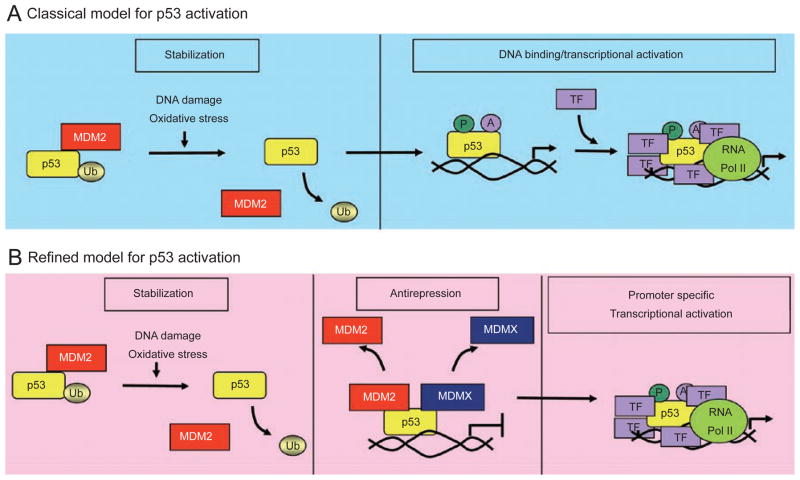
The tumor suppressor p53 is a multifunctional, highly regulated, and promoter-specific transcriptional factor that is uniquely sensitive to DNA damage and cellular stress signaling. The mechanisms by which p53 directs a damaged cell down either a cell growth arrest or an apoptotic pathway remain poorly understood. Evidence suggests that the in vivo functions of p53 seem to balance the cell-fate choice with the type and severity of damage that occurs. The concept of antirepression, or inhibition of factors that normally keep p53 at bay, may help explain the physiological mechanisms for p53 activation. These factors also provide novel chemotherapeutic targets for the reactivation of p53 in tumors harboring a wild-type copy of the gene.
Figures
References
-
- Bensaad K, Vousden KH. p53: new roles in metabolism. Trends Cell Biol. 2007;17:286–291. - PubMed
-
- Vousden KH, Lane DP. p53 in health and disease. Nat Rev Mol Cell Biol. 2007;8:275–283. - PubMed
-
- Vousden KH, Prives C. Blinded by the light: the growing complexity of p53. Cell. 2009;137:413–431. - PubMed
-
- Haupt Y, Maya R, Kazaz A, Oren M. Mdm2 promotes the rapid degradation of p53. Nature. 1997;387:296–299. - PubMed
Publication types
MeSH terms
Substances
Grants and funding
LinkOut - more resources
Full Text Sources
Other Literature Sources
Research Materials
Miscellaneous
