


Estrogen regulates estrogen receptors and antioxidant gene expression in mouse skeletal muscle
- PMID: 20405008
- PMCID: PMC2854140
- DOI: 10.1371/journal.pone.0010164
Estrogen regulates estrogen receptors and antioxidant gene expression in mouse skeletal muscle
Abstract
Background: Estrogens are associated with the loss of skeletal muscle strength in women with age. Ovarian hormone removal by ovariectomy in mice leads to a loss of muscle strength, which is reversed with 17beta-estradiol replacement. Aging is also associated with an increase in antioxidant stress, and estrogens can improve antioxidant status via their interaction with estrogen receptors (ER) to regulate antioxidant gene expression. The purpose of this study was to determine if ER and antioxidant gene expression in skeletal muscle are responsive to changes in circulating estradiol, and if ERs regulate antioxidant gene expression in this tissue.
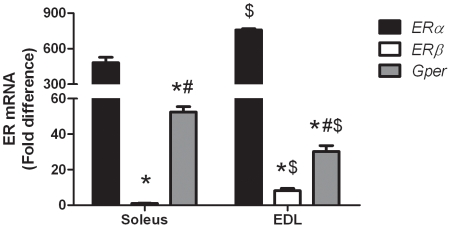
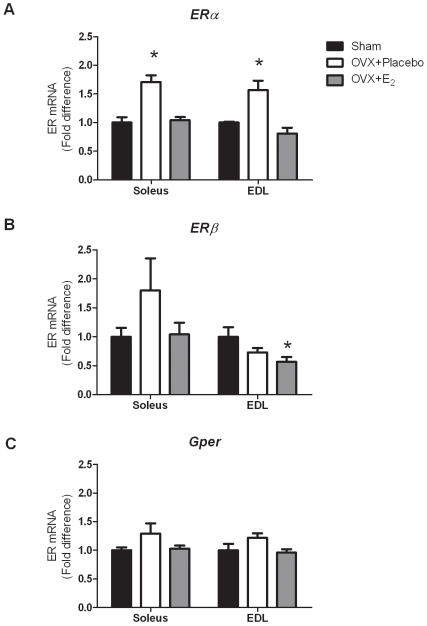
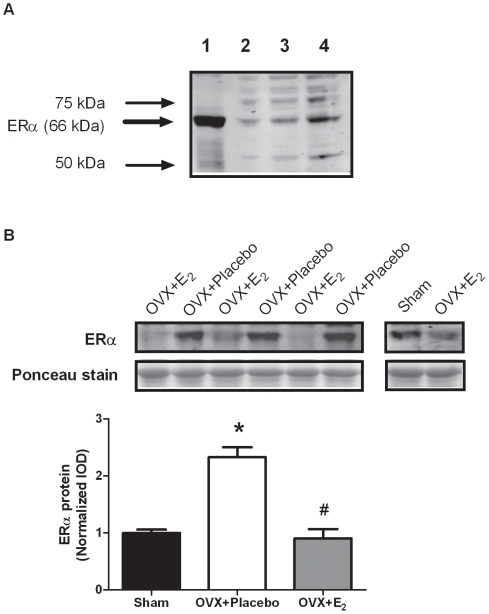
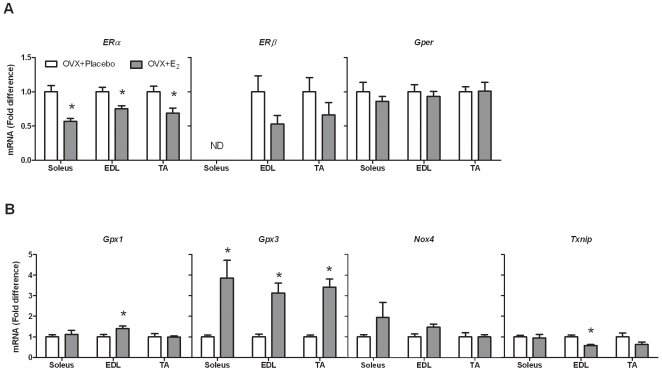
Methodology/principal findings: Adult C57BL/6 mice underwent ovariectomies or sham surgeries to remove circulating estrogens. These mice were implanted with placebo or 17beta-estradiol pellets acutely or chronically. A separate experiment examined mice that received weekly injections of Faslodex to chronically block ERs. Skeletal muscles were analyzed for expression of ER genes and proteins and antioxidant genes. ERalpha was the most abundant, followed by Gper and ERbeta in both soleus and EDL muscles. The loss of estrogens through ovariectomy induced ERalpha gene and protein expression in the soleus, EDL, and TA muscles at both the acute and chronic time points. Gpx3 mRNA was also induced both acutely and chronically in all 3 muscles in mice receiving 17beta-estradiol. When ERs were blocked using Faslodex, Gpx3 mRNA was downregulated in the soleus muscle, but not the EDL and TA muscles.
Conclusions/significance: These data suggest that Gpx3 and ERalpha gene expression are sensitive to circulating estrogens in skeletal muscle. ERs may regulate Gpx3 gene expression in the soleus muscle, but skeletal muscle regulation of Gpx3 via ERs is dependent upon muscle type. Further work is needed to determine the indirect effects of estrogen and ERalpha on Gpx3 expression in skeletal muscle, and their importance in the aging process.
Conflict of interest statement
Figures

References
-
- Ronkainen PH, Kovanen V, Alen M, Pollanen E, Palonen EM, et al. Postmenopausal hormone replacement therapy modifies skeletal muscle composition and function: a study with monozygotic twin pairs. J Appl Physiol. 2009;107:25–33. - PubMed
-
- Moran AL, Warren GL, Lowe DA. Removal of ovarian hormones from mature mice detrimentally affects muscle contractile function and myosin structural distribution. J Appl Physiol. 2006;100:548–59. - PubMed
-
- Moran AL, Nelson SA, Landisch RM, Warren GL, Lowe DA. Estradiol replacement reverses ovariectomy-induced muscle contractile and myosin dysfunction in mature female mice. J Appl Physiol. 2007;102:1387–93. - PubMed
-
- Couse JF, Lindzey J, Grandien K, Gustafsson JA, Korach KS. Tissue distribution and quantitative analysis of estrogen receptor-alpha (ERalpha) and estrogen receptor-beta (ERbeta) messenger ribonucleic acid in the wild-type and ERalpha-knockout mouse. Endocrinology. 1997;138:4613–21. - PubMed
Publication types
MeSH terms
Substances
Grants and funding
LinkOut - more resources
Full Text Sources
Medical
Miscellaneous
