


Roles for pituitary adenylate cyclase-activating peptide (PACAP) expression and signaling in the bed nucleus of the stria terminalis (BNST) in mediating the behavioral consequences of chronic stress
- PMID: 20405238
- PMCID: PMC2955825
- DOI: 10.1007/s12031-010-9364-7
Roles for pituitary adenylate cyclase-activating peptide (PACAP) expression and signaling in the bed nucleus of the stria terminalis (BNST) in mediating the behavioral consequences of chronic stress
Abstract
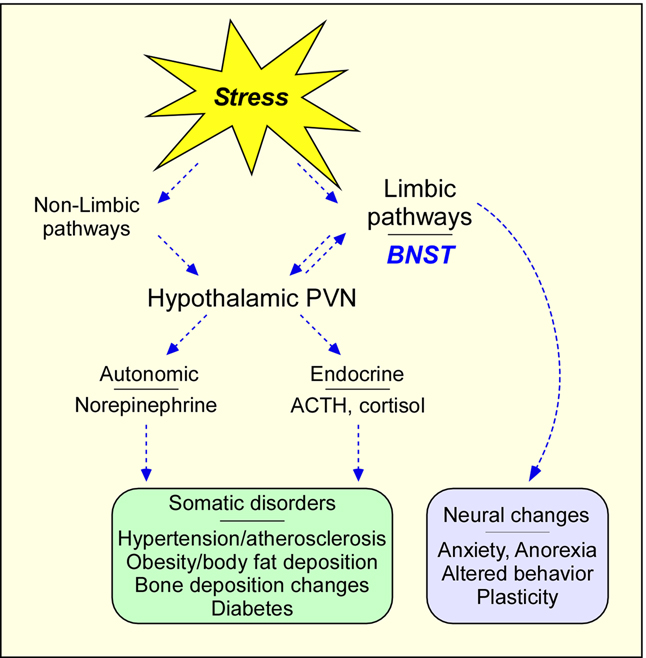
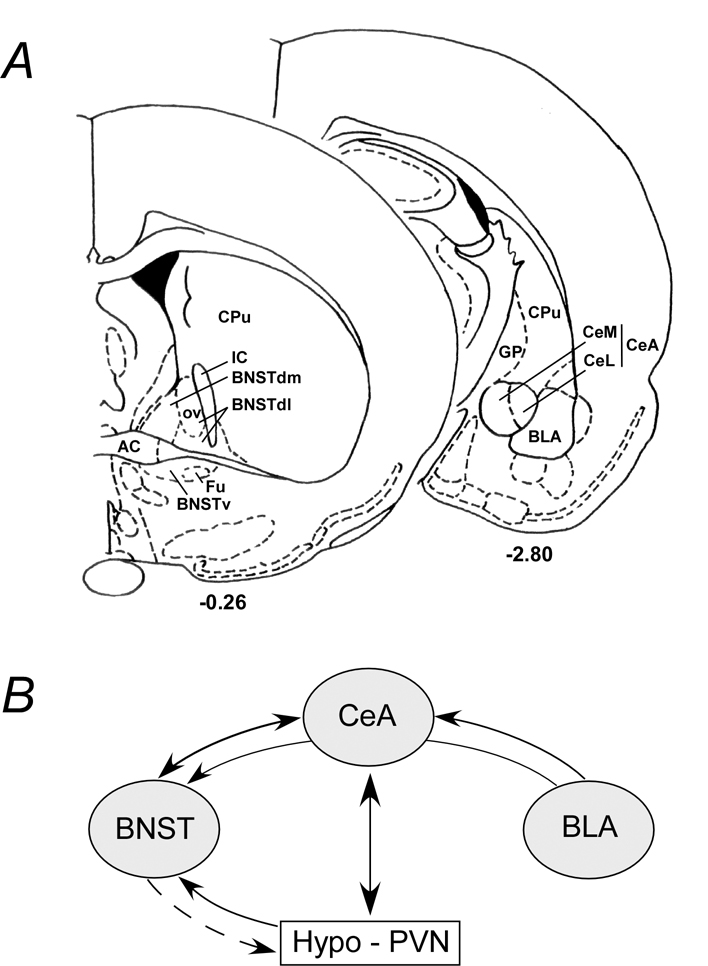
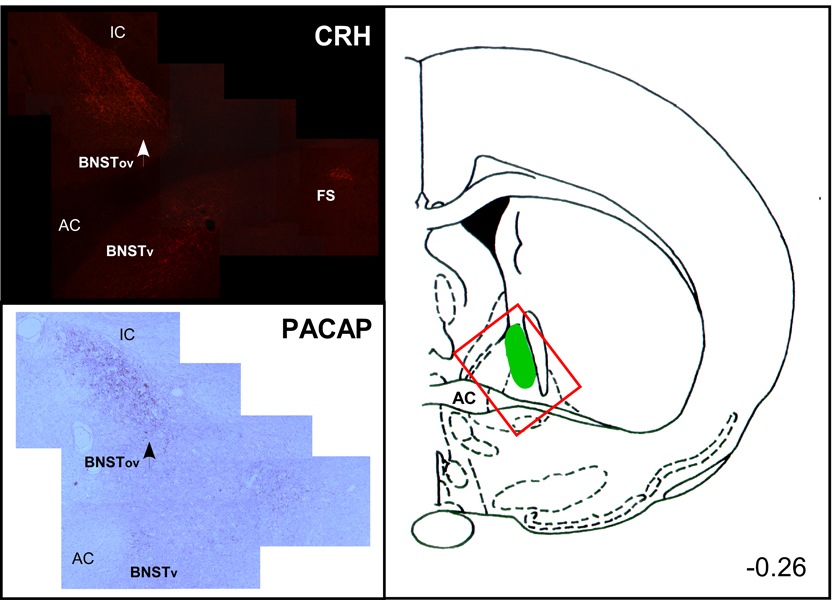
Anxiety disorders are frequently long-lasting and debilitating for more than 40 million American adults. Although stressor exposure plays an important role in the etiology of some anxiety disorders, the mechanisms by which exposure to stressful stimuli alters central circuits that mediate anxiety-like emotional behavior are still unknown. Substantial evidence has implicated regions of the central extended amygdala, including the bed nucleus of the stria terminalis (BNST) and the central nucleus of the amygdala as critical structures mediating fear- and anxiety-like behavior in both humans and animals. These areas organize coordinated fear- and anxiety-like behavioral responses as well as peripheral stress responding to threats via direct and indirect projections to the paraventricular nucleus of the hypothalamus and brainstem regions (Walker et al. Eur J Pharmacol 463:199-216, 2003, Prog Neuropsychopharmacol Biol Psychiatry 33(8):1291-1308, 2009; Ulrich-Lai and Herman Nat Rev Neurosci 10:397-409, 2009). In particular, the BNST has been argued to mediate these central and peripheral responses when the perceived threat is of long duration (Waddell et al. Behav Neurosci 120:324-336, 2006) and/or when the anxiety-like response is sustained (Walker and Davis Brain Struct Funct 213:29-42, 2008); hence, the BNST may mediate pathological anxiety-like states that result from exposure to chronic stress. Indeed, chronic stress paradigms result in enhanced BNST neuroplasticity that has been associated with pathological anxiety-like states (Vyas et al. Brain Res 965:290-294, 2003; Pego et al. Eur J Neurosci 27:1503-1516, 2008). Here we review evidence that suggests that pituitary adenylate cyclase-activating polypeptide (PACAP) and corticotropin-releasing hormone (CRH) work together to modulate BNST function and increase anxiety-like behavior. Moreover, we have shown that BNST PACAP as well as its cognate PAC1 receptor is substantially upregulated following chronic stress, particularly in the BNST oval nucleus where PACAP-containing neurons closely interact with CRH-containing neurons (Kozicz et al. Brain Res 767:109-119, 1997; Hammack et al. Psychoneuroendocrinology 34:833-843, 2009). We describe how interactions between PACAP and CRH in the BNST may mediate stress-associated behaviors, including anorexia and anxiety-like behavior. These studies have the potential to define specific mechanisms underlying anxiety disorders, and may provide important therapeutic strategies for stress and anxiety management.
Figures
References
-
- Agarwal A, Halvorson LM, Legradi G. Pituitary adenylate cyclase-activating polypeptide (PACAP) mimics neuroendocrine and behavioral manifestations of stress: Evidence for PKA-mediated expression of the corticotropin-releasing hormone (CRH) gene. Brain Res Mol Brain Res. 2005;138:45–57. - PMC - PubMed
-
- Arborelius L, Owens MJ, Plotsky PM, Nemeroff CB. The role of corticotropin-releasing factor in depression and anxiety disorders. J Endocrinol. 1999;160:1–12. - PubMed
-
- Arimura A. Perspectives on pituitary adenylate cyclase activating polypeptide (PACAP) in the neuro-endocrine, endocrine, and nervous systems. Jpn J Physiol. 1998;8:301–331. - PubMed
-
- Arimura A, Somogyvari-Vigh A, Miyata A, et al. Tissue distribution of PACAP as determined by RIA: highly abundant in the rat brain and testes. Endocrinology. 1991;129:2787–2789. - PubMed
Publication types
MeSH terms
Substances
Grants and funding
LinkOut - more resources
Full Text Sources
Other Literature Sources
Medical
Molecular Biology Databases
