


Analysis of peptides in prohormone convertase 1/3 null mouse brain using quantitative peptidomics
- PMID: 20412386
- PMCID: PMC2897930
- DOI: 10.1111/j.1471-4159.2010.06760.x
Analysis of peptides in prohormone convertase 1/3 null mouse brain using quantitative peptidomics
Abstract
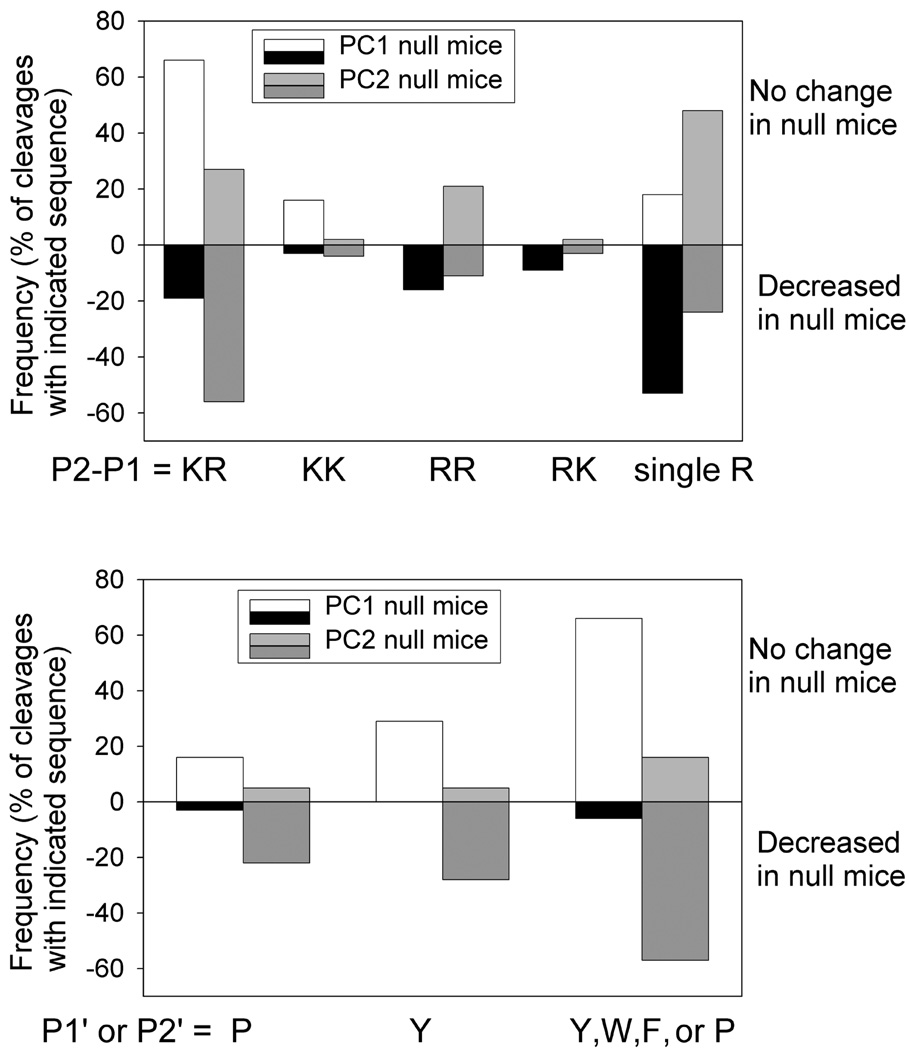
Neuropeptides are produced from larger precursors by limited proteolysis, first by endopeptidases and then by carboxypeptidases. Major endopeptidases required for these cleavages include prohormone convertase (PC) 1/3 and PC2. In this study, quantitative peptidomics analysis was used to characterize the specific role PC1/3 plays in this process. Peptides isolated from hypothalamus, amygdala, and striatum of PC1/3 null mice were compared with those from heterozygous and wild-type mice. Extracts were labeled with stable isotopic tags and fractionated by HPLC, after which relative peptide levels were determined using tandem mass spectrometry. In total, 92 peptides were found, of which 35 were known neuropeptides or related peptides derived from 15 distinct secretory pathway proteins: 7B2, chromogranin A and B, cocaine- and amphetamine-regulated transcript, procholecystokinin, proenkephalin, promelanin concentrating hormone, proneurotensin, propituitary adenylate cyclase-activating peptide, proSAAS, prosomatosatin, provasoactive intestinal peptide, provasopressin, secretogranin III, and VGF. Among the peptides derived from these proteins, approximately 1/3 were decreased in the PC1/3 null mice relative to wild-type mice, approximately 1/3 showed no change, and approximately 1/3 increased in PC1/3 null. Cleavage sites were analyzed in peptides that showed no change or that decreased in PC1/3 mice, and these results were compared with peptides that showed no change or decreased in previous peptidomic studies with PC2 null mice. Analysis of these sites showed that while PC1/3 and PC2 have overlapping substrate preferences, there are particular cleavage site residues that distinguish peptides preferred by each PC.
Figures

References
-
- Baggerman G, Verleyen P, Clynen E, Huybrechts J, De Loof A, Schoofs L. Peptidomics. J Chromatogr B Analyt Technol Biomed Life Sci. 2004;803:3–16. - PubMed
-
- Basak A, Koch P, Dupelle M, Fricker LD, Devi LA, Chretien M, Seidah NG. Inhibitory specificity and potency of proSAAS-derived peptides toward proprotein convertase 1. J Biol Chem. 2001;276:32720–32728. - PubMed
-
- Beinfeld MC, Funkelstein L, Foulon T, Cadel S, Kitagawa K, Toneff T, Reinheckel T, Peters C, Hook V. Cathepsin L plays a major role in cholecystokinin production in mouse brain cortex and in pituitary AtT-20 cells: protease gene knockout and inhibitor studies. Peptides. 2009;30:1882–1891. - PMC - PubMed
Publication types
MeSH terms
Substances
Grants and funding
LinkOut - more resources
Full Text Sources
Other Literature Sources
Molecular Biology Databases
Research Materials
Miscellaneous
