


Immunotherapy of type 1 diabetes: where are we and where should we be going?
- PMID: 20412759
- PMCID: PMC2860878
- DOI: 10.1016/j.immuni.2010.04.002
Immunotherapy of type 1 diabetes: where are we and where should we be going?
Abstract
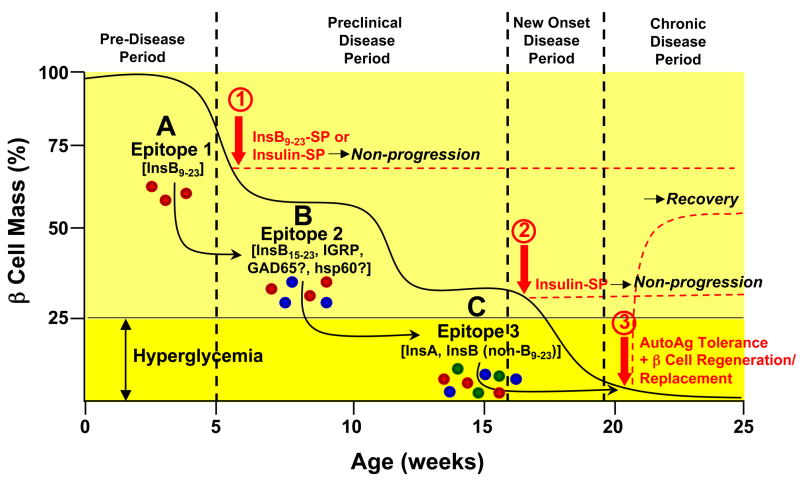
Type 1 diabetes (T1D) is a chronic autoimmune disorder characterized by destruction of insulin-producing pancreatic beta cells. Many broad-based immunosuppressive and antigen-specific immunoregulatory therapies have been and are currently being evaluated for their utility in the prevention and treatment of T1D. Looking forward, this review discusses the potential therapeutic use of antigen-specific tolerance strategies, including tolerance induced by "tolerogenic" antigen-presenting cells pulsed with diabetogenic antigens and transfer of induced or expanded regulatory T cells, which have demonstrated efficacy in nonobese diabetic (NOD) mice. Depending on the time of therapeutic intervention in the T1D disease process, antigen-specific immunoregulatory strategies may be employed as monotherapies, or in combination with short-term tolerance-promoting immunoregulatory drugs and/or drugs promoting differentiation of insulin-producing beta cells from endogenous progenitors.
Copyright 2010 Elsevier Inc. All rights reserved.
Figures
References
-
- Achenbach P, Bonifacio E, Ziegler AG. Predicting type 1 diabetes. Curr Diab Rep. 2005;5:98–103. - PubMed
-
- Agardh CD, Cilio CM, Lethagen A, Lynch K, Leslie RD, Palmer M, Harris RA, Robertson JA, Lernmark A. Clinical evidence for the safety of GAD65 immunomodulation in adult-onset autoimmune diabetes. J Diabetes Complications. 2005;19:238–246. - PubMed
-
- Anderson MS, Bluestone JA. The NOD mouse: a model of immune dysregulation. Annu Rev Immunol. 2005;23:447–485. - PubMed
-
- Assan R, Timsit J, Feutren G, Bougneres P, Czernichow P, Hannedouche T, Boitard C, Noel LH, Mihatsch MJ, Bach JF. The kidney in cyclosporin A-treated diabetic patients: a long-term clinicopathological study. Clin Nephrol. 1994;41:41–49. - PubMed
Publication types
MeSH terms
Substances
Grants and funding
LinkOut - more resources
Full Text Sources
Other Literature Sources
Medical
