


Body composition and energy metabolism following Roux-en-Y gastric bypass surgery
- PMID: 20414197
- PMCID: PMC3742000
- DOI: 10.1038/oby.2010.89
Body composition and energy metabolism following Roux-en-Y gastric bypass surgery
Abstract
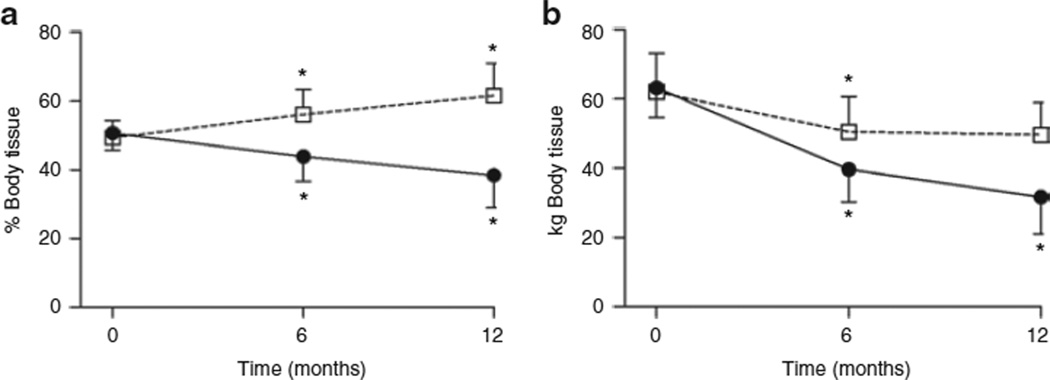
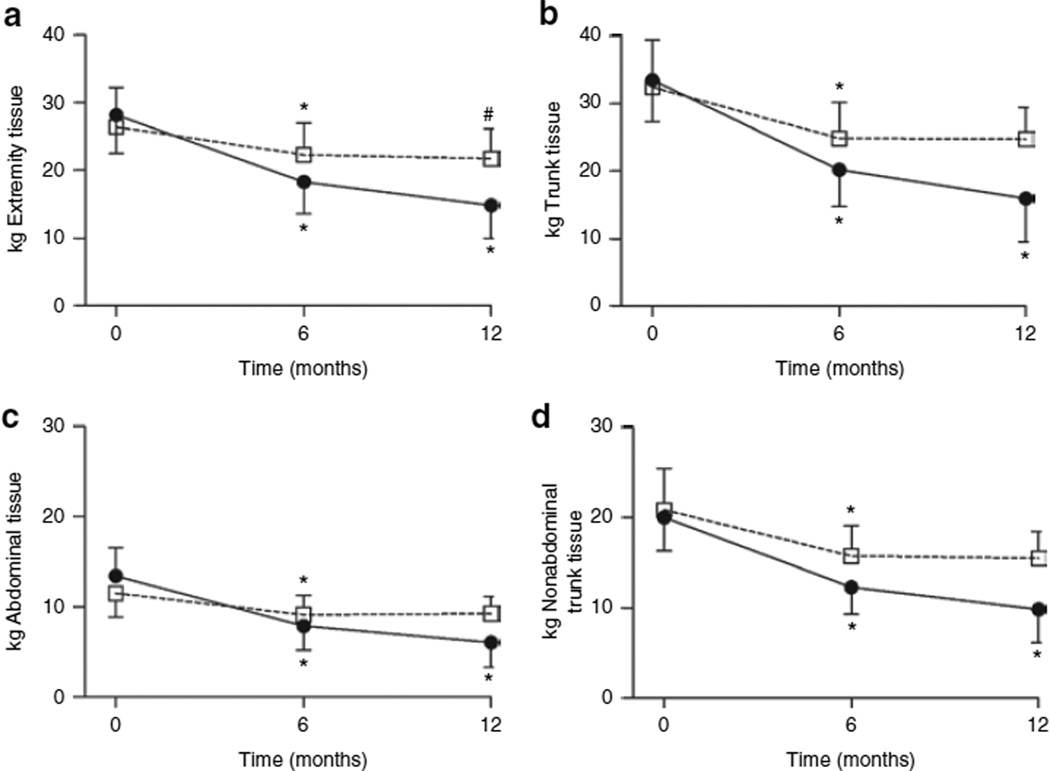
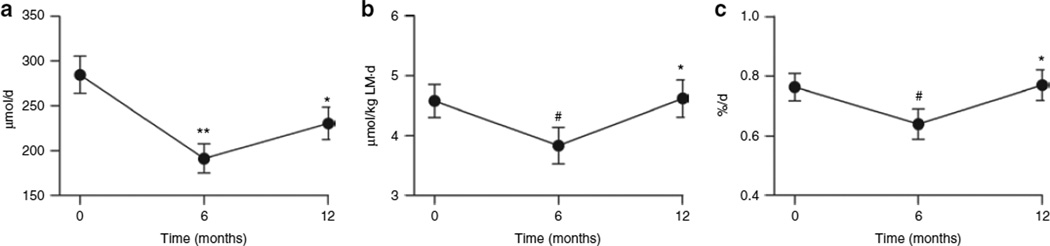
Roux-en-Y gastric bypass (RYGB) surgery has become an accepted treatment for excessive obesity. We conducted a longitudinal study to assess regional body composition, muscle proteolysis, and energy expenditure before RYGB, and 6 and 12 months after RYGB. Whole-body and regional fat mass (FM) and lean mass (LM) were assessed via dual energy X-ray absorptiometry (DXA), and myofibrillar protein degradation was estimated by urinary 3-methylhistidine (3-MeH) in 29 subjects. Energy expenditure and substrate oxidation were also determined using a whole-room, indirect calorimeter in 12 of these subjects. LM loss constituted 27.8 +/- 10.2% of total weight loss achieved 12 months postoperatively, with the majority of LM loss (18 +/- 6% of initial LM) occurring in the first 6 months following RYGB. During this period, the trunk region contributed 66% of whole-body LM loss. LM loss occurred in the first 6 months after RYGB despite decreased muscle protein breakdown, as indicated by a decrease in 3-MeH concentrations and muscle fractional breakdown rates. Sleep energy expenditure (SEE) decreased from 2,092 +/- 342 kcal/d at baseline to 1,495 +/- 190 kcal/day at 6 months after RYGB (P < 0.0001). Changes in both LM and FM had an effect on the reduction in SEE (P < 0.001 and P = 0.005, respectively). These studies suggest that loss of LM after RYGB is significant and strategies to maintain LM after surgery should be explored.
Conflict of interest statement
The authors declared no conflict of interest.
Figures
References
-
- Phelan S, Wadden TA, Berkowitz RI, et al. Impact of weight loss on the metabolic syndrome. Int J Obes (Lond) 2007;31:1442–1448. - PubMed
-
- Wadden TA, Butryn ML, Byrne KJ. Efficacy of lifestyle modification for long-term weight control. Obes Res. 2004;12(Suppl):151S–162S. - PubMed
-
- Buchwald H, Estok R, Fahrbach K, et al. Weight and type 2 diabetes after bariatric surgery: systematic review and meta-analysis. Am J Med. 2009;122:248.e5–256.e5. - PubMed
-
- Chaston TB, Dixon JB, O’Brien PE. Changes in fat-free mass during significant weight loss: a systematic review. Int J Obes (Lond) 2007;31:743–750. - PubMed
-
- Müller MJ, Bosy-Westphal A, Kutzner D, Heller M. Metabolically active components of fat-free mass and resting energy expenditure in humans: recent lessons from imaging technologies. Obes Rev. 2002;3:113–122. - PubMed
Publication types
MeSH terms
Substances
Grants and funding
LinkOut - more resources
Full Text Sources
Medical
Research Materials
