


Glycoprotein expression in human milk during lactation
- PMID: 20415418
- PMCID: PMC2882031
- DOI: 10.1021/jf100112x
Glycoprotein expression in human milk during lactation
Abstract
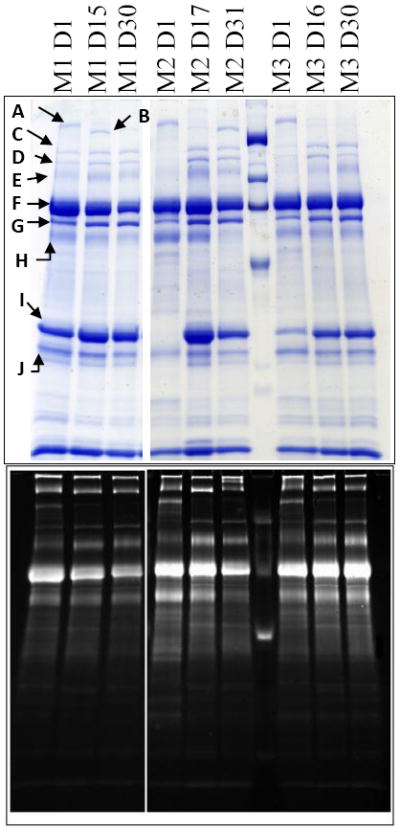
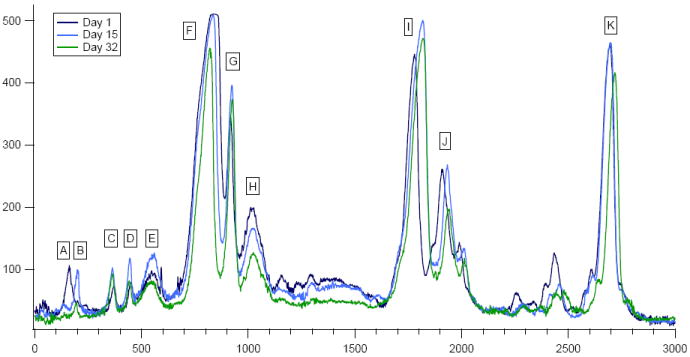
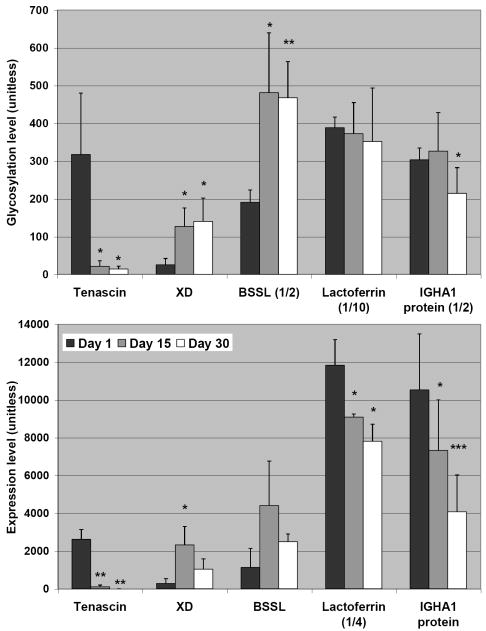
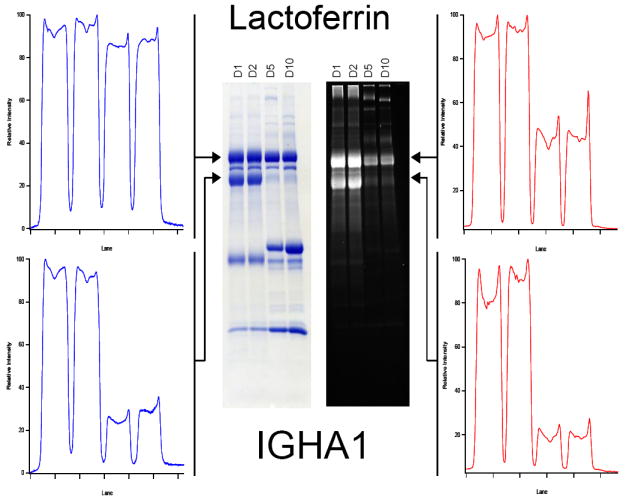
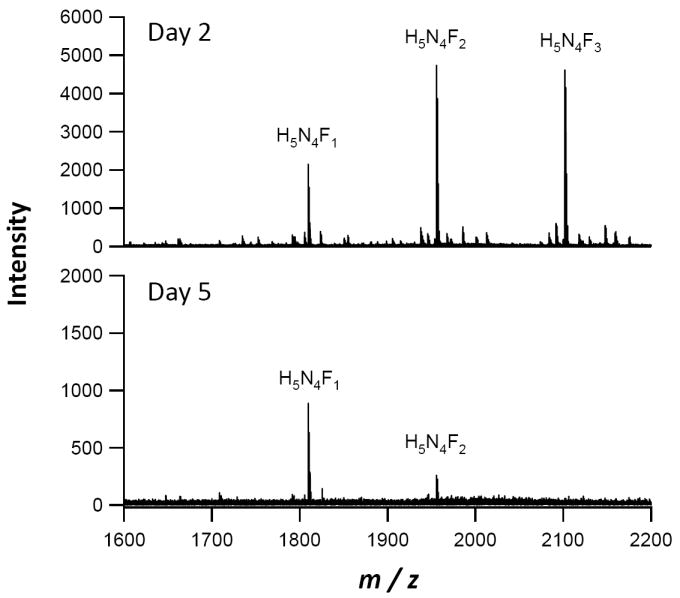
While milk proteins have been studied for decades, strikingly little effort has been applied to determining how the post-translational modifications (PTMs) of these proteins may change during the course of lactation. PTMs, particularly glycosylation, can greatly influence protein structure, function, and stability and can particularly influence the gut where their degradation products are potentially bioactive. In this work, previously undiscovered temporal variations in both expression and glycosylation of the glycoproteome of human milk are observed. Lactoferrin, one of the most abundant glycoproteins in human milk, is shown to be dynamically glycosylated during the first 10 days of lactation. Variations in expression or glycosylation levels are also demonstrated for several other abundant whey proteins, including tenascin, bile salt-stimulated lipase, xanthine dehydrogenase, and mannose receptor.
Figures
References
-
- Binns C, Lee A, Harding H, Gracey M, Barclay D. The CUPDAY Study: prebiotic-probiotic milk product in 1-3-year-old children attending childcare centres. Acta Paediatr. 2007;96(11):1646–50. - PubMed
-
- Colome G, Sierra C, Blasco J, Garcia MV, Valverde E, Sanchez E. Intestinal permeability in different feedings in infancy. Acta Paediatr. 2007;96(1):69–72. - PubMed
-
- Kokinopoulos D, Photopoulos S, Varvarigou N, Kafegidakis L, Xanthou M. The effect of human milk, protein-fortified human milk and formula on immunologic factors of newborn infants. Adv Exp Med Biol. 1991;310:77–85. - PubMed
-
- Kverka M, Burianova J, Lodinova-Zadnikova R, Kocourkova I, Cinova J, Tuckova L, Tlaskalova-Hogenova H. Cytokine profiling in human colostrum and milk by protein array. Clin Chem. 2007;53(5):955–62. - PubMed
-
- Lonnerdal B. Nutritional and physiologic significance of human milk proteins. Am J Clin Nutr. 2003;77(6):1537S–1543S. - PubMed
Publication types
MeSH terms
Substances
Grants and funding
LinkOut - more resources
Full Text Sources
Other Literature Sources
Medical
Miscellaneous
