


Evaluation of a toolkit to improve cardiovascular disease screening and treatment for people with type 2 diabetes: protocol for a cluster-randomized pragmatic trial
- PMID: 20416080
- PMCID: PMC2867980
- DOI: 10.1186/1745-6215-11-44
Evaluation of a toolkit to improve cardiovascular disease screening and treatment for people with type 2 diabetes: protocol for a cluster-randomized pragmatic trial
Abstract
Background: The gap between the level of care recommended by evidence-based clinical practice guidelines and the actual care delivered to patients in practice has been well established. The Canadian Diabetes Association (CDA) created an implementation strategy to improve the implementation of its 2008 guidelines. This study will evaluate the impact of the strategy to improve cardiovascular disease (CVD) screening, prevention and treatment for people with diabetes.
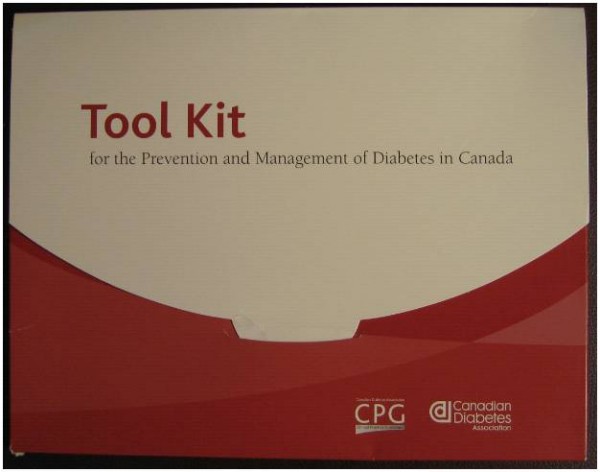
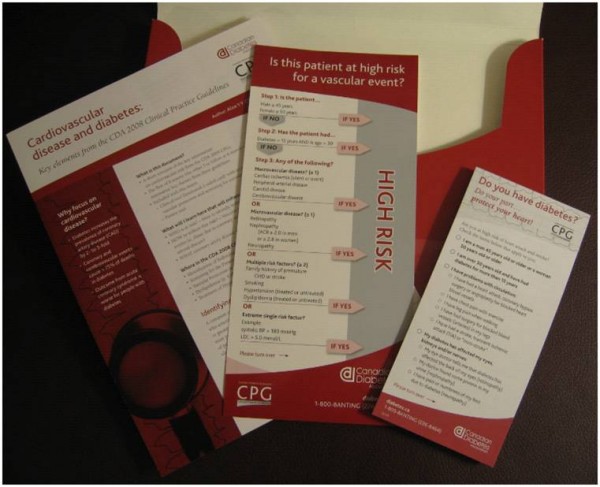
Design: A pragmatic cluster-randomized trial will be conducted to evaluate the CDA's CVD Toolkit. All family physicians in Ontario, Canada were randomly allocated to receive the Toolkit, which includes several printed educational materials targeting CVD screening, prevention and treatment, either in spring 2009 (intervention arm) or in spring 2010 (control arm). Randomization occurred at the level of the practice. Forty family physicians from each arm will be recruited to participate, and the medical records for 20 of their diabetic patients at high risk for CVD will be retrospectively reviewed. Outcome measures will be assessed for each patient between July 2009 and March 2010. The primary outcome will be that the patient is receiving a statin. Secondary outcomes will include 1) the receipt of an angiotensin converting enzyme inhibitor or angiotensin receptor blocker, 2) various intermediate measures (A1c, blood pressure, LDL-cholesterol, total-/HDL-cholesterol ratio, body mass index and waist circumference), and 3) clinical inertia (the failure to change therapy in response to an abnormal A1c, blood pressure or cholesterol reading). The analysis will be carried out using multilevel hierarchical logistic regression models to account for the clustered nature of the data. The group assignment will be a physician-level variable. In addition, a process evaluation study with six focus groups of family physicians will assess the acceptability of the CDA's Toolkit and will explore factors contributing to any change or lack of change in behaviour, from the perspectives of family physicians.
Discussion: Printed educational materials for physicians have been shown to exert small-to-moderate changes in patient care. The CDA's CVD Toolkit is an example of a practice guideline implementation strategy that can be disseminated to a wide audience relatively inexpensively, and so demonstrating its effectiveness at improving diabetes care could have important consequences for guideline developers, policy makers and clinicians.
Trial registration: ClinicalTrials.gov NCT01026688.
Figures
References
-
- Stewart AL, Greenfield S, Hays RD, Wells K, Rogers WH, Berry SD, McGlynn EA, Ware JE Jr. Functional status and well-being of patients with chronic conditions. Results from the Medical Outcomes Study. JAMA: Journal of the American Medical Association. 1989;262:907–913. doi: 10.1001/jama.262.7.907. - DOI - PubMed
-
- Gregg EW, Gu Q, Cheng YJ, Narayan KMV, Cowie CC. Mortality trends in men and women with diabetes, 1971 to 2000. Ann Intern Med. 2007;147:149–155. - PubMed
-
- Diabetes Control and Complications Trial Research Group. The effect of intensive treatment of diabetes on the development and progression of long-term complications in insulin-dependent diabetes mellitus. The New England Journal of Medicine. 1993;329:977–986. doi: 10.1056/NEJM199309303291401. - DOI - PubMed
Publication types
MeSH terms
Substances
Associated data
Grants and funding
LinkOut - more resources
Full Text Sources
Medical
Miscellaneous
