


The biology and treatment of EML4-ALK non-small cell lung cancer
- PMID: 20418096
- PMCID: PMC2888755
- DOI: 10.1016/j.ejca.2010.04.002
The biology and treatment of EML4-ALK non-small cell lung cancer
Abstract
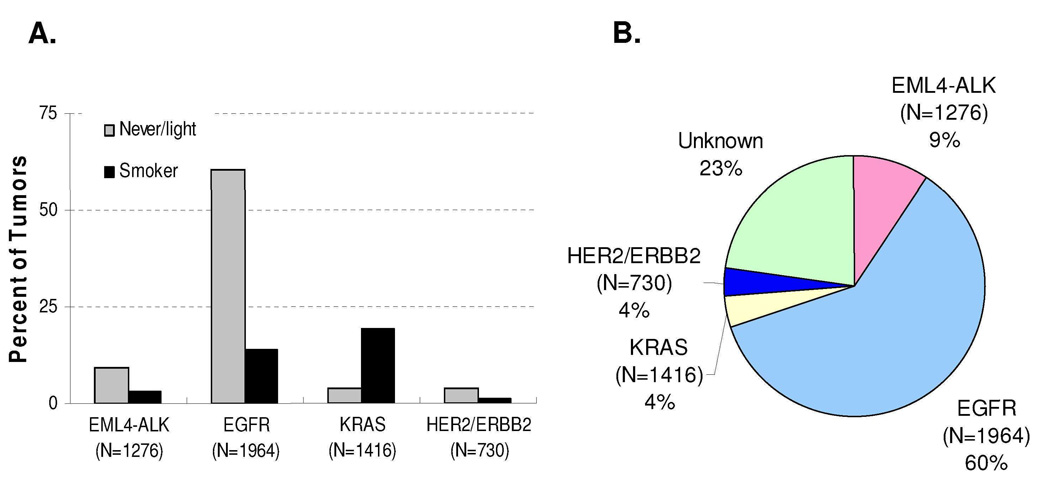
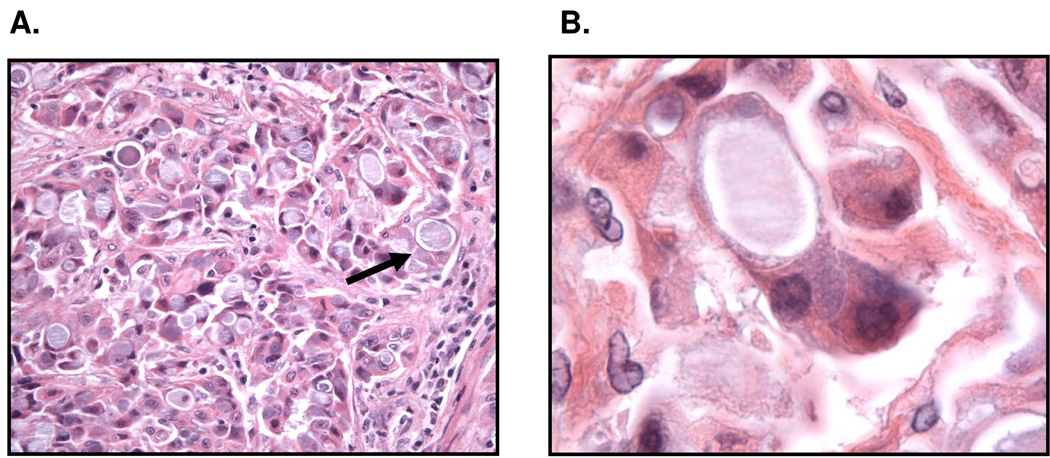
The fusion between echinoderm microtubule-associated protein-like 4 (EML4) and anaplastic lymphoma kinase (ALK) has recently been identified in a subset of non-small cell lung cancers (NSCLCs). EML4-ALK is most often detected in never smokers with lung cancer and has unique pathologic features. EML4-ALK is oncogenic both in vitro and in vivo and ALK kinase inhibitors are quite effective in pre-clinical model systems. More recently ALK inhibitors have entered clinical development and remarkably clinical efficacy has been observed in NSCLC patients harbouring EML4-ALK translocations. This review will focus on the biology, clinical characteristics, diagnosis and treatment of EML4-ALK NSCLC.
Copyright 2010 Elsevier Ltd. All rights reserved.
Conflict of interest statement
The authors have no conflicts of interest
Figures
References
-
- Schiller JH, Harrington D, Belani CP, et al. Comparison of four chemotherapy regimens for advanced non-small-cell lung cancer. N Engl J Med. 2002;346(2):92–98. - PubMed
-
- Mok TS, Wu YL, Thongprasert S, et al. Gefitinib or carboplatin-paclitaxel in pulmonary adenocarcinoma. N Engl J Med. 2009;361(10):947–957. - PubMed
-
- Soda M, Choi YL, Enomoto M, et al. Identification of the transforming EML4-ALK fusion gene in non-small-cell lung cancer. Nature. 2007 - PubMed
-
- Inamura K, Takeuchi K, Togashi Y, et al. EML4-ALK fusion is linked to histological characteristics in a subset of lung cancers. J Thorac Oncol. 2008;3(1):13–17. - PubMed
Publication types
MeSH terms
Substances
Grants and funding
LinkOut - more resources
Full Text Sources
Other Literature Sources
Medical
Miscellaneous
