


Massive ethylene glycol ingestion treated with fomepizole alone-a viable therapeutic option
- PMID: 20422336
- PMCID: PMC3550287
- DOI: 10.1007/s13181-010-0061-2
Massive ethylene glycol ingestion treated with fomepizole alone-a viable therapeutic option
Abstract
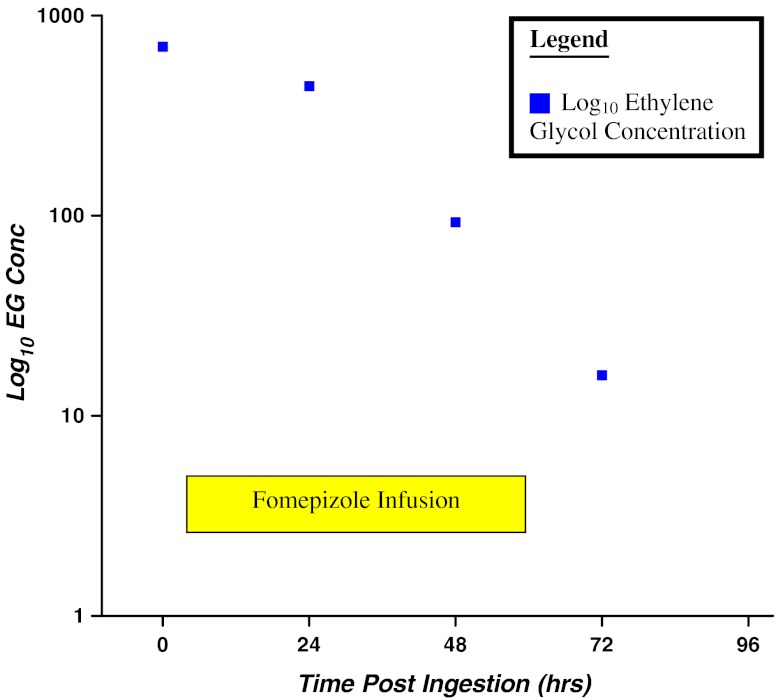
Fomepizole is used to treat and prevent toxicity from ethylene glycol poisoning. Treatment with fomepizole without hemodialysis in massive ethylene glycol ingestion has been rarely reported in the literature; however, published literature and practice guidelines recommend considering dialysis for ethylene glycol levels >50 mg/dL. We report a case of massive ethylene glycol ingestion resulting in the highest serum ethylene glycol concentration in a patient without ethanol co-ingestion who was treated with fomepizole and was not hemodialyzed. A 48-year-old male presented to the emergency department after reportedly ingesting >1 liter of antifreeze in an attempt at self-harm. He denied concomitant ethanol consumption. His initial presenting serum ethylene glycol level was 700 mg/dL, with normal renal function, and a metabolic acidosis with a high anion gap. One hour after presentation, he was started on intravenous fomepizole. Treatment with fomepizole continued until the patient's plasma ethylene glycol concentration was 16 mg/dL. His metabolic acidosis quickly resolved, he had no adverse reactions to the treatment, and his renal function remained normal. Ultimately, he was discharged to a psychiatric unit without sequelae. Published literature and practice guidelines suggests considering hemodialysis initiation in patients with an ethylene glycol level > 50 mg/dL. This recommendation is anecdotally, rather than evidence, based. With the potential risks inherent in hemodialysis, our case provides evidence that treatment with fomepizole without hemodialysis appears to be a viable alternative option in patients with even extremely high plasma ethylene glycol concentrations as long as their renal function is intact.
Figures
References
-
- Bronstein AC, Spyker DA, Cantilena LR, Jr, Green J, Rumack BH, Heard SE. Annual Report of the American Association of Poison Control Centers' National Poison Data System (NPDS) Clin Toxicol (Phila) 2007;45:815–917. - PubMed
-
- Jacobsen D. Ethylene glycol and other glycols. In: Brent J, Wallace KL, Burkhart KK, Phillips SD, Donovan JW, editors. Critical care toxicology diagnosis and management of the critically poisoned patient. Philadelphia: Elsevier Mosby; 2005. pp. 869–880.
-
- Oker EE, Kanji SA, Aks S, Fishbein C, Crockett M. Can health care workers effectively administer ethanol drips? Acad Emerg Med. 2001;8:443.
Publication types
MeSH terms
Substances
LinkOut - more resources
Full Text Sources
Miscellaneous
