


Some new insights into the molecular mechanisms of pain perception
- PMID: 20424321
- PMCID: PMC2860926
- DOI: 10.1172/JCI42143
Some new insights into the molecular mechanisms of pain perception
Abstract
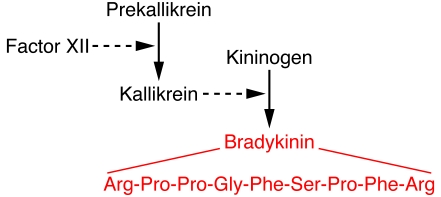
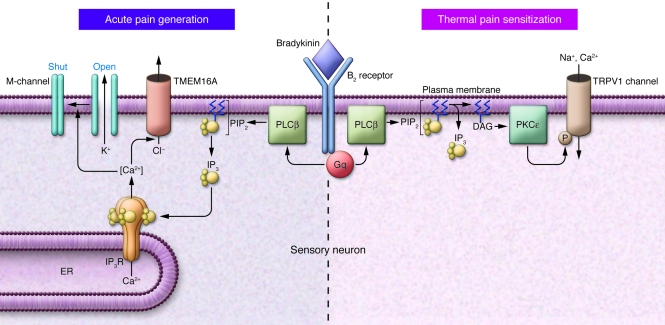
Bradykinin is the most potent endogenous inducer of acute pain. However, the way in which it excites nociceptive sensory nerve endings is still unclear. In an article recently published in the JCI, Liu et al. suggest a new mechanism via which bradykinin induces acute spontaneous pain. The authors report that the stimulation of B2 bradykinin receptors by bradykinin triggers the release of intracellular calcium ions from nociceptive sensory neurons of rat dorsal root ganglia. This depolarizes the sensory nerve endings by simultaneously closing M-type potassium channels and opening TMEM16A chloride channels, resulting in the production of nociceptive signals. Here, we discuss the relationship between this effect and a previously described mechanism for pain sensitization and evaluate its potential significance for therapeutic pain control. A separate study by Patwardhan et al. in this issue of the JCI identifies oxidized linoleic acid metabolites as novel mediators of thermally induced pain.
Figures
Comment on
-
The acute nociceptive signals induced by bradykinin in rat sensory neurons are mediated by inhibition of M-type K+ channels and activation of Ca2+-activated Cl- channels.J Clin Invest. 2010 Apr;120(4):1240-52. doi: 10.1172/JCI41084. Epub 2010 Mar 24. J Clin Invest. 2010. PMID: 20335661 Free PMC article.
-
Heat generates oxidized linoleic acid metabolites that activate TRPV1 and produce pain in rodents.J Clin Invest. 2010 May;120(5):1617-26. doi: 10.1172/JCI41678. Epub 2010 Apr 26. J Clin Invest. 2010. PMID: 20424317 Free PMC article.
