


Linking genetic susceptibility and T cell activation in beryllium-induced disease
- PMID: 20427584
- PMCID: PMC3266018
- DOI: 10.1513/pats.201002-022RM
Linking genetic susceptibility and T cell activation in beryllium-induced disease
Abstract
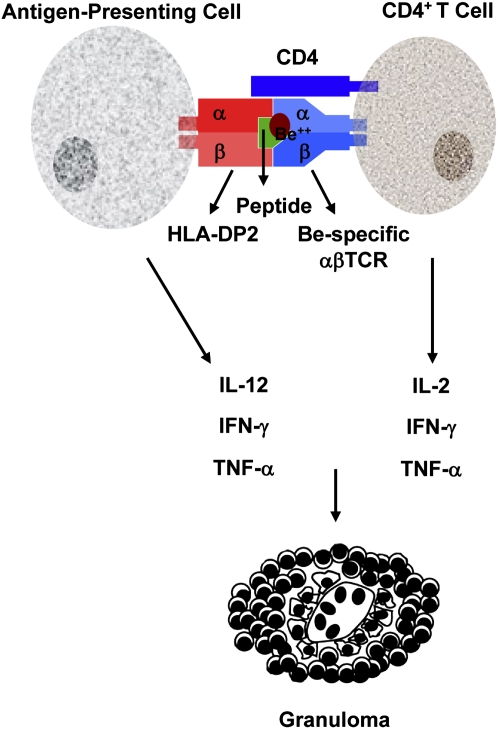
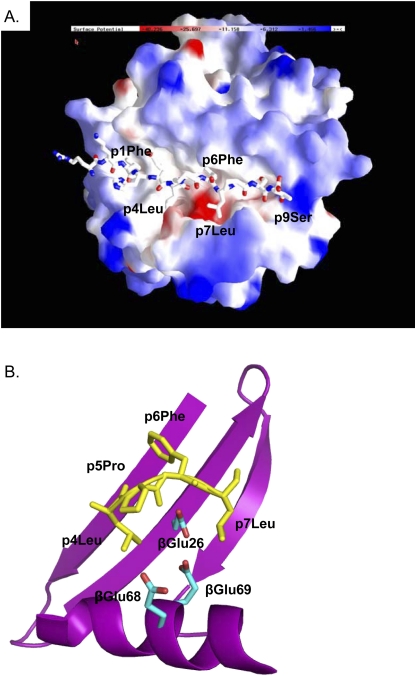
Chronic beryllium disease (CBD) is a granulomatous lung disorder caused by beryllium (Be) exposure in the workplace. It is characterized by the accumulation of Be-specific CD4(+) T cells in the lung as well as persistent lung inflammation, culminating in the development of lung fibrosis. CBD occurs in 2 to 16% of Be-exposed workers depending on the individuals' genetic susceptibility and the characteristics of the exposure. Genetic susceptibility to Be-induced disease has been linked to major histocompatibility complex class II molecules. In particular, HLA-DP alleles possessing a glutamic acid at the 69th position of the beta-chain (betaGlu69) are most strongly linked to disease susceptibility. The HLA-DP alleles that present Be to T cells match those implicated in the genetic susceptibility, suggesting that the HLA contribution to disease is based on the ability of those molecules to bind and present Be to T cells. However, the structural features of betaGlu69-containing HLA-DP molecules that explain the disease association remain unknown. We have recently crystallized HLA-DP2, which is the most prevalent of the betaGlu69-containing HLA-DP molecules. Its unique structure, which includes surface exposure of betaGlu69, provides an explanation of the genetic linkage between betaGlu69-containing HLA-DP alleles and Be-induced disease.
Figures
References
-
- Newman LS, Maier LA. Beryllium disease. In: Schwarz MI, King TE Jr, editors. Interstitial lung disease., 3rd ed. Hamilton: B.C. Decker Inc.; 2003. pp. 435–451.
-
- Henneberger PK, Goe SK, Miller WE, Doney B, Groce DW. Industries in the United States with airborne beryllium exposure and estimates of the number of current workers potentially exposed. J Occup Environ Hyg 2004;1:648–659. - PubMed
-
- Newman LS, Rose CS, Bresnitz EA, Rossman MD, Barnard J, Frederick M, Terrin ML, Weinberger SE, Moller DR, McLennan G, et al. A case control etiologic study of sarcoidosis: environmental and occupational risk factors. Am J Respir Crit Care Med 2004;170:1324–1330. - PubMed
-
- Kreiss K, Newman LS, Mroz M, Campbell PA. Screening blood test identifies subclinical beryllium disease. J Occup Med 1989;31:603–608. - PubMed
-
- Kreiss K, Wasserman S, Mroz MM, Newman LS. Beryllium disease screening in the ceramics industry: blood test performance and exposure-disease relations. J Occup Med 1993;35:267–274. - PubMed
Publication types
MeSH terms
Substances
Grants and funding
LinkOut - more resources
Full Text Sources
Research Materials