


Nanoparticles as a potential cause of pleural and interstitial lung disease
- PMID: 20427587
- PMCID: PMC3266021
- DOI: 10.1513/pats.200907-061RM
Nanoparticles as a potential cause of pleural and interstitial lung disease
Abstract
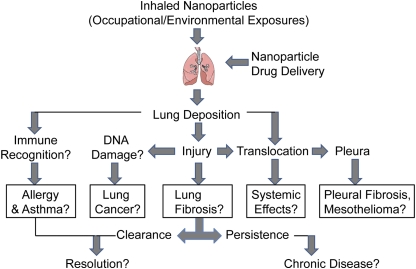
Nanotechnology holds the promise of revolutionizing our society, bringing numerous beneficial innovations to improve structural materials, electronics, energy, medical imaging, and drug delivery, among other applications. However, nanomaterials present potential safety concerns, and there is accumulating evidence to suggest that nanoparticles may exert adverse effects on the lung and other organ systems. This article will overview the potential risks of engineered nanoparticles and nanotechnology on the respiratory system and highlight recent findings related to pulmonary and systemic effects of inhaled nanoparticles. Special emphasis will be given to carbon nanotubes and the possibility that these nanoparticles could represent an emerging risk for environmental and occupational lung disease, especially in individuals with pre-existing respiratory diseases such as asthma.
Figures
References
-
- Nel A, Xia T, Madler L, Li N. Toxic potential of materials at the nanolevel. Science 2006;311:622–627. - PubMed
-
- Donaldson K, Aitken R, Tran L, Stone V, Duffin R, Forrest G, Alexander A. Carbon nanotubes: a review of their properties in relation to pulmonary toxicology and workplace safety. Toxicol Sci 2006;92:5–22. - PubMed
Publication types
MeSH terms
Grants and funding
LinkOut - more resources
Full Text Sources
Medical