. 2010 Apr 23;5(4):e10256.
doi: 10.1371/journal.pone.0010256.

Characterization of quasispecies of pandemic 2009 influenza A virus (A/H1N1/2009) by de novo sequencing using a next-generation DNA sequencer

Affiliations

Characterization of quasispecies of pandemic 2009 influenza A virus (A/H1N1/2009) by de novo sequencing using a next-generation DNA sequencer

Makoto Kuroda et al. PLoS One. .

Abstract

Pandemic 2009 influenza A virus (A/H1N1/2009) has emerged globally. In this study, we performed a comprehensive detection of potential pathogens by de novo sequencing using a next-generation DNA sequencer on total RNAs extracted from an autopsy lung of a patient who died of viral pneumonia with A/H1N1/2009. Among a total of 9.4x10(6) 40-mer short reads, more than 98% appeared to be human, while 0.85% were identified as A/H1N1/2009 (A/Nagano/RC1-L/2009(H1N1)). Suspected bacterial reads such as Streptococcus pneumoniae and other oral bacteria flora were very low at 0.005%, and a significant bacterial infection was not histologically observed. De novo assembly and read mapping analysis of A/Nagano/RC1-L/2009(H1N1) showed more than x200 coverage on average, and revealed nucleotide heterogeneity on hemagglutinin as quasispecies, specifically at two amino acids (Gly(172)Glu and Gly(239)Asn of HA) located on the Sa and Ca2 antigenic sites, respectively. Gly239 and Asn239 on antigenic site Ca2 appeared to be minor amino acids compared with the highly distributed Asp239 in H1N1 HAs. This study demonstrated that de novo sequencing can comprehensively detect pathogens, and such in-depth investigation facilitates the identification of influenza A viral heterogeneity. To better characterize the A/H1N1/2009 virus, unbiased comprehensive techniques will be indispensable for the primary investigations of emerging infectious diseases.


Conflict of interest statement

Competing Interests: The authors have declared that no competing interests exist.

Figures

Figure 1
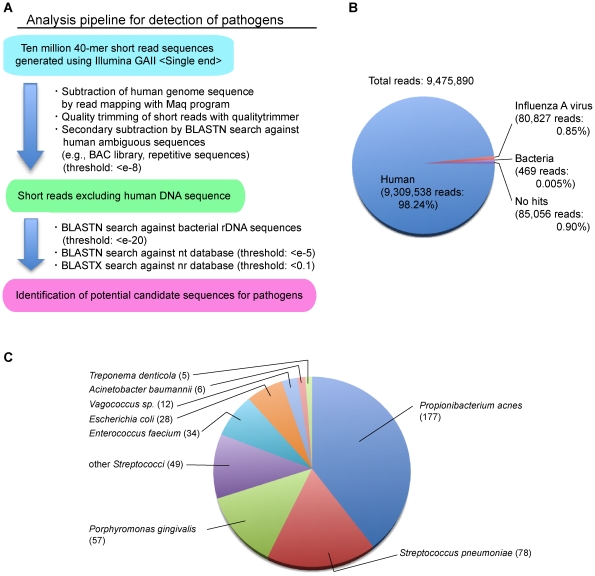
Figure 1. Detection of potential pathogens by comprehensive de novo sequencing.
(A) Schematic representation of the analysis pipeline for the detection of pathogens from comprehensive sequencing of human clinical specimens. After excluding human-derived DNA sequences using Maq software and a BLAST homology search against human genomic DNA and human ambiguous sequences extracted from the nt database, the remaining short reads were subjected to a BLAST search to detect potential pathogens. (B) Pie chart of the homology search results for the 40-mer short reads. Read numbers and their percentage to the total reads are shown in parenthesis. (C) Pie chart of identified bacterial hits. Number of hit reads is shown in parenthesis. Bacteria with less than 5 hit reads were excluded.
Figure 2
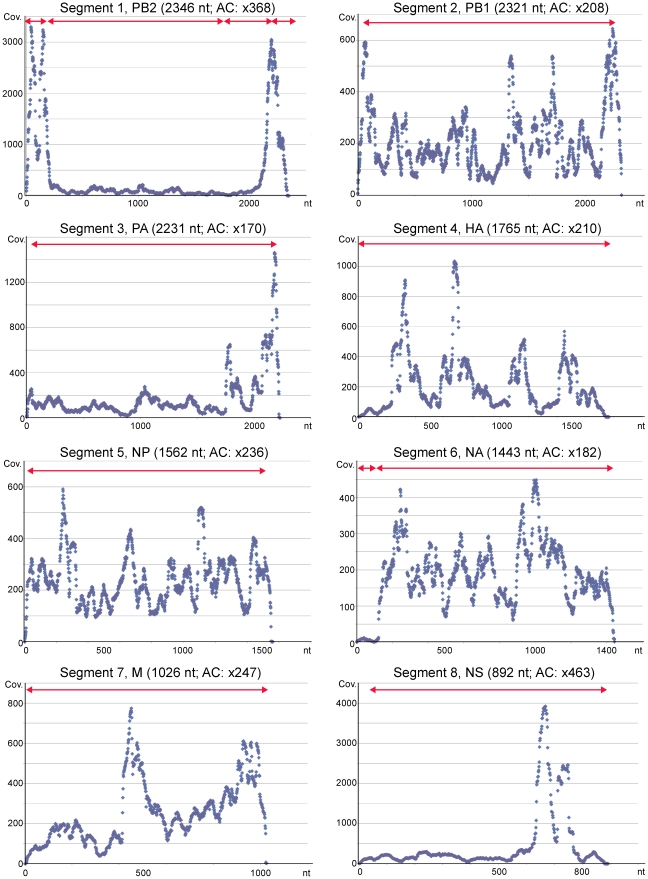
Figure 2. Dot plot of short read coverage (Cov.) at every nucleotide for the 8 segments of A/Nagano/RC1-L/2009(H1N1).
To obtain the consensus sequences for the respective 8 segments, 40-mer short reads were aligned to the complete segment sequences of A/Tronto/T0106/2009(H1N1) (gb|CY045951.1 – .8). Short read sequencing was performed using total RNA including human RNA, and also vRNA, cRNA, and mRNA from influenza A virus; thus, coverage bias was detected throughout the segments, but the average coverage (AC) is likely to be similar at approximately ×200 or more. The horizontal red arrows show the location of the contigs obtained by de novo assembly, as shown in Table 1.
Figure 3
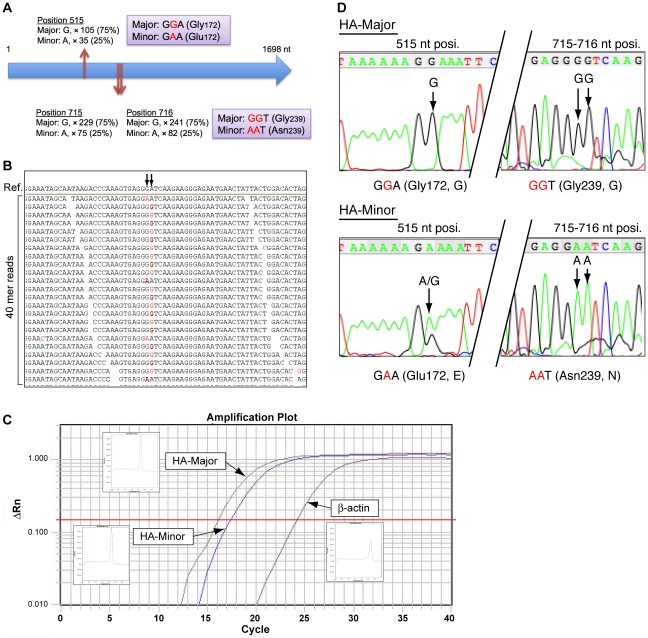
Figure 3. Genetic variations of the HA nucleotide sequence.
(A) Schematic representation of 3 nucleotide variations (positions 515, 715, and 716 nt) in the HA coding nucleotide sequence. Three variations were classified as Major (75% appearance) or Minor (25% appearance) by read coverage (×), and the coding amino acids are also shown. (B) Arrows indicate positions 715 and 716 nt of the HA sequence, and the alignment image of the 40-mer reads. Nucleotides shown in red are the mismatches to the reference sequence of A/Tronto/T0106/2009(H1N1). Every read suggested that either the GGT or AAT sequence was present, but not the GAT or AGT sequence. (C) An amplification plot for HA-specific qRT-PCR. (D) Validation of genetic variation by Sanger capillary sequencing. HA-Major or HA-Minor PCR products were obtained by qRT-PCR using HA-Major- or HA-Minor-specific PCR primers. HA-Major PCR product shows G nucleotides at positions 515, 715, and 716 nt, while HA-Minor shows A nucleotides.
Figure 4
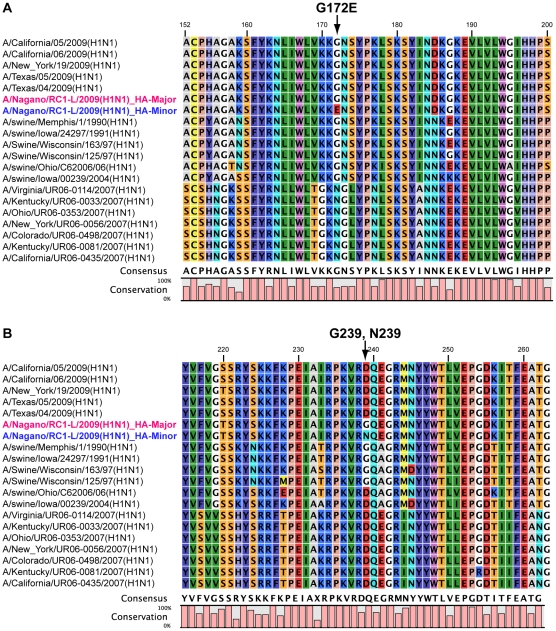
Figure 4. Alignment of HA amino acid sequences in influenza A virus around the identified mutations in A/Nagano/RC1-L/2009(H1N1).
(A) Genetic variation at position 515 nt causes the amino acid substitution Gly172Glu; HA-Major: Gly172, HA-Minor: Glu172. (B) Genetic variation at position 715 and 716 nt causes the amino acid substitution Gly239Asn; HA-Major: Gly239, HA-Minor: Asn239.
Figure 5
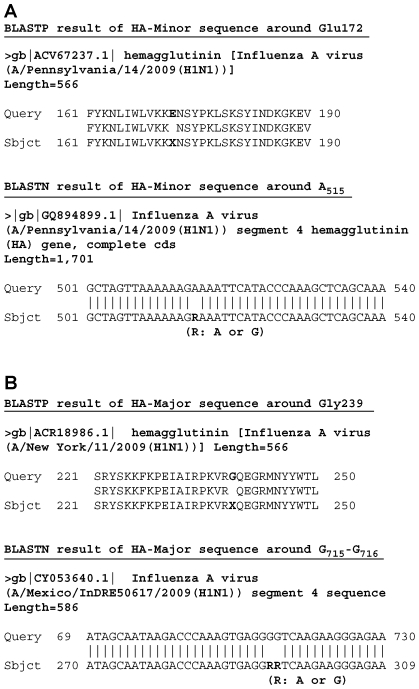
Figure 5. BLAST homology search of the HA sequences against the nr or nt databases.
(A) Glu172 of HA-Minor. (B) Gly239 of HA-Major. R: A or G.

References

    1. Dawood FS, Jain S, Finelli L, Shaw MW, Lindstrom S, et al. Emergence of a novel swine-origin influenza A (H1N1) virus in humans. N Engl J Med. 2009;360:2605–2615. - PubMed
    1. Gill JR, Sheng ZM, Ely SF, Guinee DG, Beasley MB, et al. Pulmonary pathologic findings of fatal 2009 pandemic influenza A/H1N1 viral infections. Arch Pathol Lab Med. 2010;134:235–243. - PMC - PubMed
    1. Ghedin E, Sengamalay NA, Shumway M, Zaborsky J, Feldblyum T, et al. Large-scale sequencing of human influenza reveals the dynamic nature of viral genome evolution. Nature. 2005;437:1162–1166. - PubMed
    1. Kilbourne ED. Influenza pandemics of the 20th century. Emerg Infect Dis. 2006;12:9–14. - PMC - PubMed
    1. Nelson MI, Viboud C, Simonsen L, Bennett RT, Griesemer SB, et al. Multiple reassortment events in the evolutionary history of H1N1 influenza A virus since 1918. PLoS Pathog. 2008;4:e1000012. - PMC - PubMed

Publication types

MeSH terms