


Comprehensive discharge follow-up in patients' homes by GPs and district nurses of elderly patients. A randomized controlled trial
- PMID: 20429738
- PMCID: PMC3442329
- DOI: 10.3109/02813431003764466
Comprehensive discharge follow-up in patients' homes by GPs and district nurses of elderly patients. A randomized controlled trial
Abstract
Objectives: Many hospital admissions are due to inappropriate medical treatment, and discharge of fragile elderly patients involves a high risk of readmission. The present study aimed to assess whether a follow-up programme undertaken by GPs and district nurses could improve the quality of the medical treatment and reduce the risk of readmission of elderly newly discharged patients.
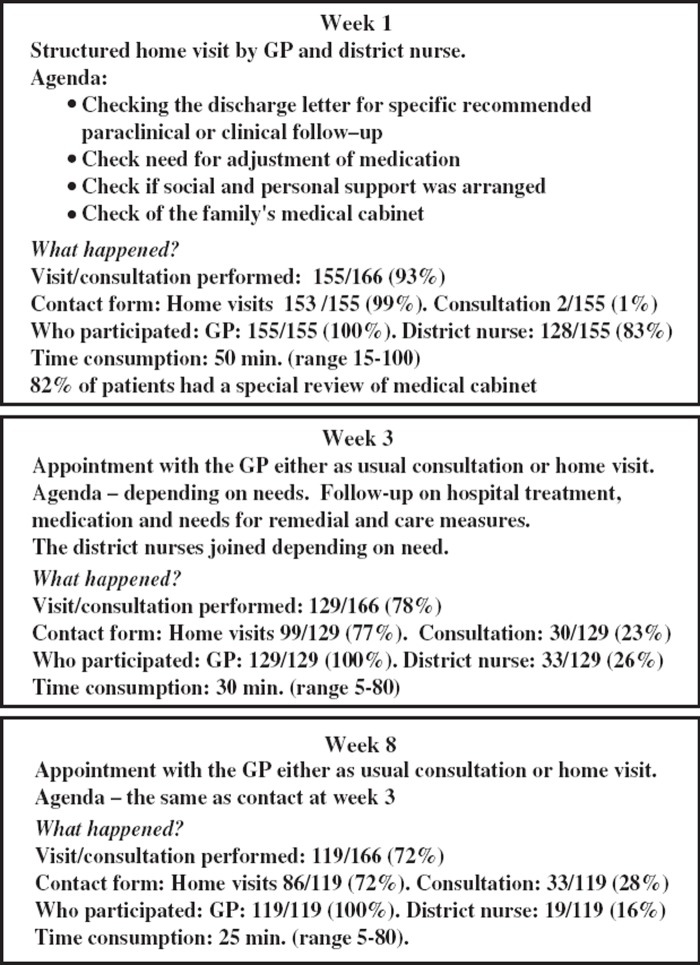
Design and setting: The patients were randomized to either an intervention group receiving a structured home visit by the GP and the district nurse one week after discharge followed by two contacts after three and eight weeks, or to a control group receiving the usual care.
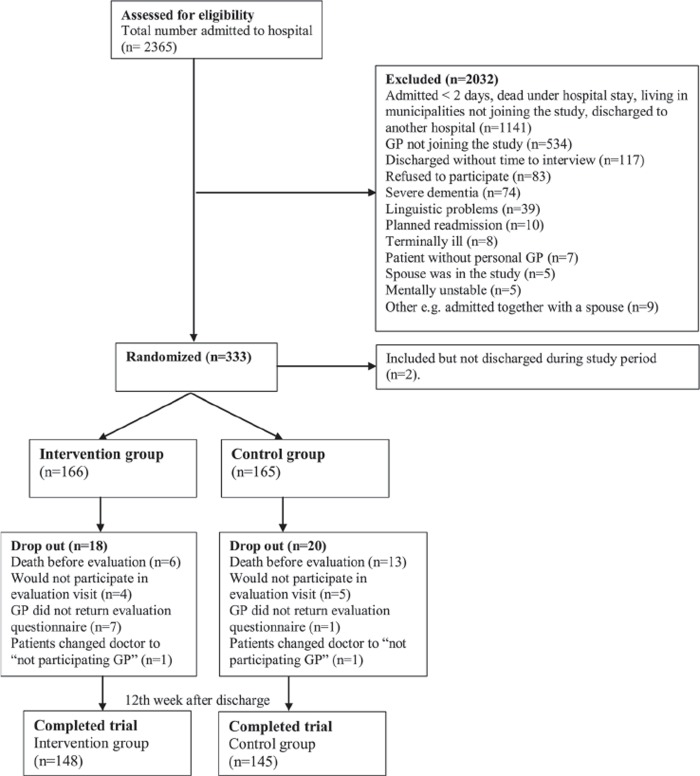
Patients: A total of 331 patients aged 78+ years discharged from Glostrup Hospital, Denmark, were included.
Main outcome measures: Readmission rate within 26 weeks after discharge among all randomized patients. Control of medication, evaluated 12 weeks after discharge on 293 (89%) of the patients by an interview at home and by a questionnaire to the GP.
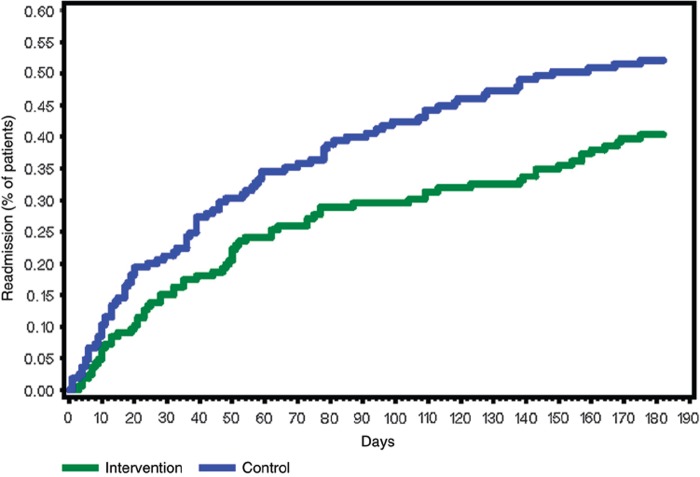
Results: Control-group patients were more likely to be readmitted than intervention-group patients (52% v 40%; p = 0.03). In the intervention group, the proportions of patients who used prescribed medication of which the GP was unaware (48% vs. 34%; p = 0.02) and who did not take the medication prescribed by the GP (39% vs. 28%; p = 0.05) were smaller than in the control group.
Conclusion: The intervention shows a possible framework securing the follow-up on elderly patients after discharge by reducing the readmission risk and improving medication control.
Figures
References
-
- Naylor MD, Brooten D, Campbell R, Jacobsen BS, Mezey MD, Pauly MV, et al. Comprehensive discharge planning and home follow-up of hospitalized elders: A randomized clinical trial. JAMA. 1999;281:613–20. - PubMed
-
- Hansen FR, Poulsen H, Sorensen KH. A model of regular geriatric follow-up by home visits to selected patients discharged from a geriatric ward: A randomized controlled trial. Aging (Milano) 1995;7:202–6. - PubMed
-
- Philips CO, Wright SM, Kern DE, Singa RM, Sheppard S, Rubin HR. Comprehensive discharge planning with postdischarge support for older patients with congestive heart failure: A meta-analysis. JAMA. 2004;291:1358–67. - PubMed
-
- Shepperd S, Parkes J, McClaran J, Phillips C. Discharge planning from hospital to home. The Cochrane Database of Systematic Reviews: Reviews 2004. Issue 1. Art. No. CD000313, UK DOI. 10.1002./14651858.CD000313.pub2. - PubMed
-
- Parker SG, Peet SM, McPherson A, Cannaby AM, Abrams K, Baker R, et al. A systematic review of discharge arrangements for older people. Health Technology Assessment. 2002;6:1–183. - PubMed
Publication types
MeSH terms
LinkOut - more resources
Full Text Sources
