


Tumor progression stage and anatomical site regulate tumor-associated macrophage and bone marrow-derived monocyte polarization
- PMID: 20431028
- PMCID: PMC2877857
- DOI: 10.2353/ajpath.2010.090879
Tumor progression stage and anatomical site regulate tumor-associated macrophage and bone marrow-derived monocyte polarization
Abstract
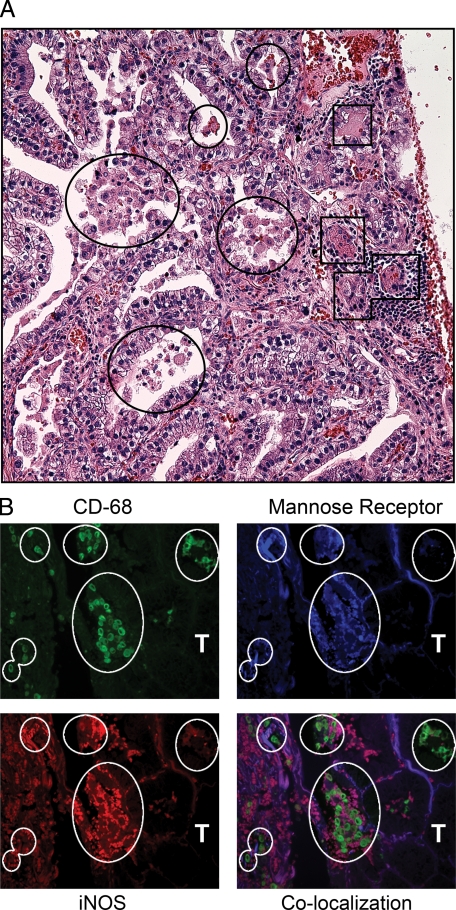
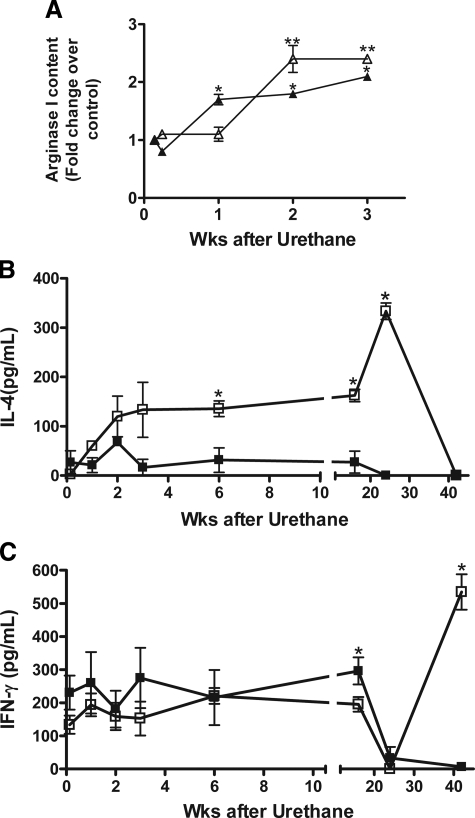
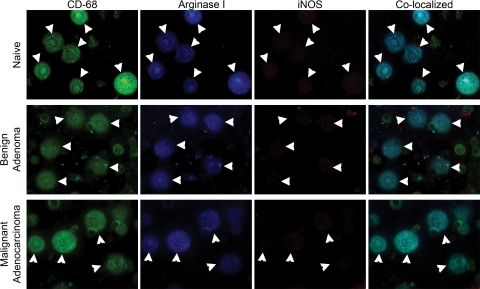
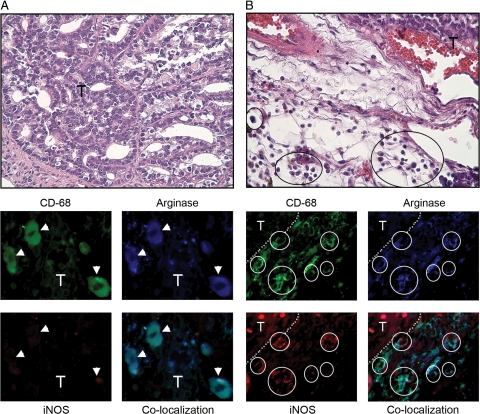
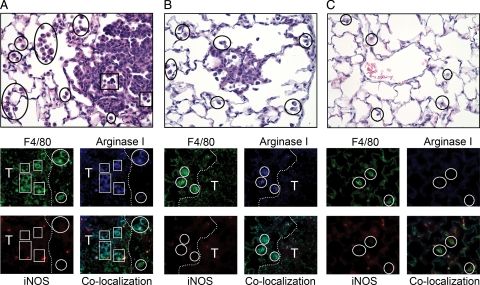
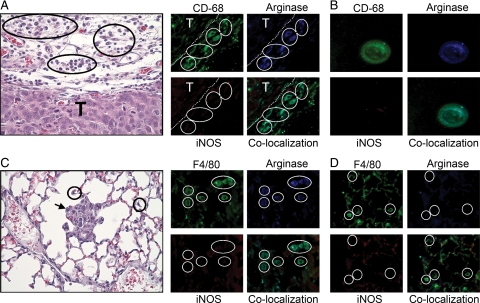
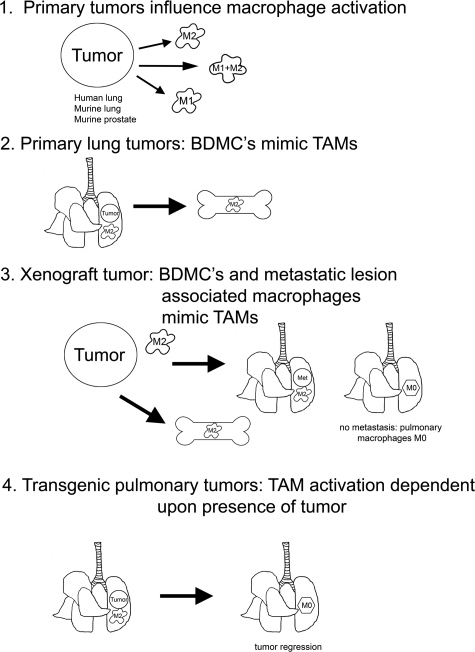
Tumor-associated macrophages (TAMs) encourage and coordinate neoplastic growth. In late stage human lung adenocarcinoma, TAMs exhibited mixed M1 (classical; argI(low)iNOS(high)) and M2 (alternative; argI(high)iNOS(low)) polarization based on arginine metabolism. In several murine cancer models including chemically and genetically-induced primary lung tumors, prostate tumors, colon xenografts, and lung metastases, TAMs expressed argI(high)iNOS(low) early during tumor formation; argI(low)iNOS(high) polarization also occurred during malignancy in some models. In a chemically-induced lung tumor model, macrophages expressed argI(high)iNOS(low) within one week after carcinogen treatment, followed by similar polarization of bone marrow-derived monocytes (BDMCs) a few days later. TAMs surrounding murine prostate tumors also expressed argI(high)iNOS(low) early during tumorigenesis, indicating that this polarization is not unique to neoplastic lungs. In a human colon cancer xenograft model, the primary tumor was surrounded by argI(high)iNOS(low)-expressing TAMs, and BDMCs also expressed argI(high)iNOS(low), but pulmonary macrophages adopted argI(high)iNOS(low) polarization only after tumors metastasized to the lungs. Persistence of tumors is required to maintain TAM polarization. Indeed, in both conditional mutant Kras- and FGF10-driven models of lung cancer, mice expressing the transgene develop lung tumors that regress rapidly when the transgene is silenced. Furthermore, pulmonary macrophages expressed argI(high)iNOS(low) on tumor induction, but then returned to argI(low) iNOS(low) (no polarization) after tumors regressed. Manipulating TAM function or depleting TAMs may provide novel therapeutic strategies for preventing and treating many types of cancer.
Figures
References
-
- Nathan C. Points of control in inflammation. Nature. 2002;420:846–852. - PubMed
-
- Geissmann F, Jung S, Littman DR. Blood monocytes consist of two principal subsets with distinct migratory properties. Immunity. 2003;19:71–82. - PubMed
-
- Malkinson AM. Role of inflammation in mouse lung tumorigenesis: a review. Exp Lung Res. 2005;31:57–82. - PubMed
-
- Balkwill F, Mantovani A. Inflammation and cancer: back to Virchow? Lancet. 2001;357:539–545. - PubMed
Publication types
MeSH terms
Substances
Grants and funding
LinkOut - more resources
Full Text Sources
Other Literature Sources
Molecular Biology Databases
Miscellaneous
