


Dimensions of oppositional defiant disorder as predictors of depression and conduct disorder in preadolescent girls
- PMID: 20431468
- PMCID: PMC2880833
- DOI: 10.1097/00004583-201005000-00009
Dimensions of oppositional defiant disorder as predictors of depression and conduct disorder in preadolescent girls
Abstract
Objective: To examine whether oppositional defiant disorder (ODD) rather than conduct disorder (CD) may explain the comorbidity between behavioral disorders and depression; to test whether distinct affective and behavioral dimensions can be discerned within the symptoms of ODD; and to determine whether an affective dimension of ODD symptoms is specifically predictive of later depression.
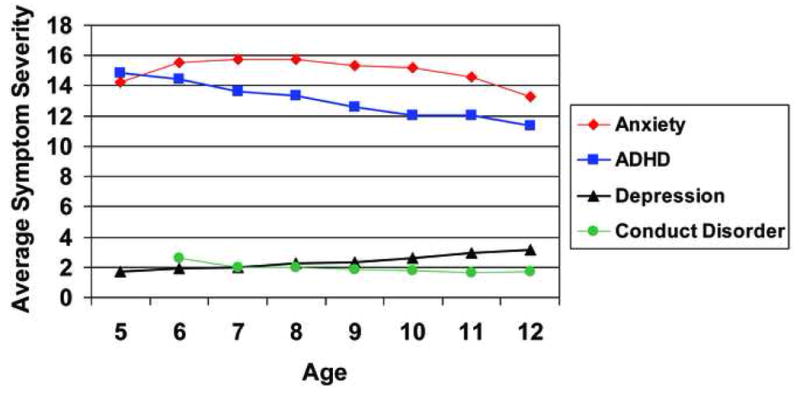
Method: The dimensions of ODD and their prediction to later CD and depression were examined in a community sample of 2,451 girls between the ages of 5 and 8 years, followed up annually over a 5-year period, using parent, child, and teacher questionnaire ratings of the severity of symptoms of psychopathology.
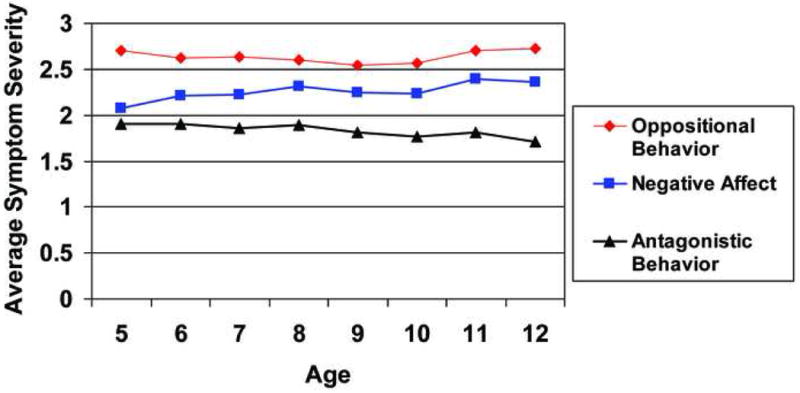
Results: Dimensions of negative affect, oppositional behavior, and antagonistic behavior were found within ODD symptoms. Negative affect predicted later depression. Oppositional and antagonistic behavior predicted CD overall, and for Caucasian girls, negative affect also predicted later CD. CD was not predictive of later depression, controlling for comorbid conditions.
Conclusions: ODD plays a key role in the early development of psychopathology. It is central in the comorbidity between internalizing and externalizing psychopathology, which may be caused by a dimension of negative affective symptoms within ODD. How this dimension relates to later CD appears to vary by race.
Figures
References
-
- Angold A, Costello EJ, Erkanli A. Comorbidity. J Child Psychol Psychiatry. 1999;40(1):57–87. - PubMed
-
- Maughan B, Rowe R, Messer J, Goodman R, Meltzer H. Conduct disorder and oppositional defiant disorder in a national sample: developmental epidemiology. J Child Psychol Psychiatry. 2004;45(3):609–621. - PubMed
-
- Puig-Antich J. Major depression and conduct disorder in prepuberty. J Am Acad Child Adolesc Psychiatry. 1982;21:118–128. - PubMed
-
- Carlson GA, Cantwell DP. Unmasking masked depression in children and adolescence. Am J Psychiatry. 1980;137:445–449. - PubMed
-
- American Psychiatric Association. Diagnostic and Statistical Manual of Mental Disorders. 4th. Washington, D. C.: American Psychiatric Association; 1994.
Publication types
MeSH terms
Grants and funding
LinkOut - more resources
Full Text Sources
Medical
