Early detection of and screening for colorectal neoplasia
- PMID: 20431727
- PMCID: PMC2852697
- DOI: 10.5009/gnl.2009.3.2.69
Early detection of and screening for colorectal neoplasia
Abstract
There are approximately one million new cases of colorectal cancer (CRC) per year worldwide, with substantial associated morbidity and mortality. The long natural history of colorectal neoplasia affords the opportunity to use preventive measures to improve survival in this disease. Currently screening for adenomatous polyps and early-stage cancers is the best methodology for improving survival. The increasing knowledge of CRC pathogenesis and its natural history is allowing the development of new tools to identify patients who will benefit most from colon cancer screening and the defining of appropriate surveillance intervals. The guidelines for screening for colorectal neoplasia have recently been substantially revised by several organizations based on developing technologies and a growing body of data on the efficacy of CRC screening.
Keywords: Adenoma; Colon cancer screening; Colonoscopy; Computed tomographic colonography; Fecal occult blood testing.
Figures
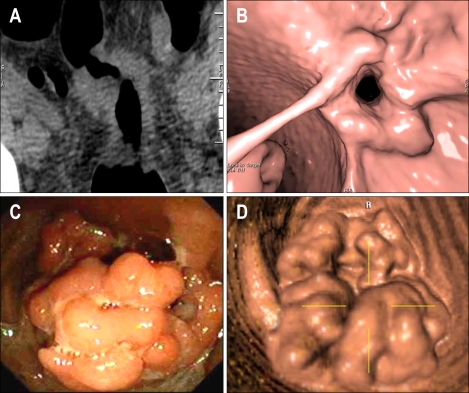
References
-
- Jemal A, Siegel R, Ward E, et al. Cancer statistics, 2008. CA Cancer J Clin. 2008;58:71–96. - PubMed
-
- Parkin DM, Bray F, Ferlay J, Pisani P. Global cancer statistics, 2002. CA Cancer J Clin. 2005;55:74–108. - PubMed
-
- Jemal A, Center MM, Ward E, Thun MJ. Cancer occurrence. In: Verma M, editor. Methods in molecular biology, cancer epidemiology. Vol. 471. New Jersey: Humana Press; 2009. pp. 3–29. - PubMed
-
- Kelloff GJ, Lippman SM, Dannenberg AJ, et al. Progress in chemoprevention drug development: the promise of molecular biomarkers for prevention of intraepithelial neoplasia and cancer--a plan to move forward. Clin Cancer Res. 2006;12:3661–3697. - PubMed
-
- Hewitson P, Glasziou P, Irwig L, Towler B, Watson E. Screening for colorectal cancer using the faecal occult blood test, Hemoccult. Cochrane Database Syst Rev. 2007:CD001216. Available from http://www.thecochranelibrary.com. - PMC - PubMed
LinkOut - more resources
Full Text Sources