


Age-dependent effects of kappa-opioid receptor stimulation on cocaine-induced stereotyped behaviors and dopamine overflow in the caudate-putamen: an in vivo microdialysis study
- PMID: 20435099
- PMCID: PMC2900406
- DOI: 10.1016/j.neuroscience.2010.04.052
Age-dependent effects of kappa-opioid receptor stimulation on cocaine-induced stereotyped behaviors and dopamine overflow in the caudate-putamen: an in vivo microdialysis study
Abstract
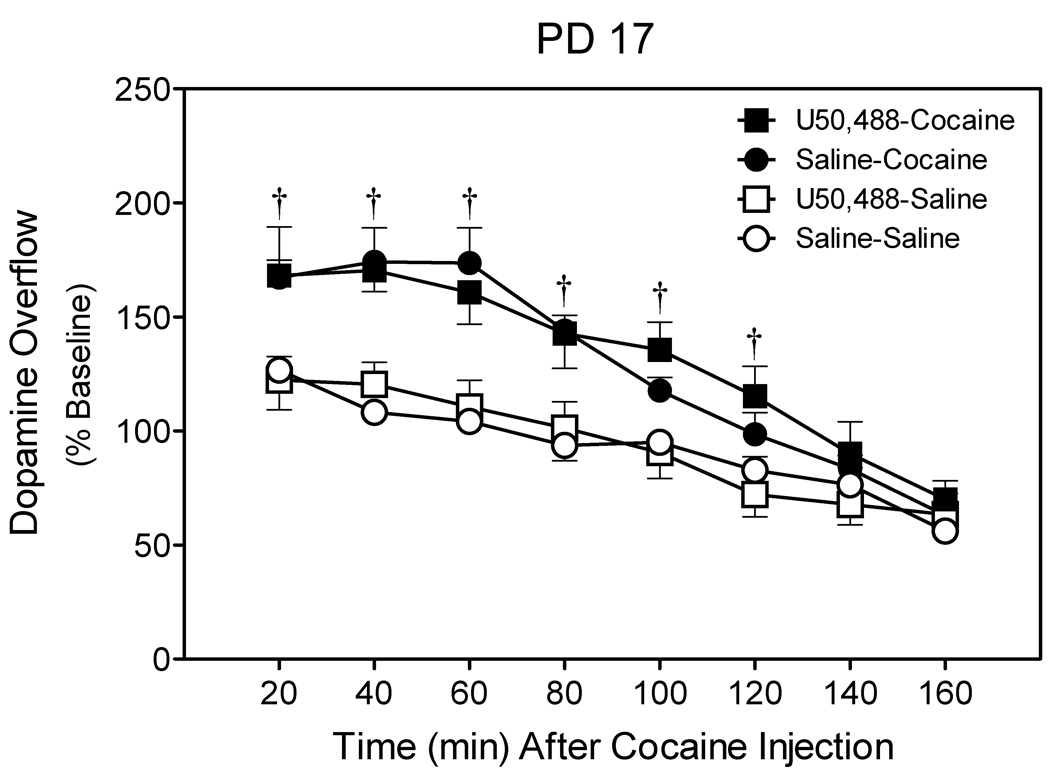
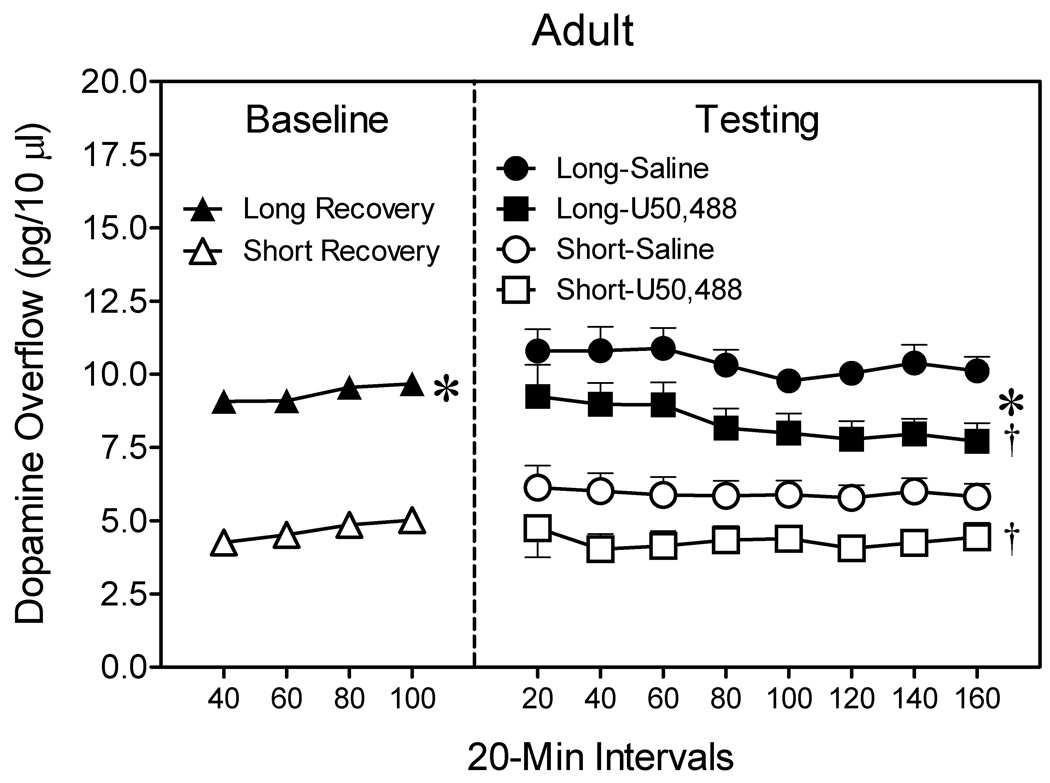
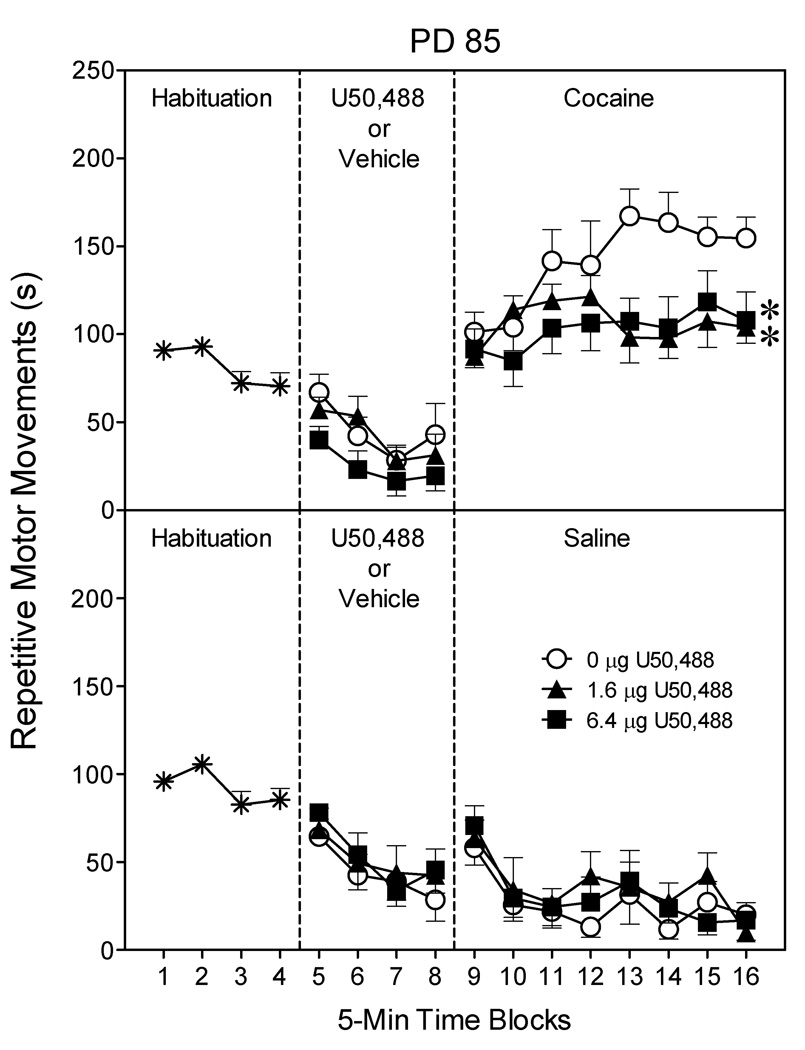
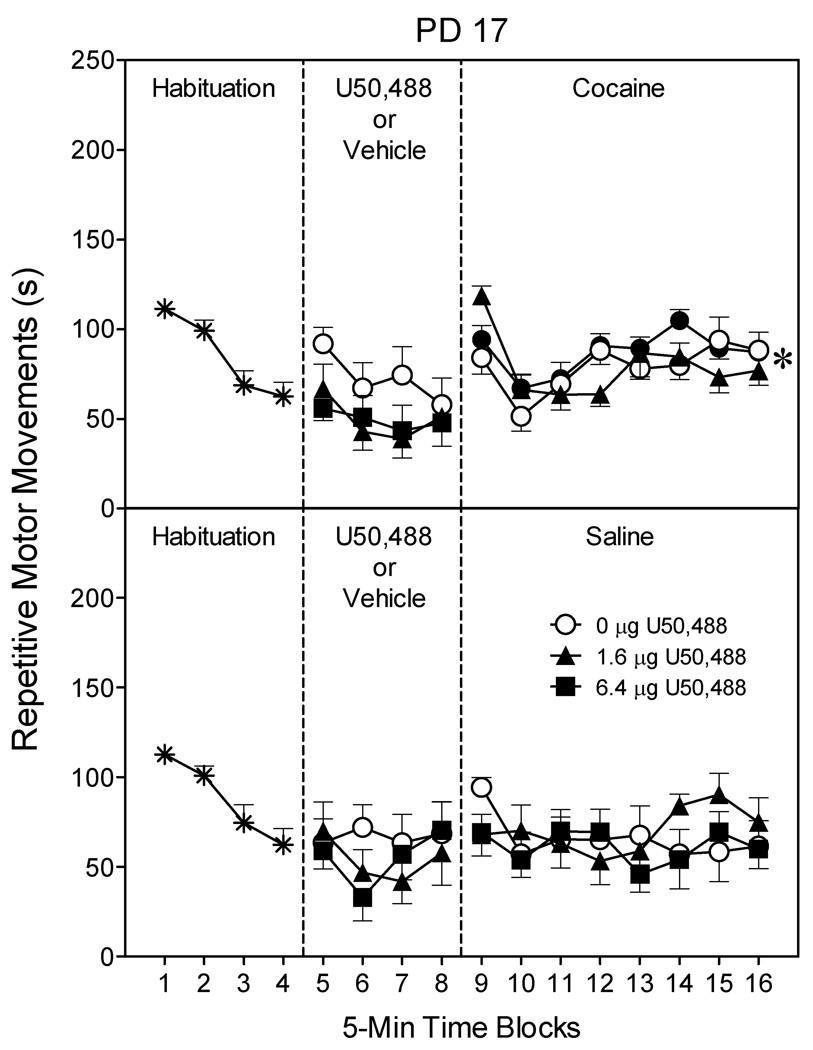
kappa-Opioid receptor stimulation attenuates psychostimulant-induced increases in extracellular dopamine in the caudate-putamen (CPu) and nucleus accumbens of adult rats, while reducing cocaine-induced locomotor activity and stereotyped behaviors. Because kappa-opioid receptor agonists (e.g., U50,488 or U69,593) often affect the behavior of preweanling rats in a paradoxical manner, the purpose of the present study was to determine whether kappa-opioid receptor stimulation differentially affects dopaminergic functioning in the CPu depending on age. In vivo microdialysis was used to determine whether U50,488 (5 mg/kg) attenuates cocaine-induced dopamine overflow in the dorsal CPu on postnatal day (PD) 17 and PD 85. In the microinjection experiment, cocaine-induced stereotyped behaviors were assessed in adult and preweanling rats after bilateral infusions of vehicle or U50,488 (1.6 or 6.4 microg per side) into the CPu. Results showed that U50,488 attenuated the cocaine-induced increases in CPu dopamine overflow on PD 85, while the same dose of U50,488 did not alter dopamine dialysate levels on PD 17. Cocaine also increased stereotyped behaviors (repetitive motor movements, behavioral intensity scores, and discrete behaviors) at both ages, but adult rats appeared to exhibit more intense stereotypic responses than the younger animals. Consistent with the microdialysis findings, bilateral infusions of U50,488 into the dorsal CPu decreased the cocaine-induced stereotypies of adult rats, while leaving the behaviors of preweanling rats unaffected. These results suggest that the neural mechanisms underlying kappa-opioid/dopamine interactions in the CPu are not fully mature during the preweanling period. This lack of functional maturity may explain why kappa-opioid receptor agonists frequently induce different behavioral effects in young and adult rats.
Copyright (c) 2010 IBRO. Published by Elsevier Ltd. All rights reserved.
Figures



References
-
- Abrams DR, Bruno JP. Ontogeny of apomorphine-induced stereotypy and its D1 and D2 receptor mediation in rats depleted of dopamine as neonates. Dev Psychobiol. 1992;25:475–495. - PubMed
-
- Adachi YU, Yamada S, Satomoto M, Higuchi H, Watanabe K, Kazama T. Isoflurane anesthesia induces biphasic effect on dopamine release in the rat striatum. Brain Res Bull. 2005;67:176–181. - PubMed
-
- Alexander GE, DeLong MR, Strick PL. Parallel organization of functionally segregated circuits linking basal ganglia and cortex. Ann Rev Neurosci. 1986;9:357–381. - PubMed
-
- Bolanos CA, Garmsen GM, Clair MA, McDougall SA. Effects of the κ-opioid receptor agonist U-50,488 on morphine-induced place preference conditioning in the developing rat. Eur J Pharmacol. 1996;317:1–8. - PubMed
Publication types
MeSH terms
Substances
Grants and funding
LinkOut - more resources
Full Text Sources
Medical
