


Retinoids for treatment of retinal diseases
- PMID: 20435355
- PMCID: PMC2882531
- DOI: 10.1016/j.tips.2010.03.001
Retinoids for treatment of retinal diseases
Abstract
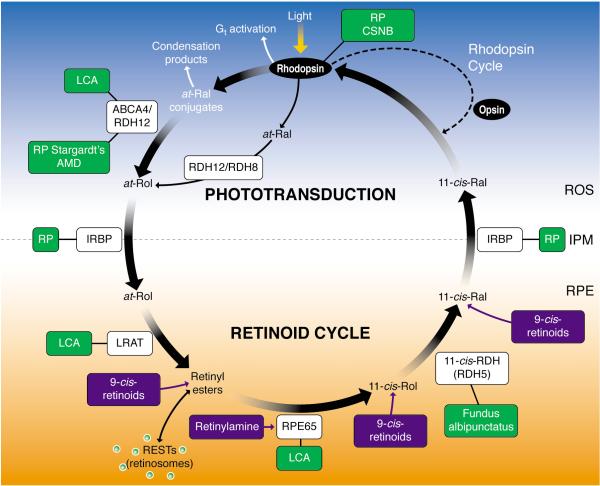
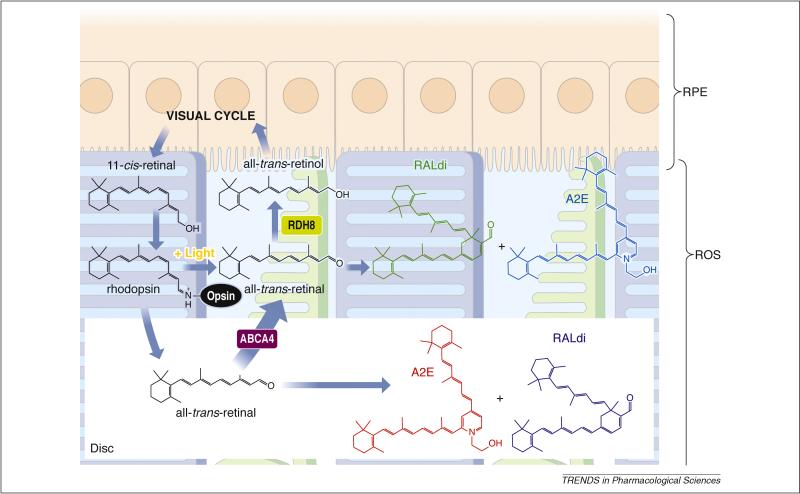
Knowledge about retinal photoreceptor signal transduction and the visual cycle required for normal eyesight has increased exponentially over the past decade. Substantial progress in human genetics has facilitated the identification of candidate genes and complex networks underlying inherited retinal diseases. Natural mutations in animal models that mimic human diseases have been characterized and advanced genetic manipulation can now be used to generate small mammalian models of human retinal diseases. Pharmacological repair of defective visual processes in animal models not only validates their involvement in vision, but also provides great promise for the development of improved therapies for millions who are progressing towards blindness or are almost completely robbed of their eyesight.
Figures


References
-
- Thompson DA, Gal A. Vitamin A metabolism in the retinal pigment epithelium: genes, mutations, and diseases. Progress in retinal and eye research. 2003;22:683–703. - PubMed
-
- Jackson GR, et al. Impact of aging and age-related maculopathy on inactivation of the a-wave of the rod-mediated electroretinogram. Vision research. 2006;46:1422–1431. - PubMed
Publication types
MeSH terms
Substances
Grants and funding
LinkOut - more resources
Full Text Sources
Other Literature Sources
Medical
Miscellaneous
