Review
. 2010 Dec 30;62(15):1468-78.
doi: 10.1016/j.addr.2010.04.007. Epub 2010 May 2.

Recombinant elastin-mimetic biomaterials: Emerging applications in medicine

Affiliations
Review

Recombinant elastin-mimetic biomaterials: Emerging applications in medicine

Wookhyun Kim et al. Adv Drug Deliv Rev. .

Abstract

Biomaterials derived from protein-based block copolymers are increasingly investigated for potential application in medicine. In particular, recombinant elastin block copolymers provide significant opportunities to modulate material microstructure and can be processed in various forms, including particles, films, gels, and fiber networks. As a consequence, biological and mechanical responses of elastin-based biomaterials are tunable through precise control of block size and amino acid sequence. In this review, the synthesis of a set of elastin-mimetic triblock copolymers and their diverse processing methods for generating material platforms currently applied in medicine will be discussed.


Figures

Figure 1
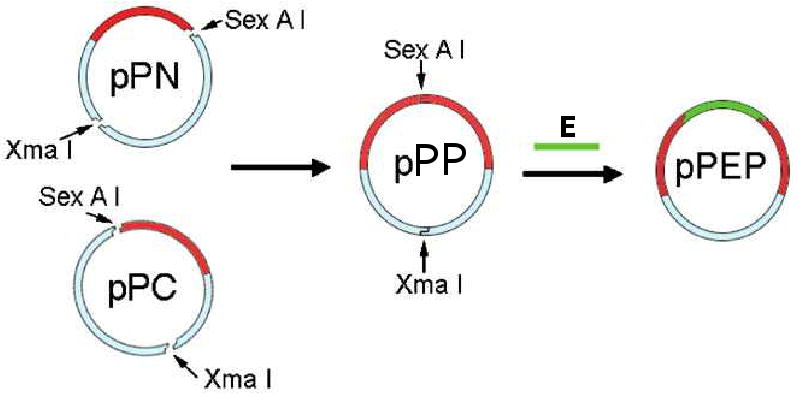
Figure 1. Scheme for for generating a triblock protein polymer with physical crosslinking sites
Synthesis of genes encoding amphiphilic elastin-mimetic triblock copolymers by assembly of a gene encoding a central hydrophilic block and identical plastic endblocks. (Reprinted from [3] with permission of American Chemical Society)
Figure 2
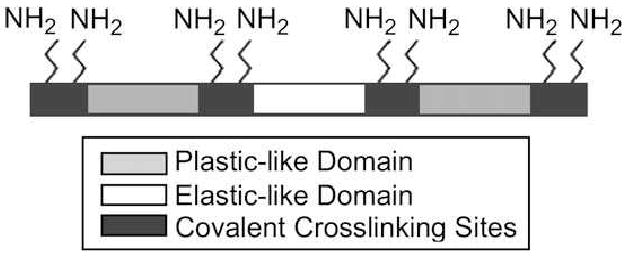
Figure 2. Representation of a triblock protein polymer with chemical and physical crosslinking sites
Crosslinkable elastin-mimetic triblock copolymers containing eight free amines placed at the end of each block that are available for chemical crosslinking. (Reprinted from [19] with permission of Elsevier)
Figure 3
Figure 3. Scheme for generating a triblock protein polymer with chemical and physical crosslinking sites
Synthesis of gene encoding amphiphilic elastin-mimetic triblock copolymers with crosslinking domain via assembly of each gene encoding a central hydrophilic block and identical hydrophobic endblocks.
Figure 4
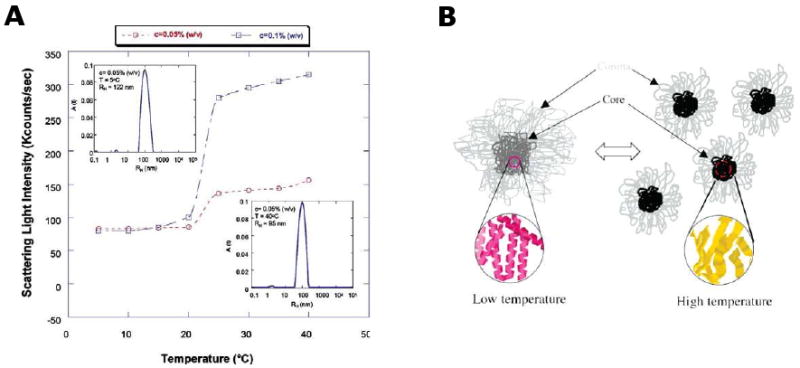
Figure 4. Thermally responsive protein micelles regulated through a reversible switch in protein secondary structure
(A) Scattering light intensity as a function of temperature and protein polymer concentration. (B) Schematic representation for nanoparticle formation from elastin-mimetic triblock copolymers in which size and core density of micelles show temperature-dependency Figures adapted from [39]. (Reprinted from [41] with permission of American Chemical Society)
Figure 5
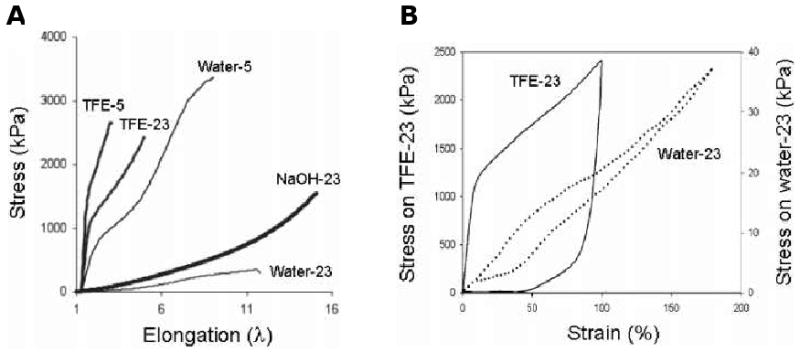
Figure 5. Uniaxial mechanical responses of elastin-mimetic protein polymer films
(A) Stress-strain curve for B9 films cast from water, TFE or NaOH at 5 and 23°C and rehydrated in PBS. (B) Hysteresis curves for B9 cast from water and TFE at 23°C. (Reprinted from [3] with permission of American Chemical Society)
Figure 6
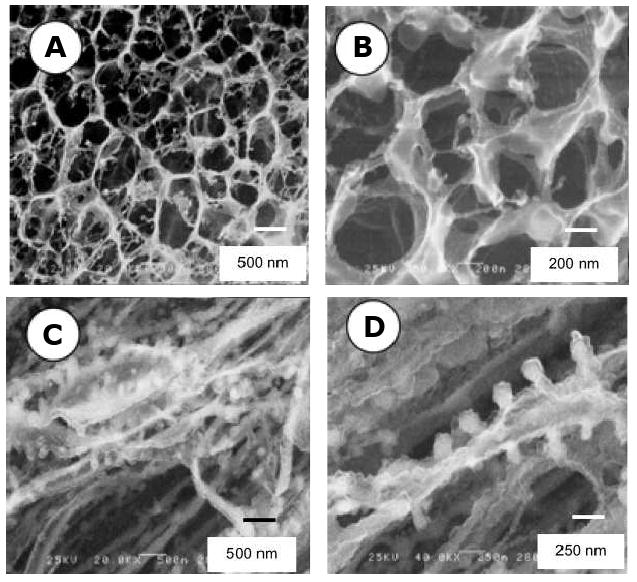
Figure 6. Microstructure of elastin-mimetic triblock protein polymer hydrogels
Cryo-HRSEM micrographs of B9 films initially cast from water (A,B) or TFE (C,D) and rehydrated in PBS at room temperature. (Reprinted from [3] with permission of American Chemical Society)
Figure 7
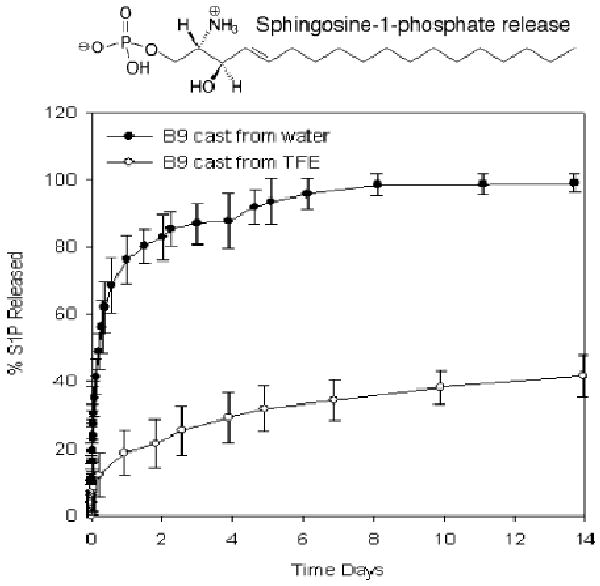
Figure 7. Elution rates of an amphiphilic compound from protein copolymer films
Drug release rates are dependent upon film processing conditions that influence protein microstructure and microphase separation of protein blocks. The in vitro release profile is presented for S1P from hydrated B9 films cast from water or TFE at room temperature. (Reprinted from [3] with permission of American Chemical Society)
Figure 8
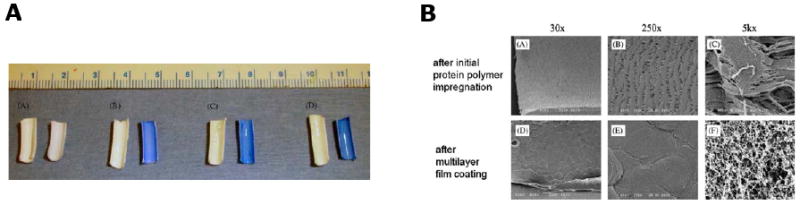
Figure 8. An ePTFE vascular graft coated with an elastin-mimetic protein polymer
(A) Macroscopic photographs of unstained (left) and Coomassie-stained (right) graft samples: plain ePTFE, after B9 impregnation, after multilayer B9 deposition, and after exposure to PBS for 24 at 37°C at a defined flow rate. (B) SEM images of ePTFE vascular grafts processed by critical point drying. (Reprinted from [10] with permission of Elsevier)
Figure 9
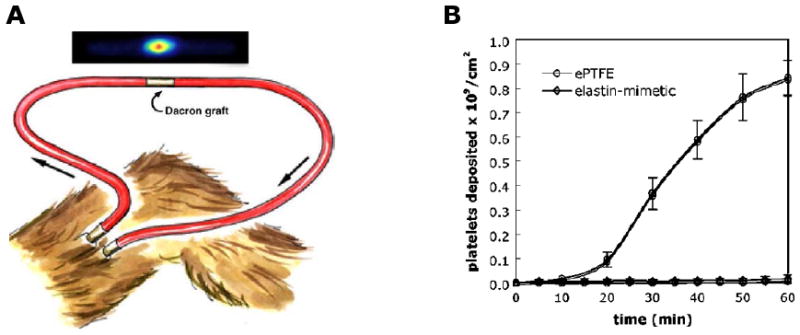
Figure 9. Examination of the blood compatibility of small diameter (4 mm) ePTFE vascular grafts coated with an elastin-mimetic protein polymer
(A) Schematic illustration of an ex vivo femoral arteriovenous shunt used to assess platelet deposition in a baboon model [63]. (B) Platelet deposition normalized by surface area over a 60-min time period (n=6). (Reprinted from [10] with permission of Elsevier)
Figure 10
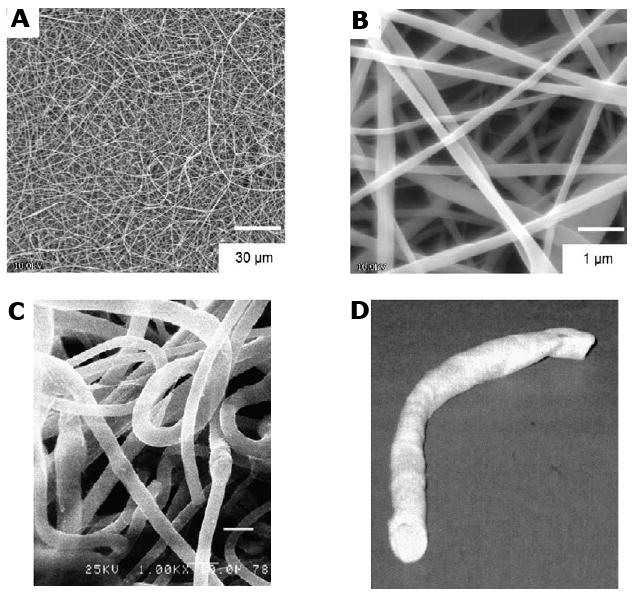
Figure 10. Fabrication of a small diameter vascular graft from electrospun elastin-mimetic protein polymers
SEM micrographs of fibers spun from a 10-wt% solution of B9 in TFE at a magnification of (A) 1000× and (B) 10,000×. Fiber networks produced from an electrospun recombinant elastin-mimetic triblock copolymer. (Reprinted from [7] with permission of Elsevier) (C) Cryo-HRSEM micrograph of fiber networks electrospun from a 12-wt% solution of B9 in TFE. (D) A tubular conduit was fabricated from electrospun protein fibers using a rotating mandrel as the collecting apparatus. (Reprinted from [59] with permission of Koninklijke Brill)
Figure 11
Figure 11. In vivo responses to elastin-mimetic protein polymer implants
Short-term host implant responses after (A) subcutaneous and (B) peritoneal injection of B9 in a mouse model. Subcutaneous implants were examined 3 weeks and peritoneal implants 1 week after implantation. (Reprinted from [56] with permission of Elsevier)
Figure 12
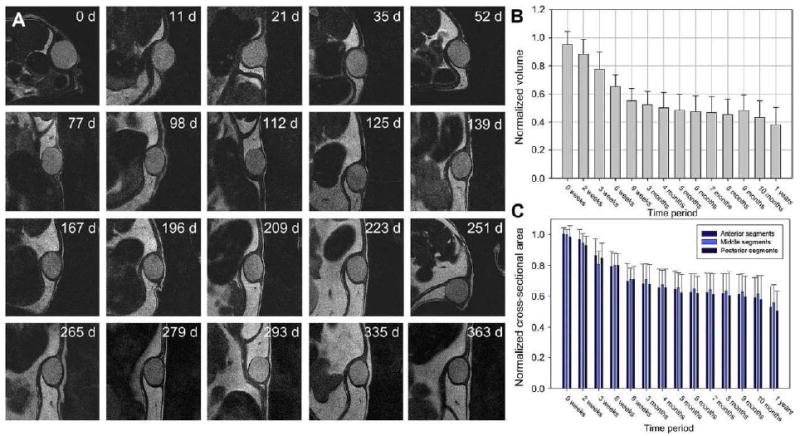
Figure 12. Serial MR imaging of subcutaneous protein polymer implants over 1 year
(A) Representative serial images of B9 implants over a 1-year period. (B) Normalized implant volumes and (C) implant cross-section areas were determined over a 1-year implant period (n=7, mean ± SD). (Reprinted from [56] with permission of Elsevier)

References

    1. Wright ER, Conticello VP. Self-assembly of block copolymers derived from elastin-mimetic polypeptide sequences. Adv Drug Deliv Rev. 2002;54(8):1057–73. - PubMed
    1. Wright ER, McMillan RA, Cooper A, Apkarian RP, Conticello VP. Thermoplastic elastomer hydrogels via self-assembly of an elastin-mimetic triblock polypeptide. Advanced Functional Materials. 2002;12(2):149–154.
    1. Nagapudi K, Brinkman WT, Leisen J, Thomas BS, Wright ER, Haller C, Wu XY, Apkarian RP, Conticello VP, Chaikof EL. Protein-based thermoplastic elastomers. Macromolecules. 2005;38(2):345–354.
    1. Wu X, Sallach R, Haller CA, Caves JA, Nagapudi K, Conticello VP, Levenston ME, Chaikof EL. Alterations in physical cross-linking modulate mechanical properties of two-phase protein polymer networks. Biomacromolecules. 2005;6(6):3037–44. - PubMed
    1. Wu X, Sallach RE, Caves JM, Conticello VP, Chaikof EL. Deformation responses of a physically cross-linked high molecular weight elastin-like protein polymer. Biomacromolecules. 2008;9(7):1787–94. - PMC - PubMed

Publication types