


Evaluation of the performance of accommodating IOLs using a paraxial optics analysis
- PMID: 20444117
- PMCID: PMC3065361
- DOI: 10.1111/j.1475-1313.2009.00694.x
Evaluation of the performance of accommodating IOLs using a paraxial optics analysis
Abstract
Purpose: We employed an analytical approach to evaluate the key parameters for the potential design optimisation of accommodating intra-ocular lenses (AIOL) and to use these parameters to predict their accommodative performance.
Methods: Paraxial thin-lens equations to predict the accommodative performances of single-element (1E) and two-element (2E) AIOLs were developed. 2E-AIOLs with either mobile front or back lens elements were analysed as well as 1E-AIOL for their accommodative performance. A paraxial model including key ocular components (corneal surfaces, pupil and retina) as well as AIOL was used to evaluate the key control parameters and optimal design configurations. A range of variants of the model, representing varying powers of front and back optical elements and with either front or back optical element mobile was tested.
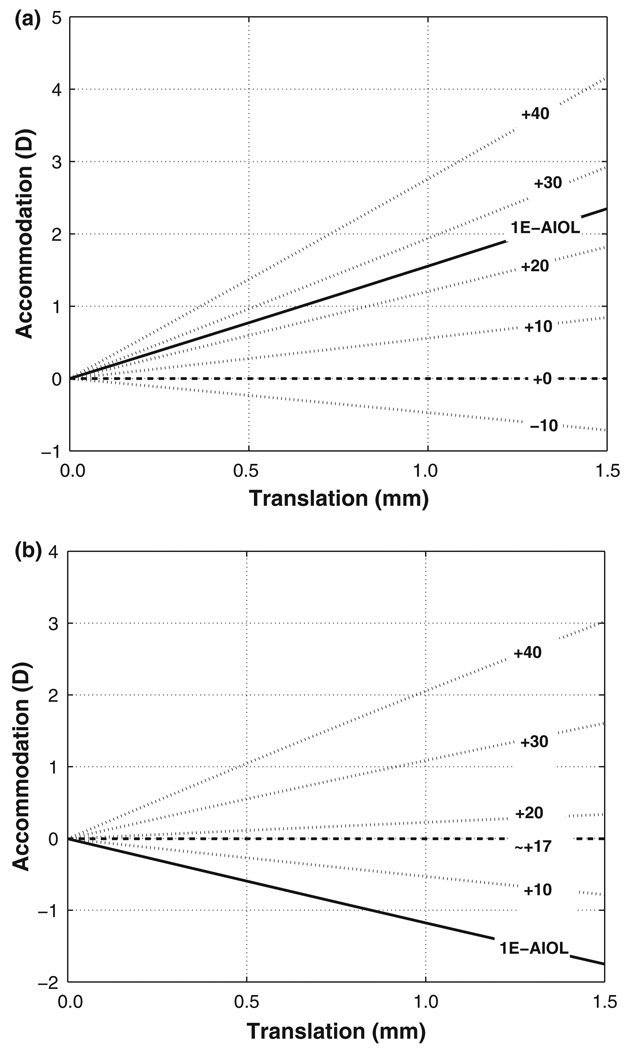
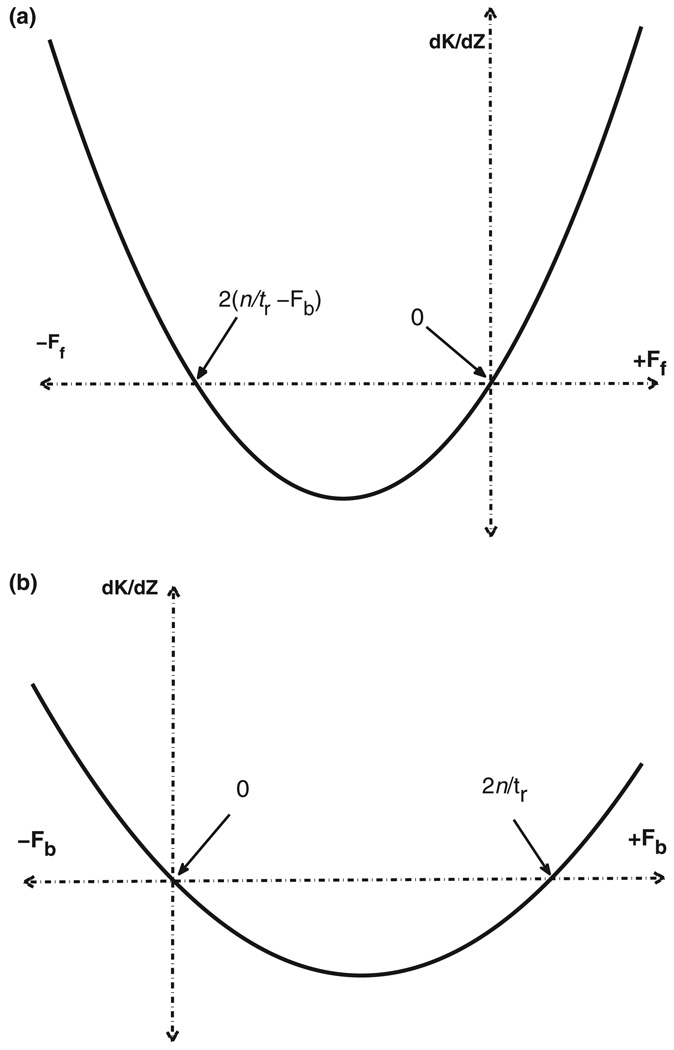
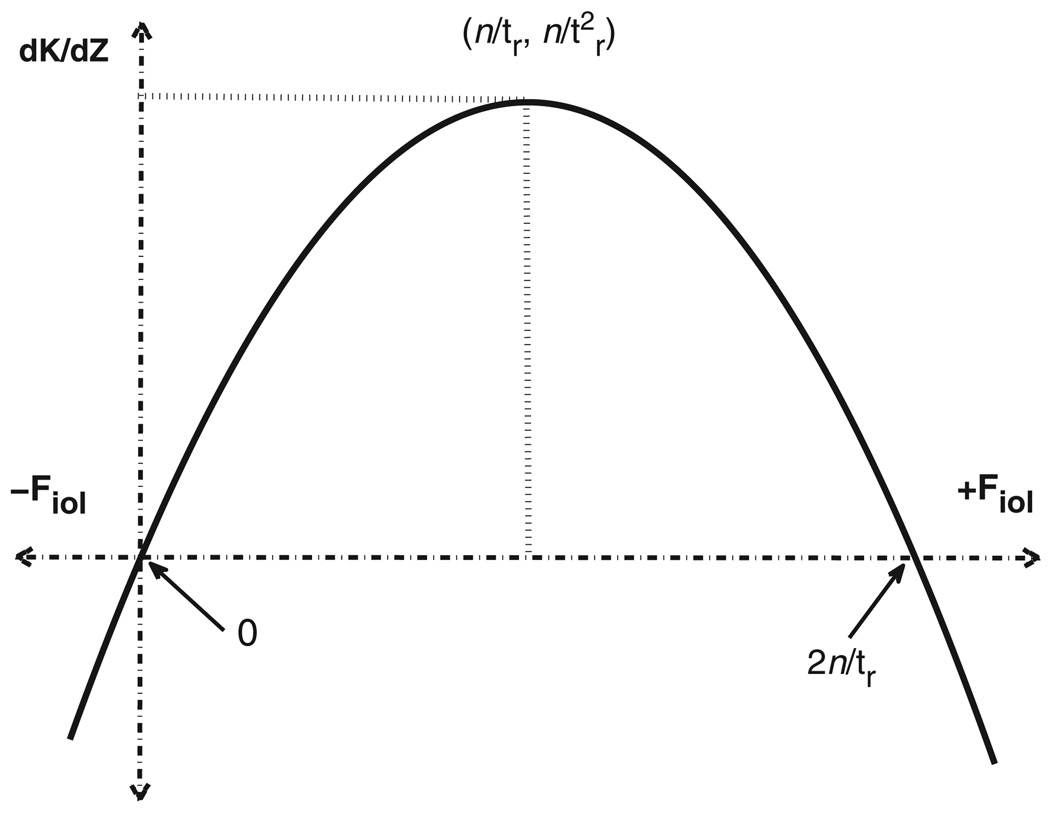
Results: Optimal accommodative performance of 2E-AIOL is governed by the power combinations of its optical elements; design variants with higher positive front element power produced greater accommodative efficacy, while mobility of the front element contributed more to the accommodative performance than the back element. The performance of 1E-AIOL is primarily governed by the power of the AIOL; the higher the AIOL power, the better the accommodative performance.
Conclusions: From an accommodative performance standpoint, the optimal design of 2E-AIOL should comprise a high plus power front element. Considering the maximum potential amounts of element translation available clinically, 2E-AIOLs are predicted to offer higher accommodative performance compared to 1E-AIOL.
Figures
References
-
- Artal P, Marcos S, Navarro R, Miranda I, Ferro M. Through focus image quality of eyes implanted with monofocal and multifocal intraocular lenses. Optical Engineering. 1995;34:8.
-
- Assia EI. Accommodative intraocular lens: a challenge for future development. J. Cataract Refract. Surg. 1997;23:458–460. - PubMed
-
- Auffarth G, Martin M, Fuchs H, Rabsilber T, Becker K, Schmack I. Validitat der Vorderkammertiefenmessung zur akkommodationsevaluierung nach implantation einer akkommodativen intraokularlinse (Modell Humanoptics 1CU) Ophthalmologe. 2002a;99:815–819. - PubMed
-
- Auffarth G, Schmidbauer J, Becker K, Rabsilber T, Apple D. Miyake-Apple-Video-Analyse des Bewegungsmusters einer akkommodativen intraokularlinse. Ophthalmologe. 2002b;99:811–814. - PubMed
-
- Bakaraju RC, Ehrmann K, Papas E, Ho A. Finite schematic eye models and their accuracy to in-vivo data. Vision Res. 2008;48:1681–1694. - PubMed
Publication types
MeSH terms
Grants and funding
LinkOut - more resources
Full Text Sources
Molecular Biology Databases
